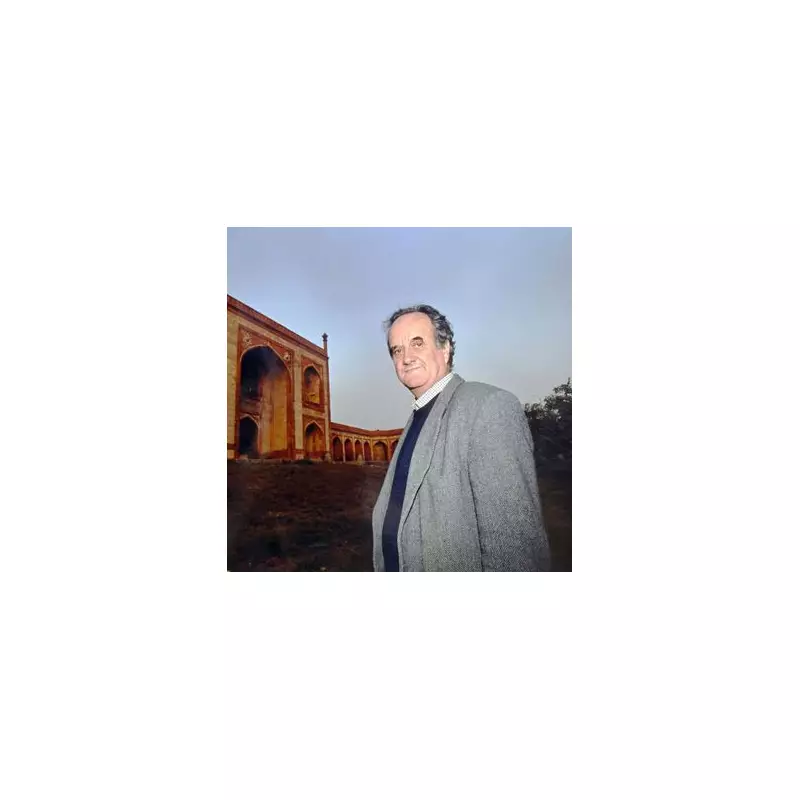
The world of journalism is mourning the loss of a true broadcasting giant, Sir Mark Tully, who has passed away at the age of 90. The legendary BBC correspondent, renowned for his deep connection to India and his pioneering coverage of South Asia, died on January 25, 2026, leaving behind an immense legacy in international reporting.
A Pioneering Career Spanning Decades
Sir Mark Tully's remarkable career at the BBC spanned over 30 years, including two decades as the bureau chief in New Delhi. Born in India in 1935 before moving to England at age nine, he studied history and theology at Cambridge University before joining the BBC in the 1960s. His move to India in 1965 marked the beginning of an extraordinary reporting journey that would define his life's work.
Covering Historic Events Across South Asia
Throughout his distinguished career, Sir Mark reported on some of the most significant historical events in the region. His coverage included:

- The birth of Bangladesh and its struggle for independence
- Periods of military rule in Pakistan
- The Tamil Tigers' rebellion in Sri Lanka
- The Soviet invasion of Afghanistan
His reporting was credited with "opening India to the world," bringing the vibrancy and complexity of South Asian nations to audiences across the United Kingdom and beyond.
Tributes from World Leaders and Colleagues
Indian Prime Minister Narendra Modi led the tributes, describing Sir Mark as "a towering voice of journalism" whose work had left "an enduring mark on public discourse." In a statement on social media platform X, Modi highlighted the journalist's deep connection with India and its people, noting how this relationship was reflected throughout his body of work.
Jonathan Munro, interim chief executive of BBC News and current affairs, remembered Sir Mark as "a joy to speak with" who would be greatly missed. He praised the journalist as one of the pioneers of foreign correspondence, whose dedication to journalism and public service commitment saw him work across various BBC outlets while maintaining his Delhi bureau leadership.
Radio 4's Spiritual Voice
Beyond his news reporting, Sir Mark became familiar to Radio 4 listeners as the host of Something Understood, a programme exploring religion and spirituality that ran until 2019. Mohit Bakaya, controller at BBC Radio 4, remembered him as "thoughtful, generous and searching," noting that his broadcasts were "about curiosity, compassion and making space for complexity" rather than certainty or instruction.
Sir Mark had expressed sadness when the programme ended, believing the BBC was "underestimating the asset" of such reflective content. His voice became synonymous with the programme's exploration of spiritual themes, adding another dimension to his already impressive broadcasting career.
Recognition and Honours
Sir Mark's contributions to journalism and international relations were recognised through numerous honours. He was knighted in 2002 by the Prince of Wales, now King Charles, during a ceremony at Buckingham Palace. Additionally, he received two of India's highest civilian awards:
- The Padma Shri
- The Padma Bhushan
These honours reflected the deep respect he commanded in both the United Kingdom and India, where he was widely regarded as a bridge between cultures and a trusted interpreter of complex regional dynamics.
Legacy of Independent Journalism
Sir Mark resigned from the BBC in 1994 after criticising the corporation's new management style, demonstrating his commitment to journalistic principles over institutional conformity. Despite this departure, he maintained strong connections with the BBC and continued contributing to British broadcasting through various projects and programmes.
His legacy extends beyond individual reports or programmes to encompass a particular approach to journalism—one characterised by deep cultural understanding, patient observation, and a refusal to simplify complex realities. As tributes continue to pour in from colleagues, world leaders, and listeners, it's clear that Sir Mark Tully's voice will be profoundly missed, but his impact on international journalism and cross-cultural understanding will endure for generations to come.