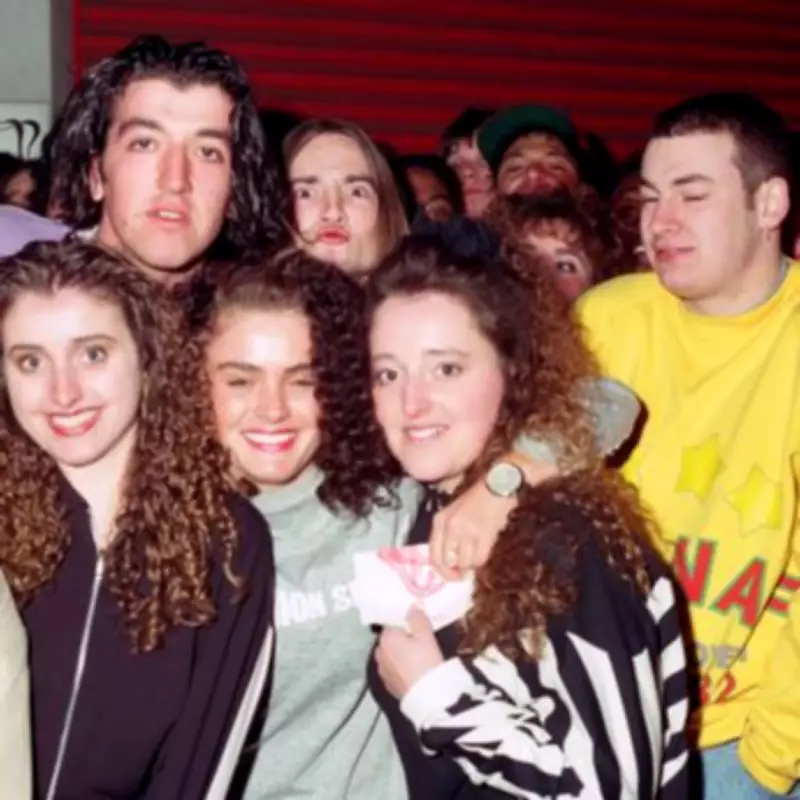
At the height of the kaleidoscopic, acid-drenched years of pulsating all-nighters when sweat-soaked bodies writhed to rave scene anthems, they gathered in their thousands for an event dubbed Birmingham's Woodstock. In all, 7,000 brightly-clad party people. But unlike the legendary 1960s hippy festival, The Rag Market Rave of May 5, 1991, has failed to find a place in popular culture.
Woodstock was love, mud and music: LSD and hash. The Rag Market was ecstasy, raw energy and bottled water. Flashing, blurred videos of the legendary happening – considered one of the rave scene’s milestones – survive on YouTube, but there are no words, no memories, certainly no clippings from the Birmingham Mail or Post. Perhaps that’s because, like Woodstock, if you remember it you weren’t there.
But today we’re reaching out to those who attended an event that is a part of Birmingham underground folklore. Tell us about it, tell us what it was like.

A Seismic Shift in Popular Culture
It was a moment that encapsulated the sudden, seismic change in popular culture, a rave revolution yet to be sign-posted by the charts. When the all-nighter took place, Cher’s version of the Shoop Shoop Song was at number one, toppling Chesney Hawkes’ The One And Only from top spot. Vic Reeves was sitting at number six. In cramped warehouses, revellers danced to the hypnotic beat of I Want You by Carl Cox, Activ8 and Timebase’s Unity. At the Rag Market, 7,000 – a staggering number – gyrated to bass lines so thudding, they made bare bellies shudder. When the musical mayhem was over, the crowd stumbled into anaemic spring morning sunshine, gaudily dressed, bleary-eyed and clutching bottles of water.
Contrary to popular belief, the rave was not illegal. Licences were obtained and police kept a watchful eye from a distance. Yet it remains cloaked in semi-secrecy to all but devotees of the scene. As one former reveller succinctly described on social media: “The Rag Market rave has to have gone down in history! If you know, you know!”
Voices from the Rave
We want to hear from the people, now middle-aged, who know. For between £25 and £30, party animals were treated to a pounding, adrenaline-fuelled night. It was a chaotic cocktail of psychedelic colours and eclectic mix of ambient sounds. As a reporter in his late 60s, I watch the YouTube explosion of lights and soak in the industrial sounds and feel giddy, nauseous even. Even then, I held a soft spot for ABBA.
Those clubbers making strange shapes on the heaving dance floor now have children of their own. They, too, may now be bellowing from the comfort of their armchairs: “Turn that bloody racket down.” They should heed a warning. The journey from rave scene to pipe and slippers is a short one.
Walton Wilkins was there and remembers. He was one of 300 security staff, watching the madness – the Es and agony – from the periphery. Now in his 60s, Walton said: “It was quite chaotic and the reason was there were a lot more people there than should’ve been there. The official figure is 5,000, but I think there were 2,000 more than that. We had problems with people breaking in to open exit doors, people smashing fences down and rogue security.”
There was an element of organisation, but that became trampled under the swaying bodies. Walton said: “There were stalls inside serving stuff and, violence-wise, it was trouble-free – they were all trouble-free. You had to help some people who fainted, mainly drug-related, but some because of the heat. There was no alcohol in those days. It was a good experience, it was something never before seen in a setting like that. I think that’s why it has become so iconic, because of the venue. The Bull Ring is known around the world. There were a couple of live sets from bands, but the DJs were the headliners.”

Walton, now a grandfather, was a well-known face on the rave scene. He still believes the positives of that culture, which burned brightly, but briefly, far outweighed the negatives. There were casualties – every recreational activity spawns casualties – but the scars left behind are mere scratches compared to the 1960s’ Summer of Love. “Scenes like that hadn’t been seen since the ‘60s or Beatlemania,” said Walton. “You had people from all walks of life and all cultures. It impacted, in a positive way, on football violence. You had the football lads there – Blues and Villa, Wolves, Albion, Coventry, Stoke – and they’d get on with each other. These were the same lads who, if they met in a pub, World War Three would break out.”
An Observer's Perspective
Jon Pegg, former professional boxer and now a successful fight manager, was there. He remembers because he was not a pill-popper or boozer. He was, in his words, an “observer”. Then only 16, he watched from the sidelines as the colourful chaos spread and mutated like culture in a Petri dish.
“You went through big double doors,” he recalled. “I was 16 and shouldn’t really have been allowed in there – just walking through those doors was a rush. You came in from the cold night air and into a room full of people in glittery shorts, tie-dye T-shirts and with whistles round their necks. There were people dancing round poles and in the middle was this sea of people going absolutely mental. It was like an underground club in a film and you got engulfed in it. Then you were charged £3 for a bottle of water and realised it was going to be an expensive night.
“I went there because everyone was going there, you wanted to be where everyone else wanted to be. Everyone wanted to be there, it was a status symbol. There were people in their 40s and 50s. I was an observer, I wasn’t someone who took a pill or drank. I stood there and watched – you couldn’t talk to anyone, it was too loud. How friendly everyone was was pretty cool.”
Jon paints a vivid picture of the aftermath. Clubbers emerged into a morning that echoed with the clanking sounds of an awakening market. They stumbled, deafened by decibels, into the path of puzzled workers on their way to the next shift. “It was a strange spectacle,” he laughed. “They’d be people clutching their sandwiches, some wearing hi-viz jackets, on their way to work and these people in a trance, who couldn’t hear, stumbling around dressed like circus performers. The workers were thinking, ‘what the hell’s going on?’. After ten hours at a noisy, packed rave, those who’d just stepped into the light were thinking, ‘what the hell’s going on?’. It was bizarre.”
Rave Culture's Legacy
Was rave culture a positive or negative influence on mainstream society? Jon’s undecided, but pointed out: “It would be interesting to compare how many people are being stabbed and shot in Birmingham now and how many were being stabbed and shot when people were taking the love drug. Everyone was chilled. You’d see people in corners from different areas, you’d see hardcore hooligans from different football firms. Today, that would be a recipe for a mass brawl. Back then, they just wanted to hug each other.” Jon added: “What was it like? It was a bit like the hippy scene with a few more lunatics.”