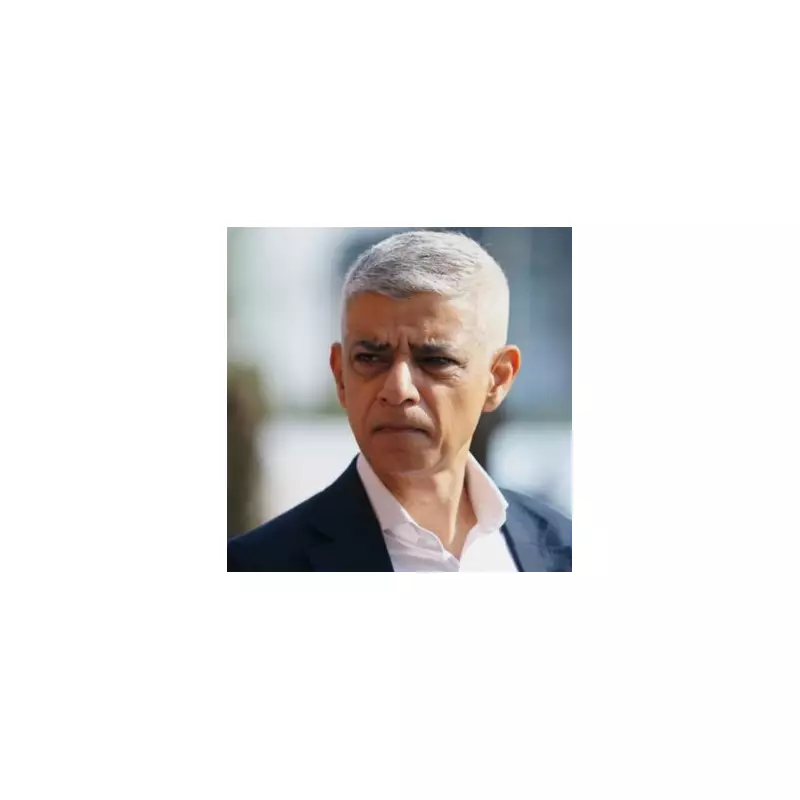
London Mayor Sadiq Khan is facing significant criticism after fresh analysis concluded his controversial expansion of the Ultra Low Emission Zone (ULEZ) has had 'no significant impact' on air pollution levels.
What the Data Reveals
Research from the University of Birmingham provides a mixed picture of the ULEZ scheme's effectiveness. The data confirms that the initial launch of ULEZ in central London in 2019 was highly successful. Within just three months, it contributed to a 19.6% drop in nitrogen dioxide (NO2) levels at roadside sites. Emissions of nitrogen oxides (NOx) saw an even more dramatic fall of 28.8% in the same period between April and July 2019.
However, the study's authors found a starkly different outcome for the 2023 expansion of the zone to cover all of Greater London. For this much larger area, the data detected no significant impact on concentrations of either NO2 or NOx.

A 'Cash Cow' for City Hall?
The findings have ignited a political firestorm. Conservative MP for Bexley and Sidcup, Louie French, stated the data confirms that Londoners who rely on their cars are being used as a 'cash cow' by the Mayor's office. He pointed to the combined financial burden of the ULEZ expansion, a hiked Congestion Charge, Low Traffic Neighbourhoods (LTNs), and new tolls on the Blackwall Tunnel.
Echoing this sentiment, the Mayor of Croydon, Jason Perry, said the analysis reaffirmed his belief that motorists were being 'punished for nothing'. He criticised the policy, stating it delivers 'no cleaner air' while imposing 'higher costs for hardworking families and traders', and called for an end to what he termed 'Labour's war on drivers'.
Expert Analysis and the Road Ahead
Despite the controversy surrounding the expansion, researchers affirmed the value of the original central London scheme. Chengxu Tong, the PhD student who was first author of the study, noted that the 2019 ULEZ introduction was effective in improving air quality and that the benefits spilled over beyond the zone's official boundaries.
Professor Zongbo Shi, who oversaw the research project, offered a crucial perspective, stating: 'Here, we showed that Ulez is an important step, but it is not enough on its own.' He emphasised that London's air pollution still exceeds World Health Organization guidelines, requiring coordinated action across multiple sectors, including industry, commerce, and residential sources, to fully address the problem.