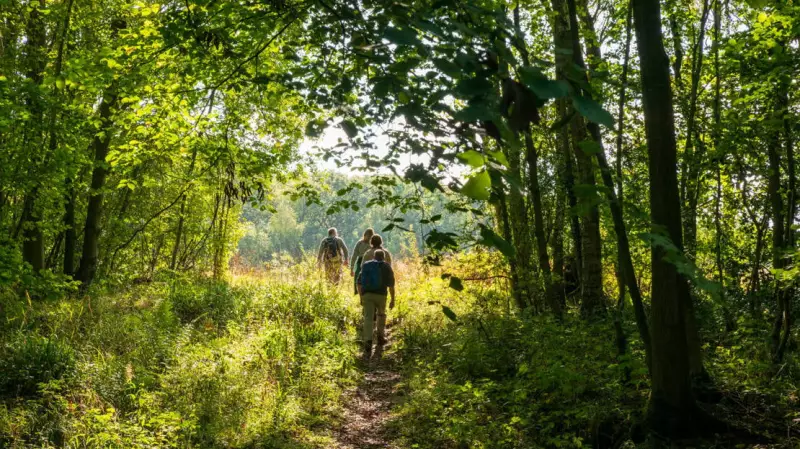
Just a thirty-minute drive from the bustling heart of Birmingham lies a remarkable survivor of the English landscape. Pepper Wood, an ancient woodland recorded as far back as the 13th century, has endured a turbulent history of being felled to the ground not once, but twice. Today, it stands as a cherished Site of Special Scientific Interest (SSSI), a testament to nature's resilience and the power of dedicated community care.
A History of Resilience and Regeneration
Located near Fairfield in Bromsgrove, Worcestershire, Pepper Wood's calm appearance belies its dramatic past. The woodland was first completely felled during the First World War to support the war effort. After it had naturally regenerated, history repeated itself when it was cut down again shortly after the Second World War. Vast swathes of this historic wood vanished to feed industry and national need.
Yet, the wood refused to die. Through a combination of natural regeneration and steady, committed care from local people, it slowly grew back. This recovery has transformed it into one of Worcestershire's most valuable and ecologically rich habitats.

A Thriving Habitat for Rare Wildlife
Step into Pepper Wood today and you enter a vibrant world. Visitors might be lucky enough to spot the local herd of melanistic fallow deer crossing a ride or find the tiny sandy cases of the rare land caddisfly tucked into oak leaves. The air is alive with white admiral butterflies in open glades and the sounds of woodland birds.
Regular sightings include nuthatch, marsh tit, and great spotted woodpecker, while buzzards soar overhead and tawny owls take over after dark. The wood's structure, largely shaped by the traditional practice of coppicing, allows soft, scattered light to reach the forest floor. This supports over 100 plant species, including herb paris, lily-of-the-valley, and broad-leaved helleborine.
Botanical rarities abound, with large and small-leaved lime trees growing together and the scarce wild service tree hiding among the mix. The main entrance to the wood is off Dordale Road to the south, offering walkers stunning views of the Malvern Hills.
Community Action Secures a Future
The wood's modern revival is deeply rooted in community effort. After being purchased in 1981, its stewardship passed to the Pepper Wood Community Woodland Group. They revived the centuries-old practice of 'coppicing with standards', which gives the wood its sunny, varied structure and is key to its biodiversity. Their work was instrumental in the site achieving its SSSI status.
This community spirit continues to drive the wood's recovery. In December 2022, volunteers from Fairfield, local schoolchildren, and staff from Lloyds Banking Group planted around 250 young trees to secure the landscape's future. A small extension at Gorsy Piece, purchased in 2017, filled with young trees and rare grassland flowers in just three years.
Accessibility is a priority, with a flat, surfaced bridleway running north to south from the small car park, suitable for wheelchairs and pushchairs. Other paths weave through the wood's characterful slopes and bridges.
Pepper Wood's story stretches back beyond the wars. During the Industrial Revolution, its charcoal fed over 20,000 iron foundries across the Black Country. By the 1800s, nearby Belbroughton was the world's scythe-making capital, with many tool handles likely starting life as coppiced poles in this very wood.
Now, with guided walks, photography sessions, and seasonal events, Pepper Wood is more than a place to visit. It is a living, growing reminder that with care and commitment, even a landscape cut to the ground can rise again.