Third Major Floating Wind Farm Project Confirmed for Celtic Sea
The Crown Estate has officially confirmed that a developer has been secured for the third and final huge floating offshore wind farm site in the Celtic Sea. This significant announcement completes the trio of major projects set to transform the region into a hub for renewable energy. The developer, Ocean Winds, a joint venture between Spain's EDP Renewables and France's ENGIE, is set to be awarded the rights for the 1.5 gigawatt (GW) site.
Powering Millions of Homes and Boosting the Economy
This latest project joins two other 1.5GW schemes already in development. Norwegian energy firm Equinor and the joint venture Gwynt Glas, comprising EDF and the Irish government's ESB, had previously secured their lease agreements. The Gwynt Glas project is located entirely in Welsh waters off Pembrokeshire, while the Equinor scheme sits in English waters. The newly confirmed Ocean Winds site straddles both jurisdictions.
When all three floating wind farms become operational by the mid-2030s, they will collectively generate a massive 4.5 gigawatts of clean electricity. This is enough to power more than four million UK homes. The development is projected to create over 5,000 direct and supply chain jobs and provide a substantial £1.5 billion economic boost to the region.

Next Steps and Industry Impact
Ocean Winds and The Crown Estate will now work towards finalising an agreement for lease, which is expected to be concluded in the spring of 2026. A key next step will be for the developer to outline its chosen ports for the final assembly and deployment of the enormous floating turbines. Port Talbot in Wales and the Port of Bristol in England have been identified as potential locations for this crucial activity.
Dan Labbad, Chief Executive of The Crown Estate, expressed his pride in delivering on the commitment to secure a developer for the third site. Craig Windram, Chief Executive of Ocean Winds, highlighted the company's decade of experience in pioneering floating wind technology and its confidence in delivering this commercial-scale project.
Energy Secretary Ed Miliband stated that securing this third site strengthens the UK's position as a global leader in floating offshore wind, unlocking the region's potential to deliver clean power and boost energy security. Geraint Evans of the UK Major Ports Group emphasised that the advancement of all three sites is a critical step, with ports playing a fundamental role in the industry's growth.
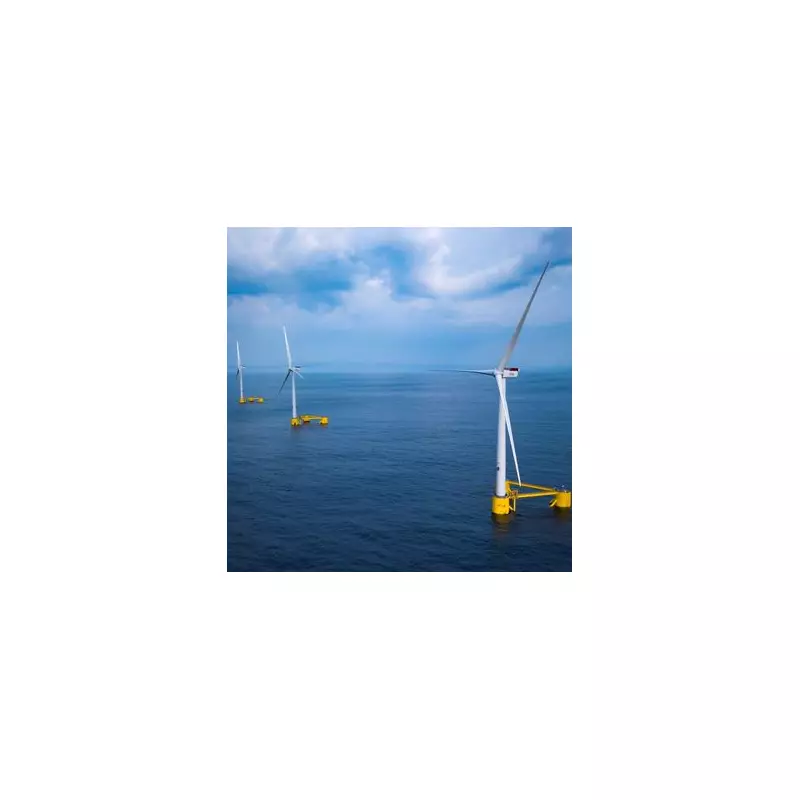
All three project operators will be seeking Contract for Difference (CfD) support from the UK Government to ensure the energy produced is commercially viable. The turbines themselves will be monumental structures, potentially as high as 300 metres – comparable to The Shard in London – mounted on floating platforms the size of a football pitch and anchored to the seabed with massive chains.