Households across the Dudley borough are receiving new bins as the council implements a major overhaul of its domestic waste collection services, driven by new national legislation.
What's Changing for Dudley Residents
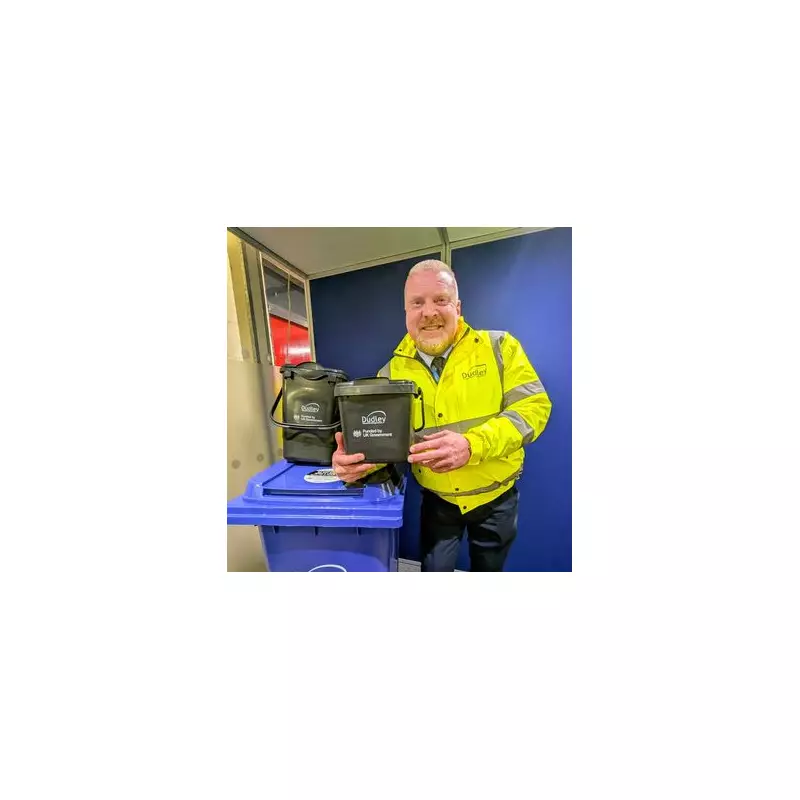
From April 2026, a new legal obligation will require all local authorities to collect food waste separately. Dudley Council is now in the first phase of this compulsory change, delivering 80,000 food waste caddies to homes.
Councillor Damian Corfield, the cabinet member for neighbourhoods, stated the council's commitment to boosting recycling rates. "We are fully committed to increasing the borough's recycling rates and want to make things as simple as possible for our residents," he said.

By the end of March, every eligible household will have received:
- A small kitchen caddy with liners.
- A larger outdoor food waste caddy for weekly collection.
- A new blue wheelie bin for mixed recycling, including cans, plastic, glass, and cartons.
The New Collection Schedule
The new system, starting in the first week of April, will see a fortnightly collection for the new blue recycling bin alongside the existing blue bag for paper and card. The general waste black bin will also be collected fortnightly.
The collected food waste will be taken to a recycling plant to be converted into fuel for generating renewable energy. Residents with communal or shared bins will see the service rolled out to them at a later date.
Funding and the Threat of Privatisation
The changes are funded by government money from Westminster. However, the rollout comes amid a wider national concern that the private sector is attempting to 'muscle in' on local waste collection services.
The Local Government Association (LGA), representing councils in England and Wales, warns that packaging producers, now forced to pay for waste disposal, are lobbying to take control of doorstep collections to cut their costs.
While the private sector claims it can bring a culture of productivity and savings, councils fear this could lead to a reduced, one-size-fits-all service where cost trumps community benefit.
Councillor Arooj Shah, the LGA's environment spokesperson, emphasised: "Decisions about collections and services must remain in the hands of communities, not handed over to producers whose priority will inevitably be profit."