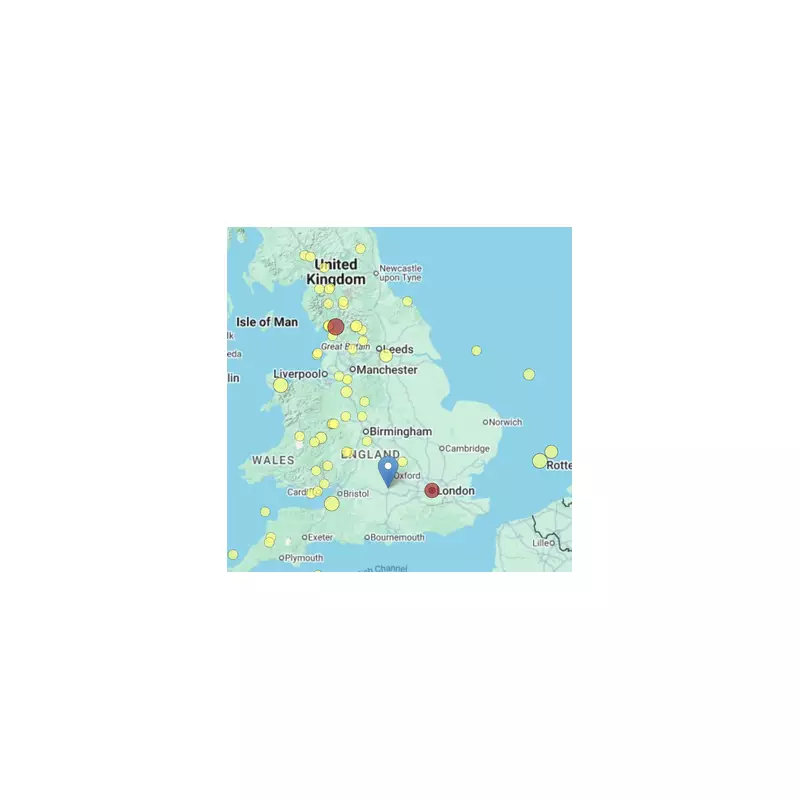
A late-night earthquake with a magnitude of 3.3 struck the North West of England, rattling homes and startling residents across Lancashire and beyond. The tremor, which occurred shortly before midnight, was detected by the British Geological Survey (BGS) and prompted dozens of people to report feeling the ground shake.
Details of the Seismic Event
The British Geological Survey confirmed the earthquake's epicentre was located off the coast of Silverdale in Lancashire. The seismic event was recorded at 11:23 pm on Thursday, December 4. Data indicates it originated at a very shallow depth of approximately 1.86 miles (3 kilometres) beneath the Earth's surface.
Widespread Reports of Shaking
The effects of the tremor were felt most strongly within a 20-kilometre radius of the epicentre. Residents in towns such as Kendal and Ulverston in neighbouring Cumbria reported their homes shaking, with many being woken up by the vibration.

Online, locals quickly shared their experiences. Descriptions ranged from the sensation of "an explosion and vibration coming from underground" to noises resembling "bricks falling or the roof falling in." There were also unverified accounts of the shaking being perceptible as far away as the Fylde Peninsula.
Earthquakes in the UK: A Common but Minor Occurrence
While the event caused alarm, the BGS confirms that no significant damage has been reported. This is consistent with the typical pattern of seismic activity in Britain. The survey detects between 200 and 300 earthquakes in the UK annually, but only a fraction—roughly 20 to 30—are strong enough to be felt by the public. The vast majority are minor and result in no physical harm.
The region has a history of tremors. Previous seismic events have been associated with human activity, including fracking operations near Blackpool. The BGS also notes that it registers vibrations caused by other sources, such as large crowds at football matches.
This 3.3-magnitude quake is the most significant recorded in the area since a 3.7-magnitude tremor was registered near Loch Lyon in Scotland in October. The latest event was picked up by several seismic monitoring stations located across northwest England.