My lovely friends on BBC Radio love to set birdsong quizzes, despite the fact that I am not really an expert. To make matters worse, they try to trick me, and last week two out of four songs were the presenter's daughter pretending to be a bird. I did realise this, so that's two questions correct. I also got the obvious seagull, but they couldn't tell me if it was a black-headed gull or not, and then there was the shrieking magpie where I had brain fog. I got three out of four but not the obvious one.
So I have decided to improve my ID skills with the free Merlin Birdsong app on my phone, and this has been a revelation.
Discovering the Merlin Birdsong App
While on holiday, I sat outside my Scottish lodge, turned the app on, and it picked up 22 different birds - song thrush, willow warbler, nuthatch, wren, collared dove, robin, and a noisy pheasant. I won't go on. As each bird sings, its picture throbs on the phone, so you can start to learn the call. It is pretty blooming amazing.

Spotting the Siskin
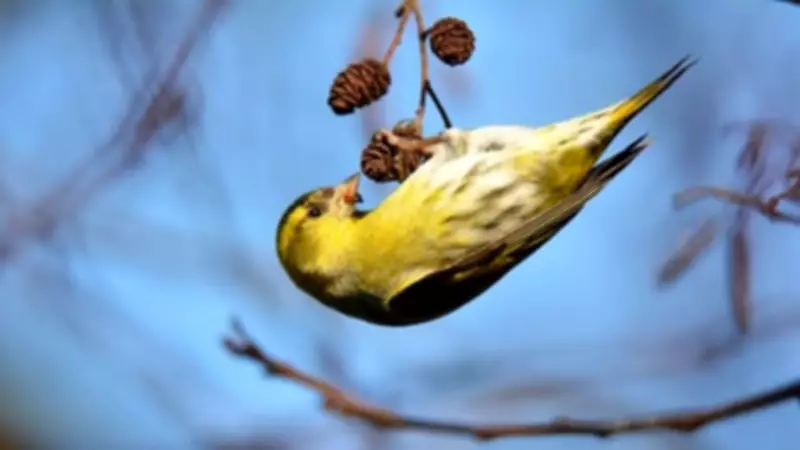
One bird that stood out was the siskin. There were loads of them in the trees around our lodge. This was mainly coniferous forest with a mix of some native woodland. Siskins can be found across the country, but they are more common in Scotland and Wales. We have some on our nature reserves in winter, I am being told.
They nest high up in coniferous trees and feed on the seeds of alder and birch, and will come to bird tables, particularly if you put out nyger seeds. So mixed woodland on the edge of coniferous forest seems like the ideal spot. I don't remember hearing much about siskins in Lancashire, so it was exciting to hear so many on holiday. Many of these will be native birds, but they are joined in spring and summer by their cousins from the continent.
The female siskin builds her tidy nest high up in a conifer tree, using twigs, lichen, and feathers. She incubates the eggs alone, but both parents feed the chicks.
Identifying the Siskin
Then I saw a couple of these beautiful birds while I was walking with the dog. Siskins are green-and-yellow, with bright yellow barring on their black wings. Males have a black crown, which I like because I wear black beanie hats. The female is grey-green and lacks the black cap.
It is so exciting to come across a bird for the first time and exciting that I now know at least one more bird song to add to my small knowledge bank.
Learn More About Bird Songs
You can learn more about bird songs on the many guided walks around Wildlife Trust nature reserves. Then you won't get caught out on the radio.
By Alan Wright for The Wildlife Trust for Lancashire, Manchester and North Merseyside. To become a member, go to the website at www.lancswt.org.uk or call 01772 324129. For more information about Cheshire Wildlife Trust, call 01948 820728 or go to www.cheshirewildlifetrust.org.uk.
We want to hear from you: Alan found plenty of siskins on his holiday, but have you spotted or heard one closer to home? Tell us in the comments below!