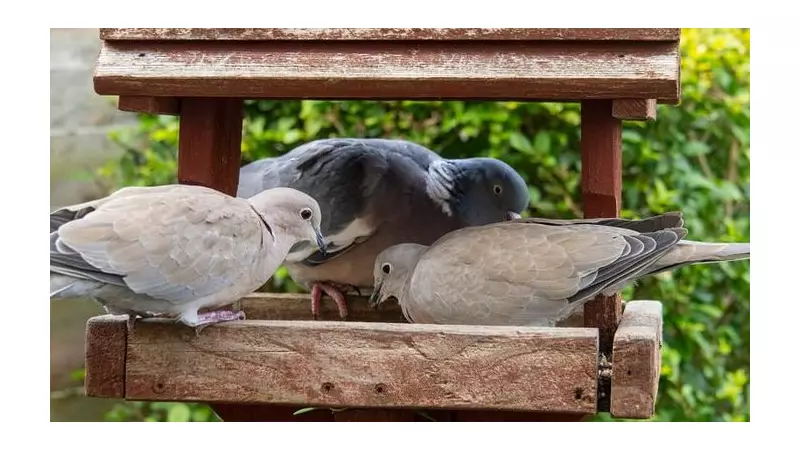
A Window on the Wild: The Morning Drama at the Garden Bird Table
Working from my dining table, which doubles as a home office, offers a surprisingly wild experience. The lively scene unfolding at the bird table just outside my window frequently pulls my attention away from virtual meetings. Currently, the spotlight is on robins, with two engaged in what seems to be a territorial dispute or perhaps a lovers' quarrel.
The Early Birds and the Arrival of the Heavier Visitors
In the early hours, blackbirds, great tits, starlings, and a pair of collared doves are typically the first to arrive, eagerly pecking at worms, seeds, and raisins. However, the last couple of days have seen a shift in dynamics, with larger avian visitors taking centre stage.
Our bird tables literally rock under the considerable weight of two substantial wood pigeons and three magpies. These five hungry characters ensure that the feeding station is completely cleared by mid-morning, leaving little for later arrivals.

The Amusing Antics of the Wood Pigeon
The wood pigeons provide particular amusement. They often perch on the garden wall, rocking back and forth as if gathering the courage to make the leap onto the bird table. Their eventual landing is quite an event, causing the table to sway and scattering smaller birds from the buffet. It's little wonder, given that a wood pigeon weighs about the same as a football—a fact that brings back chilly memories of school matches.
As I write, one pigeon is feeding inside the bird table while its mate waits patiently on top. Now, they are feeding together, leaving no room whatsoever for a sparrow observing from the wall. The wood pigeon, our largest pigeon species, is easily identified by its pink breast, distinctive white neck patch, and the white markings visible on its wings during flight.
The Striking Yet Controversial Magpie
Weighing in at roughly half the mass of a wood pigeon is the magpie. These birds often appear larger due to their longer build and striking black-and-white plumage. As members of the crow family, magpies have garnered a somewhat negative reputation for raiding nests and taking eggs and fledglings during spring—a harsh but natural behaviour.
We tend to admire birds of prey for their hunting prowess yet are less forgiving of magpies and their more covert tactics. For their size, they are remarkably adept thieves. Interestingly, the magpies in my garden display a degree of politeness, often waiting for pigeons, doves, and blackbirds to depart before moving in to hoover up the remaining seeds.
A Continuous Cycle of Garden Activity
It's entertaining to watch the wood pigeons steadfastly refuse to budge, yet always keep a watchful eye on the black-and-white spectators nearby. A particularly impatient robin has just bounced off the two pigeons currently squeezed onto my bird table. That robin will likely find ample food on the ground below, as these larger birds are notably messy eaters.
As the pigeons finally fly off, a beautiful collared dove has just landed, and I expect its partner to join shortly. This constant cycle of activity highlights how simple it is to bring nature right to your doorstep or window by installing bird tables and feeders.
Planning for a Wildlife-Friendly Spring and Summer
Now is an ideal time to start planning your wildlife garden for the coming spring and summer seasons. Introducing elements that attract wildlife can significantly enhance your daily life and well-being.
Watching the birds this morning has lifted me from a sense of gloom about politics and the weather, bringing numerous smiles—and it's only 9 am. The simple pleasure of observing garden wildlife offers a genuine boost to one's mood and outlook.
By Alan Wright from The Wildlife Trust for Lancashire, Manchester and North Merseyside.