Primary School Teacher with Heart and Stroke History Takes on London Marathon for Brain Injury Awareness
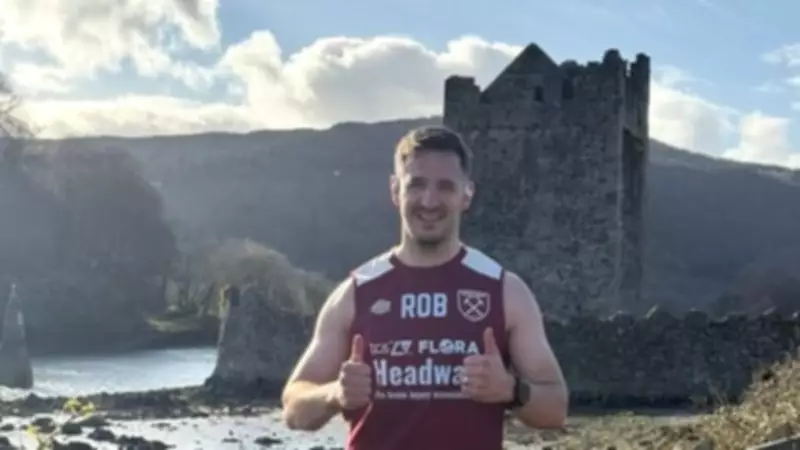
A dedicated primary school teacher, who has undergone two open heart surgeries and survived a stroke, is set to run the London Marathon to raise crucial funds and awareness for brain injury support. Rob Belt, originally from Lincoln in the East Midlands, experienced a life-altering stroke at the young age of 24 in December 2017. Now 33 and residing in Newry, Northern Ireland with his wife and two sons, he will lace up his running shoes on April 26 to support Headway UK, a nationwide charity focused on improving life after brain injury.
A Sudden Stroke and Its Aftermath
Rob, who was born with an atrial septal defect in his heart and had his first open heart surgery at just 18 months old, was driving home from work in 2017 when he unknowingly suffered stroke symptoms. "I had pulled over to post a parcel, and as I leant across to grab it, I was suddenly overwhelmed with dizziness, double vision, nausea, and heat," he recalled. "I tried to call my wife but couldn't operate my phone, so I had to use Siri to reach her."
Despite feeling extremely unwell, Rob attempted to go to work the next day due to the proximity of his Christmas break. "I lasted about an hour, but every light or screen was painfully bright, and my headache worsened," he said. A visit to his GP led to immediate referral to ambulatory care, where a CT scan revealed a large stroke in the cerebellum region of his brain.

Medical Challenges and Recovery Journey
Rob spent a week in the hospital stroke ward, where doctors discovered that a patch fitted in his heart during childhood had lifted slightly, potentially causing or contributing to the stroke. Faced with an ultimatum of surgery or lifelong medication, he opted for a keyhole procedure in December 2018, which was unsuccessful, followed by open heart surgery in March 2019—just four months before his wedding.
Since the stroke, Rob lives with ongoing symptoms commonly associated with brain injury, including:
- Balance and coordination difficulties
- Chronic fatigue
- Aphasia, a communication disorder causing word mix-ups or omissions
"I really notice my aphasia in high-pressure situations, like job interviews, where I lose my train of thought," Rob explained. "I also deal with social anxiety and cognitive overload. Simple tasks like shopping at Tesco felt overwhelming early in my recovery, with too many moving parts to process."
Inspiring Progress and Marathon Mission
Despite daily challenges, Rob has advanced in his teaching career and fitness journey. "Nearly nine years on, I'm incredibly grateful to run again and for Headway UK giving me this marathon opportunity," he said. "Their support and aftercare for families are invaluable, helping everyone understand a survivor's experience without overwhelming explanations. Brain injury is often hidden, so educating the public on its varied impacts is crucial."
Eden Harlow, fundraising coordinator at Headway UK, praised Rob's efforts: "Rob bravely shares his story to highlight that brain injury can happen to anyone at any age. His passion for raising awareness is inspiring, and his marathon fundraising will significantly support others facing life after brain injury."