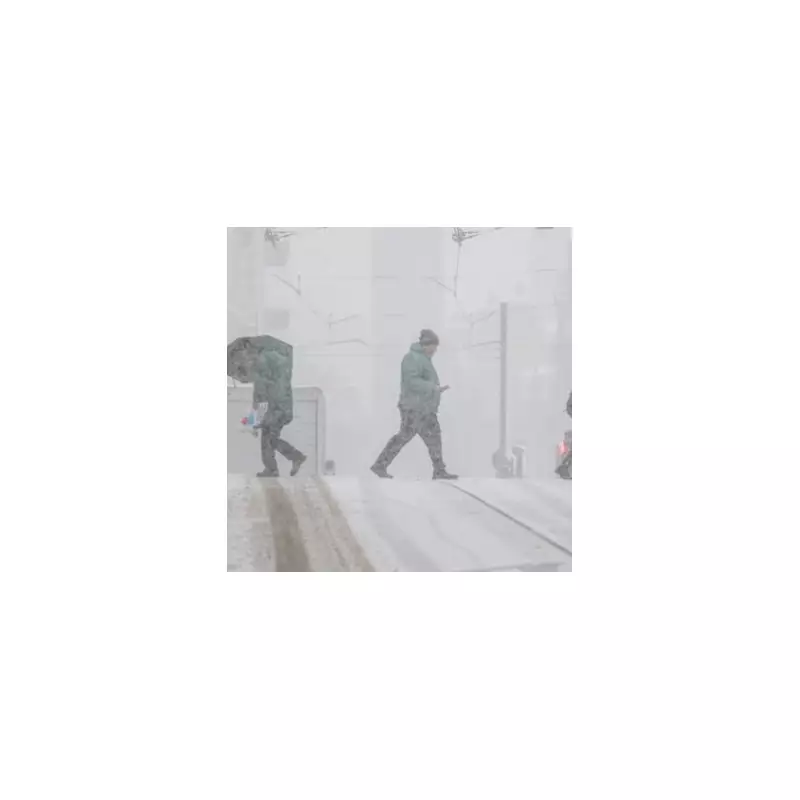
The United Kingdom is preparing for a significant winter onslaught, with forecast maps indicating a widespread snowstorm bringing accumulations of up to 5.5 inches (14cm) around New Year's Day.
Widespread Snow Blanket Forecast
Data from WX Charts, which utilises Met Desk information and the GFS advanced modelling system, paints a stark picture for the turn of the year. The models predict a band of snow stretching for around 600 miles, from Scotland down through to the southeast of England.
The most severe conditions are expected in northern England, where the deepest snow will settle. However, East Anglia, Norfolk, and Suffolk are also in line for heavy flurries as plunging temperatures grip the eastern side of the country. Daytime temperatures could struggle to reach -5°C in parts of England in the days following Christmas.

The Lone Escape Zone
According to the projections, only one corner of the nation appears likely to avoid the whiteout. The southwest of England, encompassing Devon and Cornwall, along with southwest Wales, is currently modelled to escape the snow on January 1st.
This means major population centres elsewhere will face disruptions. The Midlands, including Birmingham, alongside the south of England, the Home Counties, and Greater London, are all forecast to see snow. The northeast is set to be worst-hit, with Tyne and Wear, Northumberland, Durham, Cumbria, and all of Yorkshire facing the highest accumulations.
Colder, Settled Pattern Ahead
The snowy spell is expected to follow a colder, drier Christmas Day. BBC Lead Weather Presenter Sarah Keith-Lucas outlined the pattern, stating: "In the days following Christmas higher pressure is expected to build in from the north-east."
She added that this high pressure will bring a reduction in wet and windy weather, replacing it with "slightly colder, more settled conditions." Looking further ahead to the new year, temperatures are predicted to be around average or a few degrees below, with an increased risk of overnight frost and fog becoming a hazard.
Residents across most of the UK are now advised to monitor the latest forecasts and prepare for potential travel disruption as the year turns, with only the far southwest looking set for a relatively snow-free start to 2026.