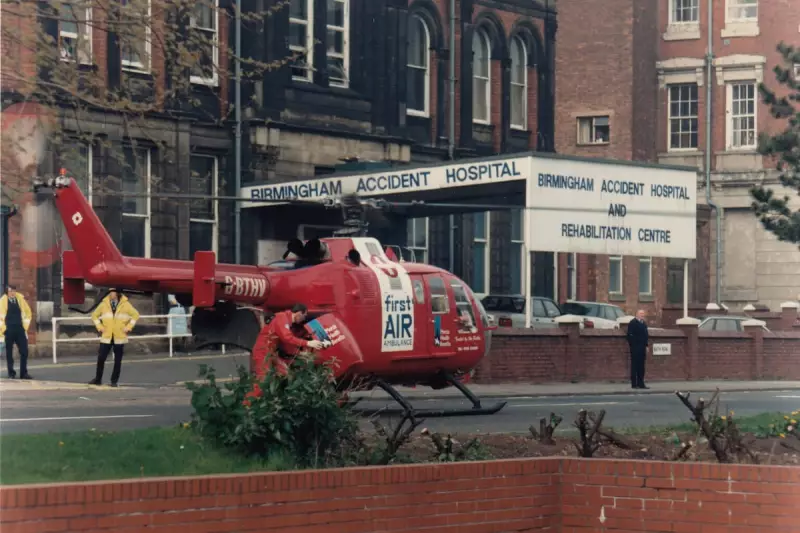
During the darkest days of World War II, as Birmingham endured the relentless bombing campaigns of The Blitz, an extraordinary medical institution emerged from the crisis. The Birmingham Accident Hospital, affectionately known as 'The Acci', opened its doors in 1941, establishing itself as the world's first dedicated trauma centre and beginning a legacy that would transform emergency medicine globally.
The Birth of a Medical Pioneer
Established at the former Queen's Hospital site, The Acci was conceived to address a critical need: treating the countless victims of Hitler's bombing raids. However, its mission quickly expanded beyond wartime casualties. With inexperienced workers flooding into wartime factories, industrial accidents had surged by 40 per cent, creating another stream of patients requiring urgent care.
The hospital launched with 322 beds, though remarkably, 83 located on the top floor remained unused due to air raid risks. This pioneering institution operated for over five decades before closing in 1993, but its innovative approach to trauma care continues through the work carried out at Queen Elizabeth Hospital's trauma centre in Edgbaston.

Groundbreaking Work and Notable Patients
The Acci's influence extended far beyond its original wartime purpose. Before crash-helmets became compulsory, the hospital conducted vital research that helped hundreds of cyclists seriously injured on Britain's roads. In 1974, when terror struck Birmingham with the pub bombings, victims were rushed to The Acci, located merely a mile away from Bath Row.
The hospital attracted widespread recognition, including praise in the House of Commons in 1944 when Sir Patrick Hannon, MP for Moseley, declared: "The hospital is giving the lead in the rehabilitation and restoration of injured and wounded men to make them fit for industry, and their work should be known throughout the length and breadth of the land." The institution even hosted royal visits, including Princess Diana in 1990.
A Lasting Legacy in Modern Medicine
The recent launch of Professor Ian Greaves' book "The Acci" at Queen Elizabeth Hospital brought together leading medical professionals and military personnel to celebrate the hospital's enduring impact. Sir Keith Porter, Emeritus Professor of Clinical Traumatology, who commissioned the book, emphasised The Acci's revolutionary role.
"Birmingham Accident Hospital was at the forefront in almost every clinical advance from the wide introduction of antibiotics to the establishment of critical care in trauma," Sir Keith noted. "What was learned on the ground there, in what was a hugely innovative centre of advanced trauma care and rehabilitation, were the principles which underlie all of today's advanced civilian and military trauma care."
The hospital's establishment was made possible largely through generous donations from local factories, demonstrating community support for this visionary project. Author Ian Greaves, a military emergency medicine consultant who worked at both The Acci and Selly Oak Hospital, brings unique authority to the subject, having overseen emergency medicine provision in conflict zones like Iraq and Afghanistan.
The principles pioneered within The Acci's walls continue to save lives worldwide, proving that this Birmingham institution's groundbreaking work during Britain's most challenging period created a medical legacy that endures to this day.