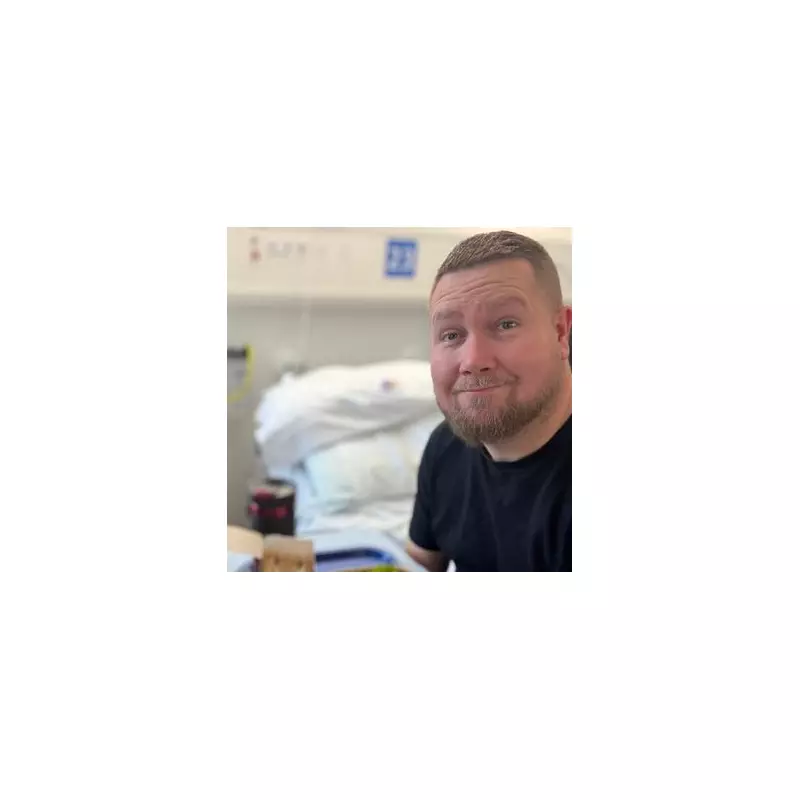
A popular radio presenter from Tamworth has spoken out about the devastating stroke he suffered at just 41 years old, revealing how his first Christmas following the medical emergency became a profoundly lonely experience.
The Silent Onset of a Medical Crisis
Chris Williams, a well-known voice on Radio Tamworth, never imagined that something as silent as high blood pressure would bring his life to a sudden halt. The crisis began in November 2024 with a sharp, persistent pain behind his left eye.
"It started with a sharp, radiating pain on the left side of my head, buried deep behind my eye," Chris recalled. "Not unbearable, just there – but constant."

After six days of discomfort, his partner insisted he seek medical help. Following a call to NHS 111, Chris was advised to go to hospital, where he was diagnosed with high blood pressure and sent home.
'Then Came The Curtain': The Stroke Strikes
Days later, his condition dramatically worsened. "The vision in my right eye went fuzzy," he said. "I thought maybe I needed a nap. But then came the curtain – a black cloud sweeping across my vision diagonally. That's when I knew this was something else."
With his daughter present, Chris attempted to speak but found the words wouldn't form. "I'm having a sssss... ssss...' – it wouldn't come out," he explained. His daughter finished the sentence for him: 'A stroke?'
Rushed to hospital for a second time, Chris faced an agonising wait. "It felt like I was slipping away and no one noticed," he confessed. While a CT scan appeared clear, an MRI revealed the truth: a 3mm bleed in the basal ganglia – a tiny but devastating brain haemorrhage.
A Lonely First Christmas After Stroke
After six nights on the stroke ward, Chris returned home, but the Christmas of 2024 was a period he will never forget. He struggled to keep up with conversations and often couldn't find the words he wanted to say.
"That frustration, knowing exactly what I wanted to say but not being able to get it out, was exhausting and made me withdraw more than I'd like to admit," Chris shared.
The hardest part was feeling invisible. "I felt like I was being spoken around rather than to," he continued. "It was a very lonely kind of presence."
New research from the Stroke Association confirms Chris's experience is far from unique. Their survey of 1,000 stroke survivors found:
- Almost half (46%) now feel negatively about Christmas
- Two thirds (66%) feel frustrated about not being able to do things they could before their stroke
- Almost a third (30%) feel like a burden to family and friends
- 28% could not cook Christmas dinner, while 26% could not visit friends and family
Approximately 100,000 people in the UK have strokes each year, with 1.4 million stroke survivors now living in the country. For about 85,000 people, this Christmas will be their first since having a stroke.
Finding Hope and the Path to Recovery
One year on, Chris's outlook has significantly improved. Through determination and recovery, he has returned to his radio show and is feeling more like himself.
"This year, I'm feeling hopeful. I've come a long way," he said. "I still have a few balance issues and the occasional moment where the words don't come, but I feel a million times better than I did back then."
Chris is genuinely looking forward to Christmas 2025, anticipating being "more present, more involved, and more like myself."
The Stroke Association has released a short film, 'Still Christmas', featuring home videos and photos shared by stroke survivors, narrated by celebrities including Brian Cox and Alison Steadman. The film aims to highlight the realities faced by stroke survivors during the festive season.
Juliet Bouverie OBE, CEO of the Stroke Association, emphasised: "A stroke can have physical and cognitive impacts, as well as emotional trauma... But, with strength, determination and the right support, recovery is possible."

The charity encourages people to support their work this Christmas through donations, volunteering or fundraising to help more stroke survivors find their way back to life after a stroke.