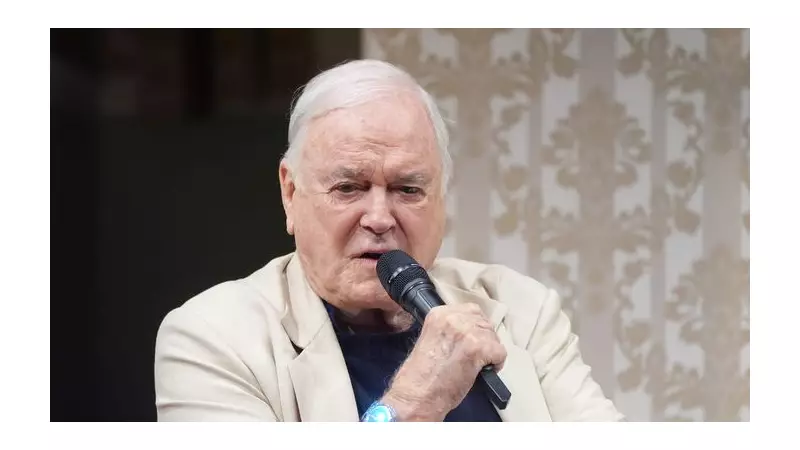
Comedy Legend Confronts Mental Health Struggle
John Cleese, the iconic comedian behind Monty Python and Fawlty Towers, has made a startling revelation about experiencing a severe mental health crisis following his third divorce. The 80-year-old star disclosed that he endured what he describes as 'two and a half to three months of a nervous breakdown with suicidal thoughts' after separating from psychotherapist Alyce Faye Eichelberger in 2008.
The Road to Recovery and New Perspective
Speaking about his documentary John Cleese Packs It In, which recently screened in selected cinemas, Cleese told PA news agency that the period was 'very unpleasant', particularly the mornings when he would wake up feeling intensely depressed for several hours. However, his recovery began when doctors prescribed a mild dose of antidepressants. 'Once they got me on a mild dose of an antidepressant, then I got rid of it fairly quickly and was performing again within about three or four months,' he explained.
Remarkably, Cleese now views the experience positively, stating it provided him with 'a much more realistic grasp of what was important in life'. The comedy veteran continues to tour across Europe, partly due to financial pressures from the divorce, with his documentary following him to cities including Gothenburg, Ghent and Rotterdam.

Comedy Philosophy and Modern Challenges
Despite his age, Cleese remains passionate about performing, driven by the thrill of audience laughter. He's overcome earlier struggles with stage fright and now feels warmly received by fans. The documentary crew had full access to his life, which didn't bother the star who stated: 'I don't have anything particularly to hide.'
Cleese also shared his thoughts on modern comedy and 'woke' culture, describing it as a broad spectrum with both positive and problematic extremes. 'I feel that we're in danger of not understanding the nature of comedy,' he remarked. 'All comedy is critical - we laugh at people torn apart by ridiculous, egotistical emotions like competitiveness or anger.'
However, he drew a clear distinction between observational humour and deliberately hurtful jokes. 'When people make pretend jokes that are intended to hurt people's feelings and make them feel bad about themselves, it's wrong, as simple as that,' he firmly stated.