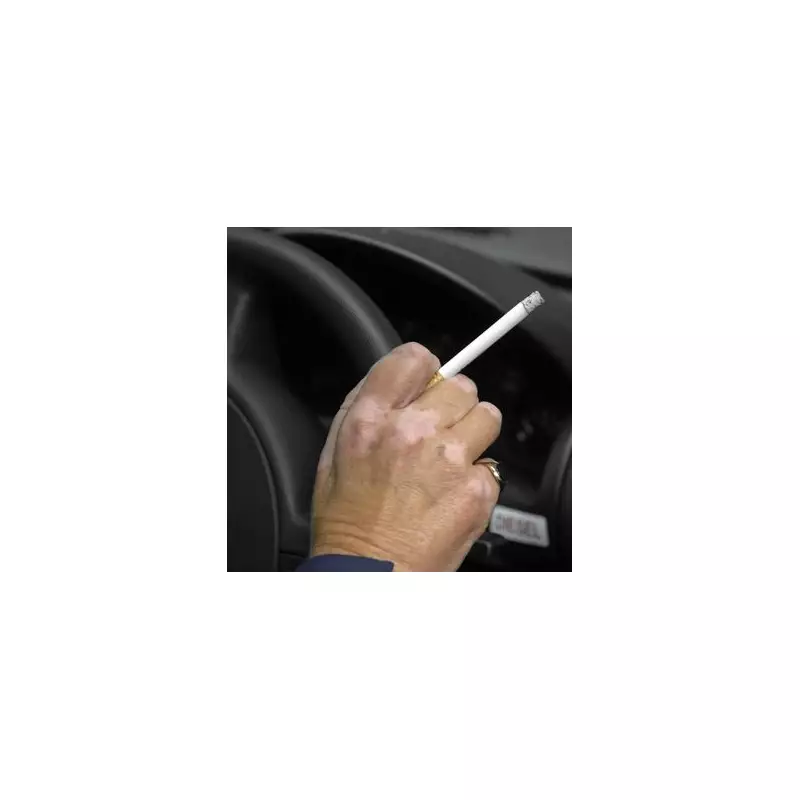
New figures released by Solihull Council have revealed a mixed picture for smoking prevalence across the borough. While the overall rate sits comfortably below the national average, significant concerns persist about the number of smokers in the north of the area.
Stark North-South Divide in Smoking Prevalence
The council's report, focusing on data from 2022/23, shows that 12.8 per cent of adults in Solihull are smokers. This compares favourably to the England-wide average of 14.7 per cent. However, this headline figure masks a stark geographical divide within the borough itself.
When the data is broken down by ward, the statistics for northern Solihull are alarming. The smoking rate in Chelmsley Wood is 26.7 per cent, closely followed by Kingshurst & Fordbridge at 24.3 per cent and Smith’s Wood at 23.5 per cent. Castle Bromwich also registers above the borough average at 14.7 per cent.

Council Targets Action to Tackle Health Inequalities
These figures were discussed at a recent decision session for Councillor Tony Dicicco, the cabinet holder for adult social care and health. Councillor Dicicco expressed his disappointment, stating, "Kingshurst and Fordbridge, Chelmsley Wood and Smith’s Wood are still up around the 25 per cent mark – that’s one in four adult residents."
He directly linked the high smoking rates to broader health inequalities, emphasising that "one of the things that really improves people’s health is to get them to stop smoking." The government has set an ambitious national target to reduce smoking rates to 5 per cent or less by 2030. Council officers and councillors agree that achieving this in Solihull will require specifically targeted action in its northern communities.
Focused Initiatives and The Challenge of Vaping
In response, the council confirmed that its stop-smoking initiatives are being deliberately concentrated in areas with the highest prevalence. Michelle Hughes, a council officer, explained, "Everything we are doing is targeted around where we see the higher rates. For example, the clinic we operate will be more populated around areas with higher smoking prevalence."
The virtual meeting, held on November 25, also addressed the issue of vaping. Councillor Samantha Gethen raised concerns about teenage vaping within secondary schools. In reply, officers acknowledged the need for more effective ways to reach young people, beyond traditional school resources.
The council's message on vaping remains clear: while it is considered better than smoking for existing adult smokers, the firm advice for non-smokers, especially young people, is not to start. The council is now exploring new strategies for public health communication as it continues its fight to reduce smoking rates across all of Solihull.