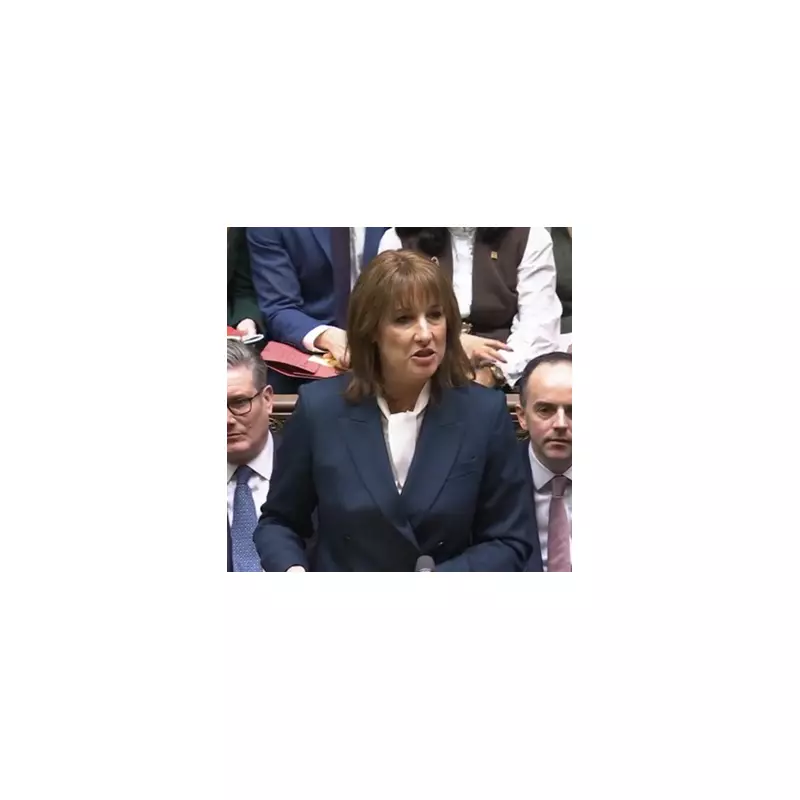
Chancellor Rachel Reeves has delivered her second Budget to the House of Commons, outlining a series of tax increases designed to bolster the UK's public finances. The details were revealed ahead of her official speech after the Office for Budget Responsibility (OBR) published its economic analysis early.
Economic Forecasts and Income Tax Changes
The independent fiscal watchdog, the OBR, has presented a mixed economic picture. It has upgraded its growth forecast for this year from 1% to 1.5%. However, it has simultaneously downgraded its predictions for the subsequent four years, indicating longer-term challenges.
A central measure announced is the extension of the freeze on income tax thresholds until 2030. This policy, often labelled a 'stealth tax', means that as wages increase, more people will be pulled into paying income tax for the first time or into a higher tax bracket. The OBR estimates this freeze will create 780,000 more basic-rate taxpayers and 920,000 more higher-rate taxpayers by the 2029/30 tax year, raising approximately £7.6 billion that year.

New Taxes on Pensions, Property, and Electric Vehicles
In a significant move for retirement planning, the Chancellor will introduce a new cap on pension contributions made through salary sacrifice schemes. Currently unlimited, these contributions will now be subject to National Insurance contributions if they exceed £2,000 per year from 2029. This is projected to raise £4.7 billion in 2029/30.
Owners of high-value properties will face a new council tax surcharge, effectively a 'mansion tax' on homes worth more than £2 million. The surcharge will be banded, starting at £2,500 for properties valued between £2 million and £2.5 million, rising to £7,500 for those worth £5 million or more. This measure is set to generate £0.4 billion in 2029/30.
In a bid to replace lost revenue from fuel duty, drivers of electric vehicles (EVs) will be subject to a new road tax. The Chancellor announced a charge of 3p per mile for electric vehicles.
Spending Measures and Cost of Living Support
Amidst the tax rises, the Budget also includes several spending commitments. A major social policy change is the scrapping of the two-child benefit cap, which prevented parents from claiming Universal Credit for third and subsequent children. This move, long called for by anti-poverty groups, is estimated to cost £3 billion by 2029/30.
To help with travel costs, the government will extend the 5p cut to fuel duty, maintaining the effective rate at 52.95p per litre. Furthermore, rail fares will be frozen for one year, providing relief for commuters across the country.