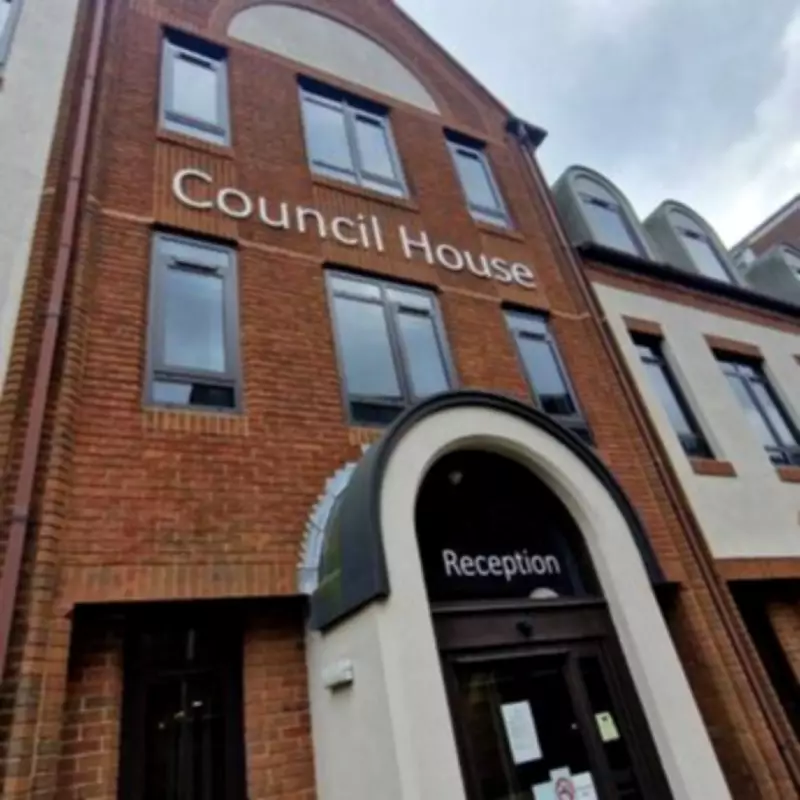
Solihull Residents Face Council Tax Warning as Financial Pressures Mount
Solihull Council has issued a stark warning about future council tax increases, revealing that substantial funding gaps may force rises above current limits in coming years. While a 4.99 per cent increase has been confirmed for this financial year, officers are preparing residents for potentially higher increases in 2027/28 and 2028/29 to balance the authority's books.
Dire Financial Position Laid Bare
The council's financial challenges have been detailed in a new report ahead of this year's budget setting process. Andrew Felton, the authority's director of resources, has warned that funding gaps for the next two financial years are "so substantial" that balancing the budget through savings alone may prove impossible.
"The funding gaps for 2027/28 and 2028/29 are so substantial that at this stage there is a significant risk it will not be possible to balance the budget in those years through savings alone," Mr Felton writes in his report to the resources and delivering value scrutiny board.

Emergency Support and Current Measures
Last year, the council avoided its worst-case scenario after successfully securing exceptional financial support from the government, receiving more than £40 million. This emergency funding, described as an 'overdraft' facility, enabled the authority to cover day-to-day service costs through asset sales or borrowing.
Several austerity measures remain in place, including non-essential spending controls and rigorous vetting of all recruitment decisions. A paid resignations scheme implemented last year has also reduced staff numbers as part of ongoing cost-saving efforts.
Future Tax Increase Plans
Under normal circumstances, local authorities can only increase council tax by 4.99 per cent without holding a local referendum. However, councils can apply for exceptional financial support to exceed this limit.
Mr Felton confirms that next year's budget can be balanced "without recourse to EFS" but warns that the council will need to seek permission to increase council tax by up to 9.99 per cent in both 2027/28 and 2028/29.
"Given the scale of the funding challenge and the council's reserves position – and with confirmation no resolution to this position can be expected from central government – as part of next year's budget process the council will need to seek permission under EFS to increase council tax by up to 9.99 per cent in both 2027/28 and 2028/29," the director states.
Political Responses and Accountability
The council's financial management has become a contentious political issue, with opposition leaders criticising the Conservative-run administration. Councillor Ade Adeyemo, leader of the Liberal Democrat group, stated: "Residents will be paying the price for Conservative's mismanagement of Solihull's finances for years to come."
At a recent cabinet meeting, Green Party group leader Councillor Max McLoughlin challenged council leader Karen Grinsell on the state of the authority's finances. Ms Grinsell responded: "We are all working to address the financial challenge. Over the years we have been underfunded by national government, we know that. We rise to the challenge though."
Budget Timeline and Decision Process
The cabinet is scheduled to agree budget recommendations, including any council tax rise, on February 12. Following this, the full council will meet on February 26 to approve this year's budget, setting the financial direction for the coming year while preparing residents for potentially more challenging decisions in future years.
The council's financial report reveals a "materially worse" funding outlook than previously assumed, highlighting the ongoing pressures facing local government finance across the region and the difficult choices facing both councillors and residents in the years ahead.