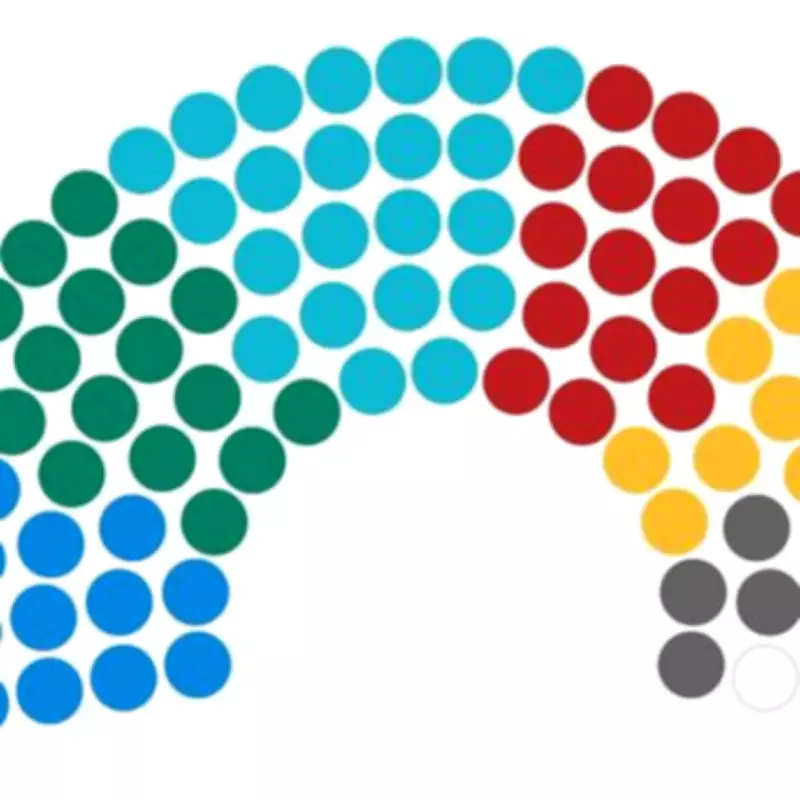
In the end, it was an outcome as diverse and contradictory as the city it serves. Birmingham City Council is now under no overall control following the declaration of election results on Friday, May 8. Every colour of the political spectrum is represented almost equally by councillors who must navigate how to work together for the good of the city.
The Reform tsunami that has broken over other councils, including Sandwell and Walsall, did not engulf Birmingham, nor even come close. It is the biggest party in the city after taking 22 seats out of a possible 99 declared so far, with two to come on Monday, but that is a much lower return than predicted. The party remains way off the magic number of 51 that would be a majority on the 101-seat council.
The outcome also does not give Reform a clear mandate to lead negotiations over possible coalition arrangements, with the Green Party only three seats behind with 19 seats. The Greens were cockahoop over that surge, though there was frustration over the poor funding of their campaign that meant some candidates received little financial help to fight for votes or leaflet households. Activists believe it could have done even better.

Also in the anti-right defensive wall is a down-but-not-done-yet Labour, which ended up with 34 seats fewer than it started the week. It has 17 seats, some secured by tiny margins. The battling Liberal Democrats also kept hold of 12 seats in all, though there was particular sadness at the loss of Paul Tilsley, a well-respected and loved veteran councillor of 45 years. His seat was one of two taken by Reform UK in Sheldon.
There were 13 winning independent candidates, though several of them distanced themselves from the celebrations hailing their victories by Shakeel Afsar and Akhmed Yakoob under the umbrella of Independent Candidate Alliance. They included Sam Forsyth in Quinton, Martin Brooks in Harborne, and Amar Khan in Stockland Green, all ex-Labour members. Others, including Harris Khaliq in Ward End, Nosheen Khalid in Alum Rock, Abdul Choudhry in Aston, and Jamil Khan in Sparkbrook, claimed they were not part of the Independent Candidates Alliance.
Residents in some parts of the city appeared to have decided that, if they could not bring themselves to vote Labour this time, they did not want to let a Nigel Farage-led Reform sneak by instead. The predicted collapse of the local Conservatives vote to Reform did not wholly transpire, with holds and even two gains for the party in Sutton Coldfield among its bright spots. It did lose seven seats in the south west of the city, including two in Bartley Green, two in Longbridge and West Heath, Frankley Great Park, Rubery and Rednal, and Northfield. It also lost councillors in Kingstanding and Oscott.
Whether Tory members decide to jump in with Reform to create a right-wing coalition, bolstered by some Independents, was unclear, but one Conservative councillor suggested it was unlikely, despite an assumed fit. Conservative group leader Robert Alden said: "Birmingham has spoken and while no party is even 50 per cent of the way to control, it is clear residents wanted the Labour administration out. The onus is on all councillors to put fixing the city and Brummies first." He added: "We will seek to work with councillors who share our vision for cleaning up Birmingham to try and deliver for residents."
Brummies United Against Racism and Hate Crime has already called on councillors of all political parties to work together to unify against racism and hate. It said the results mirrored the divisive and fractured state of UK politics. "Reform failed to secure the majority they desperately wanted. However, residents will understandably be concerned about Reform gains across the country, about how Birmingham City Council will operate under no overall control, and how this will impact them. We vow to double our efforts to bring people together and protect their rights, and we urge people to join us."

Over this weekend and Monday, all the parties locally will gather to hold their annual meetings and select a leader to represent them during the fraught negotiations that will follow. Any coalition hoping to form a majority group needs to command 51 seats or more, and ideally do so in time for the first full council meeting of the new term, on May 19. Informal discussions between group members are already well-advanced, as people examine which differences in values and policy they are prepared to negotiate, and where their red lines lie.
An array of possible outcomes lie in store for Birmingham after an historic election day. There were 101 seats up for election, with 99 declared. A recount in a two-seat ward, Glebe Farm and Tile Cross, takes place on Monday. The position so far is: Reform - 22 seats, Greens - 19 seats, Labour - 17 seats, Conservatives - 16 seats, Independents - 13 seats, Liberal Democrats - 12 seats.