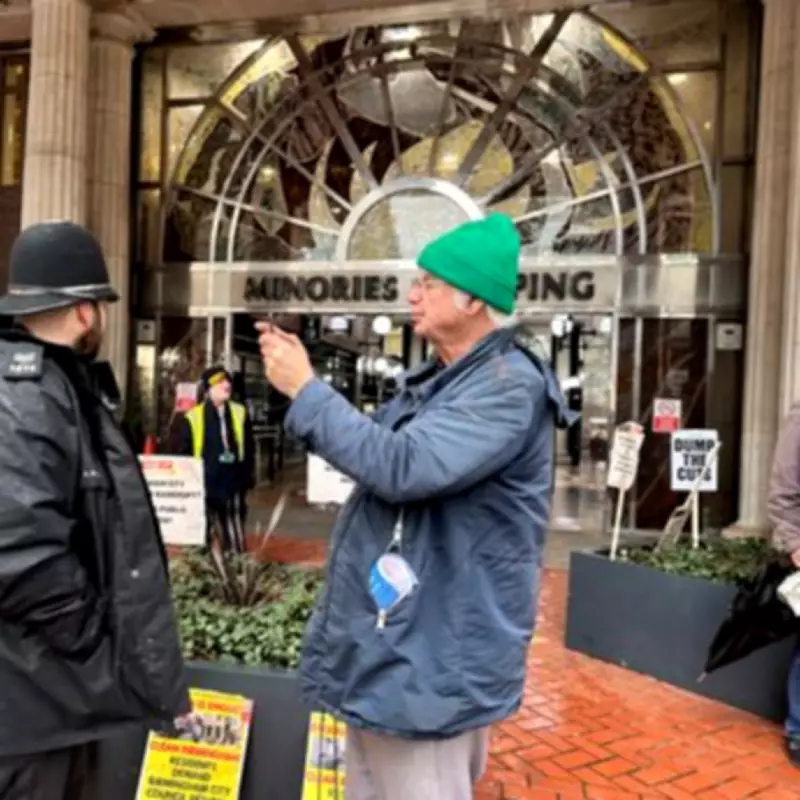
Birmingham City Council Awaits High Court Decision on Bin Protest Injunction
A High Court judge has postponed his ruling on Birmingham City Council's application for an injunction aimed at preventing protesters from obstructing bin lorries. Mr Justice Pepperall decided to reserve his decision after hearing arguments from the council and two residents during a hearing at Birmingham County Court on Friday, January 13.
Delay Frustrates Council's Efforts to Ensure Unhindered Bin Collections
The council's urgent bid to ban anyone from slowing or stopping its bin trucks across the city has been met with a delay, as the judge now has up to three months to deliver a written verdict, though it is anticipated much sooner. This setback hampers the council's attempts to guarantee daily bin collections proceed without interruption, as it struggles to clear a backlog of bin bags and flytipping accumulated over weeks of disruption.
Stuart Richardson, a trade union activist and retired lecturer, opposed the application in court, labeling the injunction bid as "utterly draconian" and comparable to measures in a "police state." If the council ultimately succeeds, individuals found in contempt of the injunction could face imprisonment, fines, or asset seizure.

Council Cites Escalating Disruption Since Christmas
The council asserts it is taking legal action because demonstrators supporting the Unite strike have effectively disrupted collections citywide since last September, with efforts intensifying since Christmas. According to council data, 67,000 households, or 19%, missed bin collections in January due to the protests.
Only five protesters appeared outside the court this morning to voice their opposition. Two of them, after being informed of their legal right to make direct representations, formally applied and were granted the opportunity to challenge the council's proposed citywide ban on actions disrupting bin collections.
Protesters Argue for Peaceful Direct Action and Democratic Rights
Mr Richardson described the protests as "peaceful and non-violent," characterizing them as direct action intended to pressure the council into resolving the 14-month dispute. He identified himself as one of the "persons unknown" targeted by the injunction, detailing his participation in several protests at the council's Atlas depot in Tyseley.
He explained that protesters would "slow walk in circles" at the depot gates, with bin trucks dispatched every 15 minutes, seemingly by agreement. Mr Richardson contended the lorries could have safely exited at any time, a claim disputed by the council's barrister, Bruce Carr KC, who argued drivers would have reasonably felt it unsafe to drive toward people in the road.
Mr Richardson emphasized that police were always present and never intervened, with no criminal offenses committed. He stressed the importance of preserving "a long tradition of protest and deliberate direct action," calling the length of the dispute "an utter disgrace." He urged the council to reinstate lost wages for bin workers instead of spending on "expensive lawyers," warning that granting the injunction would have serious implications for democratic protest rights.
Council Defends Application as Necessary Due to Resident Impact
Bruce Carr KC, representing the council, told the court the application was made "reluctantly" but was "forced upon" the council due to the significant impact on residents and collections. He described the protests as "peaceful but disruptive," noting the injunction only seeks to stop disruptions to bin collections, allowing protesters to "stand and protest" elsewhere.
He also informed the judge that under a previous injunction against Unite, striking workers and legal pickets are not permitted to block bin trucks, and neither should anyone else. The court heard that Unite had breached this injunction multiple times, admitting to doing so, and awaits a judgment on the consequences.

Resident Voices Concerns Over Council's Actions and Dispute Background
Christopher Smiles, the council's head of waste, logistics, and collections, stated in a court submission that the situation has "reached a tipping point that we cannot remedy" without legal action. He cited a "lack of engagement by police to address the issue" as a factor necessitating legal steps to prevent flytipping from escalating.
The council presented a bundle of evidence and statements to support its case, including instances of protesters blocking roads and holding up trucks away from depots. Resident Alistair Wingate, the second to address the court, challenged the order, speaking on behalf of Sparkbrook/Sparkhill area residents concerned about the council's actions and failure to resolve the dispute.
In an impassioned speech, Mr Wingate urged the judge to consider why people are resorting to road blockades and to reflect on the dispute's roots, which he said involve the council's attempt to cut workers' pay by £6,000 to £8,000 in some cases. He argued that while filth has worsened during the bin strike, the council's approach is to blame, and silencing protests goes against social justice principles.
Details of the Proposed Injunction and Potential Consequences
Birmingham City Council has applied for a six-month injunction to prohibit protesting activities by "persons unknown" supporting Unite strikes. The injunction aims to prevent:
- Entering, occupying, or blocking access to specific depot locations: Atlas Depot in Tyseley, Lifford Lane Depot in Kings Norton, Perry Barr Depot, and Smithfield Depot in Birmingham.
- Obstructing any of the council's street management vehicles within Birmingham, including waste collection, street scene, trade waste, and clinical waste vehicles.
The application does not seek to limit protesting activity that does not obstruct waste services or lawful picketing under the existing injunction against Unite dated May 27, 2025. If granted, breaches could result in up to two years imprisonment, fines, or asset seizure for contempt of court.