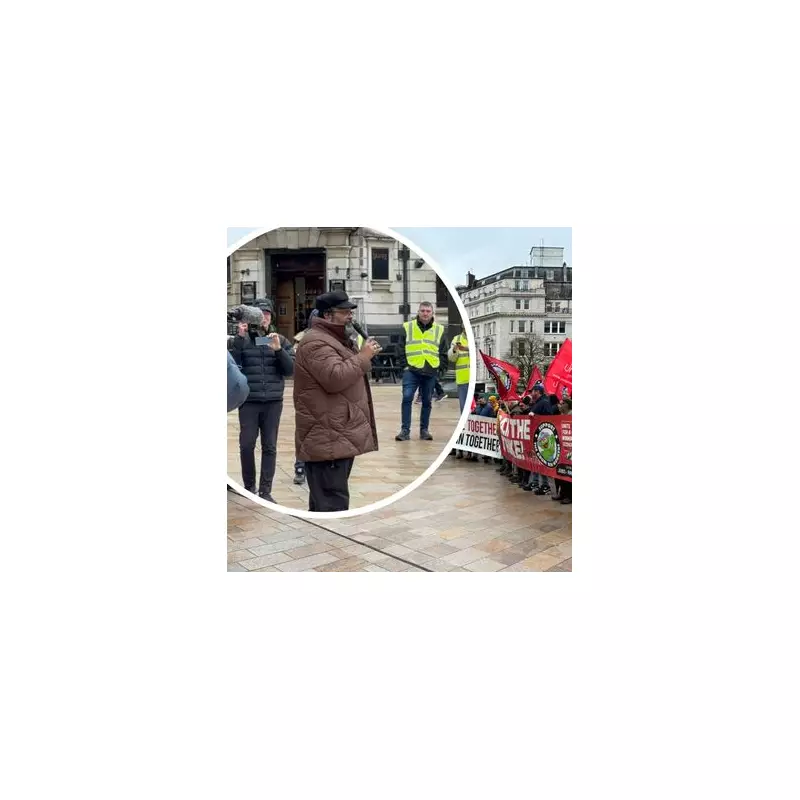
A prominent community activist has issued a stark call for a council tax payment boycott in Birmingham, as tensions surrounding the ongoing bins strike reach a critical juncture. The rallying cry came during a passionate demonstration outside the council house, where striking workers and their supporters gathered to voice their frustration over the protracted industrial dispute.
Rallying Cry for Action
Bishop Dr. Desmond Jaddoo MBE, a respected community figure and chief organiser of the protest, directly addressed the assembled crowd in Victoria Square on Tuesday afternoon. With chants of "enough is enough" and "clean our city" echoing around the square, he posed challenging questions about the council's service delivery to Birmingham residents.
"Do you think the residents of Birmingham have had enough? Do you believe Birmingham City Council is doing those residents a service that they deserve?" Jaddoo demanded, receiving a resounding "No!" from the protesters, which included numerous striking bin workers among their ranks.

Council Tax Withdrawal Proposal
In a significant escalation of the dispute, Bishop Jaddoo called upon Birmingham residents who are financially able to withhold their council tax payments starting from April 1, 2026. He framed this proposed action as a direct response to what he perceives as the council's failure to deliver essential services that residents pay for through their taxes.
"Refuse collection is a core service that people pay for through their council tax and Birmingham City Council is failing to deliver it," Jaddoo stated emphatically. "With the reforms they have announced, one has to ask: how on earth can they deliver those successfully when the basics are all over the place? This state of affairs is no longer acceptable – the people of Birmingham deserve far better than this."
Council's Firm Response
Birmingham City Council has responded to the protest threats with a clear reminder of residents' legal obligations. The authority has previously cautioned those considering withholding payments while their rubbish remains uncollected to reconsider their position carefully.
"It is a legal responsibility to pay council tax and we urge people to continue doing this," the council stated firmly. "The current situation is the result of industrial action taken by Unite the union, not due to the council's actions. Council tax is collected to fund council services generally."
Strike Background and Costs
The industrial action, which has now continued for approximately twelve months, originated from disputes surrounding the loss of the Waste Recycling and Collection Officer role. Striking workers maintain they face potential pay reductions of around £8,000 – a figure that the council has consistently disputed.
The Labour-run administration has repeatedly asserted that a fair offer was presented before negotiations concluded last summer. At that time, council representatives stated they had "reached the absolute limit of what we can offer" while expressing concerns about equal pay implications.
The financial impact of the strike has been substantial for the local authority, which declared itself effectively bankrupt back in September 2023. According to a recent report by the council's director of finance Carol Culley, the forecast one-off and direct costs of the industrial action will reach £14.6 million if it continues until the end of March.
These significant expenses include:
- Enhanced street cleansing operations
- Additional security measures
- Extra support services to manage waste accumulation
The council plans to meet these costs through a combination of reserve funds and corporate underspends, though the financial strain comes at a particularly challenging time for the authority's finances.
Broader Implications
The standoff represents more than just a local dispute about bin collections and council tax payments. It highlights growing tensions between residents, workers, and local government authorities over service delivery, funding allocation, and accountability mechanisms.

As the strike continues to disrupt bin collections across Birmingham and generates negative publicity for the city, the call for council tax withholding adds a new dimension to the conflict. This development raises important questions about the relationship between taxation and service provision in local government, and how communities can legitimately express dissatisfaction with public services they fund through their contributions.
The situation remains fluid, with both sides maintaining firm positions. The council continues to emphasise residents' legal obligations, while protest leaders argue that failure to deliver core services justifies reconsideration of payment commitments. How this standoff develops in the coming weeks could have significant implications for local governance and community relations in Britain's second city.