Council Demands Police Action Over Bin Depot Blockades
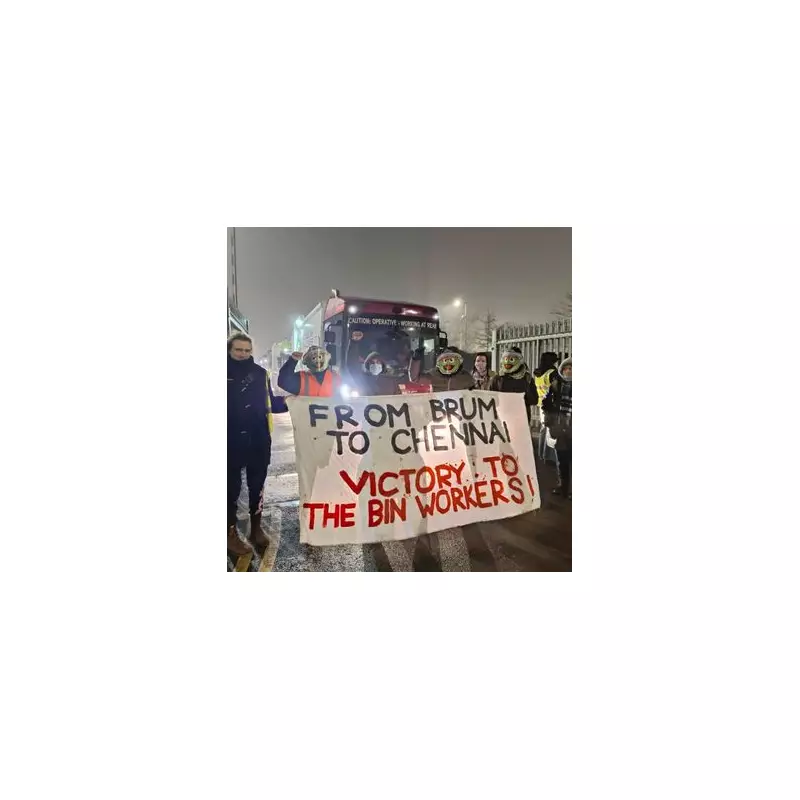
Birmingham City Council leaders have expressed mounting frustration with what they describe as police inaction as protestors continue to block bin lorries from leaving depots across the city. The ongoing industrial dispute has entered its thirteenth month, triggering fresh confrontations at depot gates that threaten to disrupt weekly waste collections for thousands of households.
Daily Disruption and Council Concerns
Council chiefs have formally written to West Midlands Police leaders, urging immediate intervention to remove protestors who stand in roads preventing waste collection vehicles from exiting depots. They claim officers routinely "stand by" while protestors block traffic for approximately three hours each day, creating significant delays to bin collection schedules.
Labour councillor Marcus Bernasconi, representing North Edgbaston, has publicly criticised the police response, warning that "a handful of people were being allowed to dictate when bins were collected." He specifically pointed to former Chief Constable Craig Guildford's approach to the situation.

Legal Complexities and Human Rights Considerations
The protest actions are complicated by legal precedent known as the Ziegler Ruling, which originated from a 2021 Supreme Court hearing concerning anti-arms protests. This ruling allows for "deliberate, obstructive protest" as a lawful excuse for highway obstruction, requiring police and courts to consider human rights to protest when determining if disruptive action constitutes criminal behaviour.
In his formal correspondence with police authorities, Councillor Majid Mahmood, Birmingham's cabinet member for environment and waste services, argues that local police have interpreted this ruling by "waiting for protests to last three hours before taking any action." He states this approach results in lorries only being able to exit depots one at a time, creating widespread disruption.
Escalating Impact on City Services
The council anticipates "a minimum of three protests a week" continuing into spring as the industrial dispute persists. Mahmood warns in his letter that continued disruption would "make it impossible to guarantee a weekly collection to every household in the city."
He contends that while the Ziegler Ruling requires balancing protestors' rights against disruption caused, the substantial impact on Birmingham's communities should be prioritized. "The people of Birmingham expect the law to be upheld and the highway to be kept free of obstruction," Mahmood stated in his public communications this week.
Historical Context and Current Response
This is not the first instance of tension between council and police regarding depot disruptions. Earlier in the strike action, striking bin workers regularly halted lorries through slow-walking tactics, leading to thousands of tonnes of waste accumulating across Birmingham and triggering a public health emergency incident.
While striking union members remain subject to a high court injunction, these restrictions do not extend to non-union members or support organizations participating in current protests.
West Midlands Police responded to the council's concerns, stating: "We continue to have a police presence at depots as and when required. Birmingham City Council was granted an injunction last year to manage the impact of this disruption. We continue to liaise closely with Birmingham City Council throughout the industrial action."
The council has offered to meet with police officers to discuss how to "rapidly progress this issue" and ensure waste collection operations can continue without significant disruption to Birmingham residents.