Solihull Council has decisively rejected a proposal from Reform UK councillors that sought to introduce recorded voting for members of the planning committee. The motion, which aimed to enhance transparency in local planning decisions, was thrown out during a recent governance committee meeting amid significant concerns about potential political pressure and the public targeting of individual councillors.
Transparency Versus Protection Debate
The controversial motion called for a formal record to be kept of how each planning committee member votes on applications. Currently, while planning meetings are held in public and streamed online, with observers in the gallery able to see councillors raise their hands, there is no official, easily accessible record of individual votes. Reform UK councillor Alan Feeney, who brought forward the motion, argued this change was crucial for rebuilding public trust.
"For me it is about public confidence," stated Councillor Feeney. "You don't have to look much beyond the comments on social media to realise trust in planning, how it is done, is on the floor. This would be one important step – it is not a difficult thing to do." He emphasised that recording votes would provide clearer accountability for residents.

Opposition Cites Practical and Political Concerns
Despite some support for the principle of transparency, the motion faced strong opposition from across the political spectrum. Conservative councillor Bob Grinsell, who chairs the planning committee, delivered a particularly forceful rebuttal, highlighting the practical challenges and potential risks.
"They (the meetings) often go beyond four hours," noted Cllr Grinsell. "This motion is neither necessary nor appropriate. Forcing named individuals on every single item invites political pressure and public targeting of members. Planning committees should be insulated from outside or party political influence – a roll call system erodes that insulation."
Other councillors raised additional objections. Green Party councillor Max McLoughlin supported greater transparency in theory but questioned the practicality, suggesting that manually recording votes during lengthy meetings would be "time consuming." He mentioned automated voting systems used elsewhere but doubted their feasibility for Solihull's committee.
Cross-Party Consensus for Rejection
The debate revealed a rare cross-party consensus against the proposal. Liberal Democrat councillor Ade Adeyemo argued for consistency, stating, "I don't think we should be voting differently on one committee to how we vote everywhere else because that in itself is not a good way to run a council."
Conservative councillors Bob Sleigh and Josh O’Nyons, the latter chairing the governance committee, also voiced their opposition. Cllr Sleigh saw "no justification" for the change, while Cllr O’Nyons summarised the committee's position, saying, "I summarise from the discussion it is not supported." The committee subsequently voted to take no action on the motion, effectively killing the proposal.
Implications for Local Democracy
This decision underscores an ongoing tension in local government between the desire for open, transparent decision-making and the need to protect councillors from undue influence and harassment. The rejection means Solihull's planning committee will continue its current practice, where the public can witness votes but lacks a straightforward, official record of each member's stance on every application.
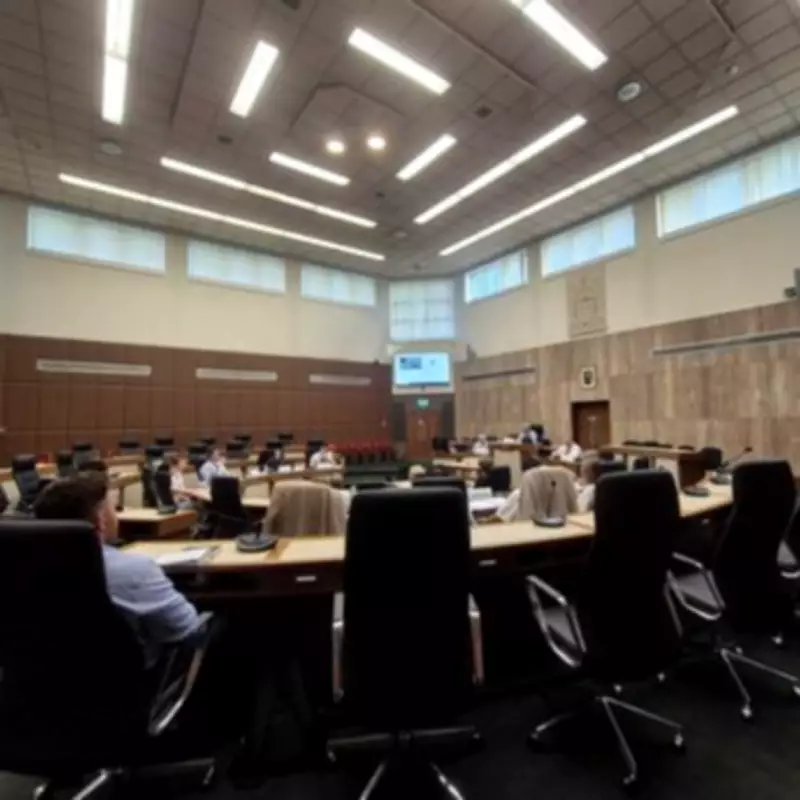
The meeting, held at the Civic Suite on January 22, highlights how procedural changes, even those framed as simple transparency measures, can provoke complex debates about the functioning of local democracy, the workload of councillors, and the integrity of the planning process itself.