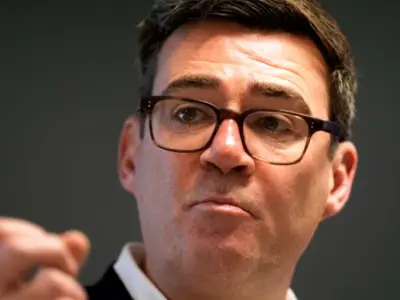
Triple Lock Under Scrutiny as Burnham Prepares for Premiership
Andy Burnham, the Labour Party leader widely expected to become Prime Minister, is reportedly hearing 'loud and clear' that the state pension triple lock needs to be abandoned. Sky News has reported that two key advisors are warning the policy is unsustainable, with costs ballooning since its introduction in 2010 by the coalition government of Liberal Democrats and Conservatives.
The triple lock guarantees that the state pension increases by the highest of inflation, average earnings growth, or 2.5%. Despite commitments from Labour, Reform, and the Conservative Party to maintain the pledge, the Office for Budget Responsibility (OBR) has forecast that the government will spend £15.5 billion more per year on the state pension by 2030 compared to if it were increased in line with earnings alone. That figure is roughly three times higher than initial expectations.
Fiscal Risks and Unsustainable Promises
Richard Hughes, chair of the OBR and an advisor to Burnham, described the 'uncertainty around the operation of the triple lock' as an 'important source of fiscal risk'. He added: 'When you project trends in both pension spending and health and other age-related spending forward, the UK public finances are in an unsustainable position in the long run. The UK cannot afford the array of promises that are displayed to the public if you leave those unchanged based on a reasonable assumption about growth rates in the economy and in tax revenues.'

Lord O'Neill, economist, co-president of the Northern Powerhouse Partnership, and former Goldman Sachs Asset Management chairman, is also advising Burnham. He has called the metric 'bonkers'. The Department for Work and Pensions (DWP) expects state pension spending to hit £169 billion by 2030.
Potential Alternatives to the Triple Lock
Tom Selby, director of public policy at AJ Bell, outlined two main levers to control costs: 'Assuming the Treasury does not want spending as a share of GDP on state pensions to continue ballooning – squeezing the ability to spend elsewhere or reduce the tax burden on the working population – there are two main levers available to control costs: the amount people receive from the state in retirement and the age at which they receive it.'
Researchers at the National Institute of Economic and Social Research (NIESR) have proposed replacing the triple lock with a 'living standards lock'. Pensions expert Charlene Young from AJ Bell told Sky: 'Raising the state pension age without meaningful improvements in healthy life expectancy risks pushing more people into working-age benefits later in life. In that scenario, the government could simply end up shifting costs from one part of the welfare system to another, rather than delivering substantial savings overall.'
Other options put forward to Burnham include copying the Australian, Swedish, or German models. Sky's Money blog suggests the UK will discover Burnham's plans 'in the next few weeks.'