The Resurgence of Far-Right Movements in Contemporary Politics
Throughout 2025, a pressing question echoed across Western political discourse: is fascism experiencing a resurgence? Prominent figures including London Mayor Sadiq Khan voiced concerns about "echoes of the 1920s and 30s" in contemporary politics, while Nobel Laureates and academics globally signed an open letter warning about "a renewed wave of far-right movements, often bearing unmistakably fascist traits." This concern gained tangible expression in September when record-breaking crowds gathered in London for Tommy Robinson's Unite the Kingdom rally.
Birmingham's Pivotal Role in British Far-Right History
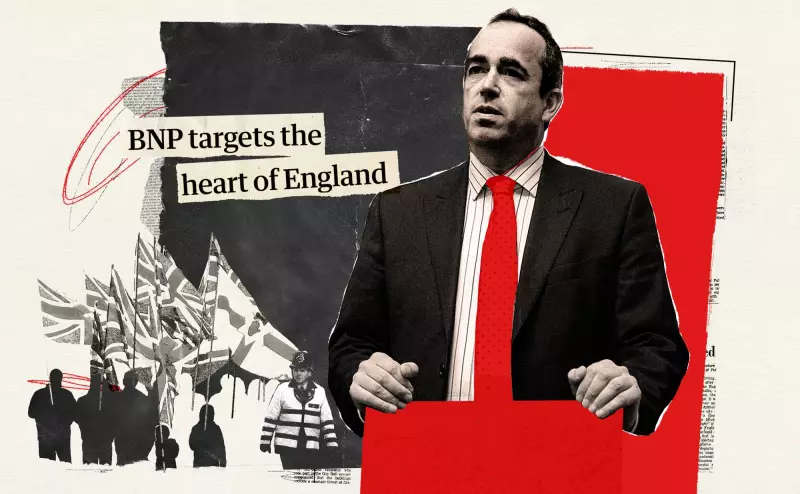
While mainstream British politics has largely excluded overt fascism, the ideology has maintained significant support at various points in history. Birmingham and the wider West Midlands region have played crucial roles in this narrative. To commence 2026, we present the final installment in a three-part essay series examining key moments in West Midlands history during British fascism's development, focusing on Simon Darby, former deputy leader of the British National Party.
A Revealing Television Encounter
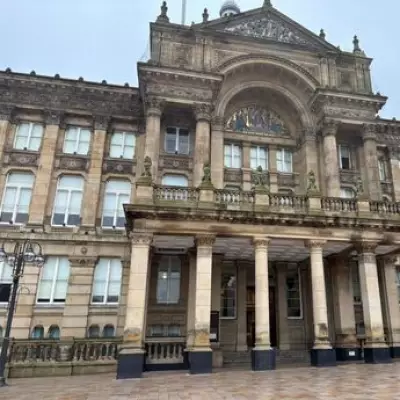
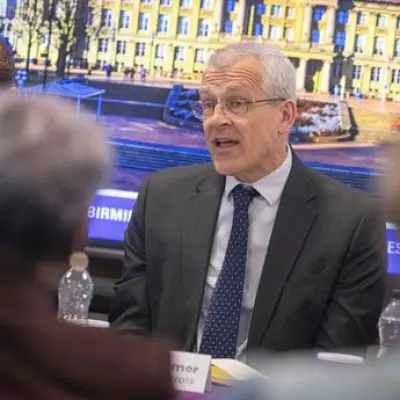
"Golliwog? Is that racist?" a reporter inquires during a 2012 interview. "It depends how you use it. I don't think so [really] because it's an old English kind of word," responds Simon Darby, dressed in neat white slacks, a brown blazer, and bright-blue dress shirt. The former BNP leader, seated in a grand Birmingham room, continues: "People associate [the word] with jam and marmalade. If you go out into the streets of Birmingham, you'll see many black faces, right? They'd laugh at you if you said 'golliwog.'"

Unbeknownst to Darby, his interviewer was actually comedian Jolyon Rubinstein for BBC sketch show The Revolution Will Be Televised, posing as reporter 'Dale Maily'. Throughout their exchange, Rubinstein countered Darby's discriminatory remarks with increasingly outrageous observations, creating an illuminating, if uncomfortable, dynamic.
Their conversation eventually turned to Birmingham's Muslim communities: "Demographically, we're outbred in our own country, by many who don't belong here. The Muslim community [often] have five, six, seven kids. There is a deliberate policy going on in the Muslim community to use their wombs to replace us," Darby asserted.
Portrayal as Political Anachronism
During August 2012, amidst the coalition government's social liberalism emphasizing "hug a hoodie" rhetoric and "Big Society" initiatives, Darby appeared as a reactionary symbol of a declining far-right party—perfect material for satirical television. The BBC presented him as an oddball, middle-class racist, awkwardly isolated in surroundings too grand for his lonely presence.
Darby defied familiar far-right stereotypes: neither the aggressive skinhead neo-Nazi of 1970s-80s National Front, nor the charismatic, salesman-like figure exemplified by Nigel Farage in post-2016 populist-right movements. Instead, he appeared withdrawn, almost shy, delivering racist pronouncements in polished Received Pronunciation.
West Midlands Origins and Political Evolution
Born in West Bromwich, Staffordshire, Darby represented a younger generation than far-right stalwarts like Nick Griffin and John Tyndall. A Gen X'er rising during Tony Blair's optimistic years, the BNP presented him as a strange far-right shadow of Blairite politicians: well-groomed, tech-savvy, upwardly mobile, and digitally competent.
Significantly, Darby avoided association with the BNP during its openly fascistic phase under John Tyndall's 1980s-90s leadership, joining instead during Nick Griffin's "modernising" tenure when shirts and ties replaced bomber jackets and boots.
Early Political Involvement
Before the BNP, Darby participated in the National Democrats—an evolution from the larger, more infamous National Front. Founded in 1995 when a National Front faction sought to rebrand and shed its toxic reputation, the National Democrats under Darby attempted branching beyond racism into "softer" campaigns around family values, including a "Paedophile Watch" website registering accused sex offenders.

Though never matching BNP popularity, the National Democrats maintained strongholds in the West Midlands, particularly West Bromwich, gaining 11.4% of votes there in the 1997 general election. Darby followed leader Ian Anderson in the 1995 National Front split.
Rise Within the BNP
In 1998, following New Labour's triumph, Darby joined the BNP when his local National Democrat chapter defected to the larger party, viewed as the "modernising" vanguard of British far-right politics focusing on elections and community engagement over protests and open violence. Darby and his West Midlands supporter base proved instrumental in ousting openly fascist leader John Tyndall in favour of Nick Griffin.
Beginning as local party organiser, Darby rose to council candidate by the early 2000s while managing party technological innovations and organising the West Midlands wing. A 2001 BBC profile showed him running the party's "info-line," an early online audio-visual podcast featuring music by far-right Coventry band Avalon.
By 2003, Darby won a Dudley council seat, elevating his party standing. Newspapers described his West Midlands campaigning as a "BNP-led rebellion at the ballot box," branding him "heir to Nick Griffin." By 2006, The Guardian identified him as Griffin's chosen successor should racial incitement charges prove successful. Reporting suggests Darby's rise stemmed partly from superior internet and PR skills compared to older members, earning him deputy leadership in 2007.
Electoral Success in Deindustrialising Regions
Darby's BNP wing proved competitive across Black Country council seats, outer Birmingham, and small West Midlands towns. During mid-2000s, his branch recorded strong results in Castle & Priory (Dudley), Tipton, Walsall, Kingshurst & Fordbridge near Solihull, Kingstanding in North Birmingham, and Cradley Heath in Sandwell.
In these areas experiencing deindustrialisation, mass unemployment, and spatial segregation, thousands of white working-class and lower-middle-class voters demonstrated willingness to support far-right candidates. A 2005 Joseph Rowntree Foundation survey revealed one in four electors had considered voting for fascists.
Contrary to stereotypes of far-right support concentrating in "poor, Northern, urban, ex-heavy manufacturing" areas, discontent spread significantly into the West Midlands, which recorded England's second-highest BNP support levels in 2003 at 23.8% of those sampled. In 2004 European elections, West Midlands BNP support reached 7.5%, second only to Yorkshire.
BNP voters clustered near heavy industry and light manufacturing, with Black Country boroughs like Dudley (27.9%) and Sandwell (26.6%) far exceeding Birmingham (14.2%) in ward-level far-right support. A 2003 MORI poll for Migration Watch revealed the West Midlands, alongside North East England, held stronger anti-immigration views than other UK regions.
Capitalising on Economic Discontent
In 2006, Darby capitalised on this regional support to win four Sandwell Council councillors, three Stoke-on-Trent representatives, and one Solihull councillor. While the mid-2000s are often remembered as pre-recession economic growth years, this wasn't universal experience. Darby gained audience as jobs haemorrhaged across the West Midlands. "It's amazing. This is new territory. We're used to being the target of a constant drip of hatred," he told The Guardian. "Now, our message is being heard."
The previous year saw only 1.5% British economic growth—slowest since 1992—accompanied by major West Midlands industry closures: Stoke-on-Trent's Royal Doulton potteries, MG Rover's Longbridge plant in South Birmingham, and Coventry South's Ryton Car plant, laying off thousands. The Labour government's failure to prevent outsourcing or save these industries deepened alienation among former working-class West Midlands voters.
This microeconomic downturn, combined with relatively high immigration levels, generated consternation over social housing and state resources—themes Darby exploited in campaigning. A Guardian journalist reported how Darby combined racism, newfound Islamophobia (fueled by the War on Terror, 7/7 London bombings, "Tipton Taliban" rumours, and Dudley mosque construction controversies) with grievances about declining social services and council housing shortages in Tipton and Dudley.
During Darby's 2006 campaign, unemployment exceeded national averages while wages lagged behind in these areas, with council house waiting lists skyrocketing due to Right to Buy sales, construction shortages, and increased migration. Residents commonly complained about Kosovan asylum seekers allegedly prioritised for social housing. Though unsuccessful in Dudley wards, Darby translated this alienation into Sandwell victories at Great Bridge, Princes End, and Tividale.
Political Decline and Disappearance
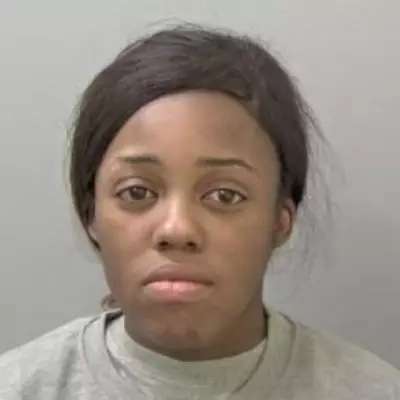
By 2012, Darby nervously awaited election results as fortunes reversed. The BNP's Kingstanding candidate Sharon Ebanks was accidentally declared winner after miscounting, but no other Birmingham or Black Country seats showed BNP momentum. Darby had quit as deputy leader in 2010, writing to members that he "didn't really want to be drawn into the leadership question," though he remained as Griffin's spokesman during party decline.
The previous year saw the BNP lose 11 English councillors, with votes flowing to Conservatives and UKIP. The party faced existential crisis as membership plummeted toward far-right groups with stronger street presence like the English Defence League (under Tommy Robinson) and Britain First (under Paul Golding), or more openly euro-sceptical parties like the British Democrats. Others moderated toward populist-right alternatives like UKIP, creating crowded competition.
Internally, Darby and Griffin formed loyal old-guard while rebellions sparked across membership. A senior BNP MEP quit over Griffin's management, and ongoing court challenges to "whites only" membership policies caused rank-and-file discontent. The 2012 elections proved disastrous for BNP mainstream hopes, with nine of twelve remaining council seats lost. Between 2008-2012, party votes collapsed from 240,000 to 26,000—almost 90% decline.
Darby's current BNP membership status remains unclear (the party recorded just 300 members in 2018). After 2012, he faded from public view. A 2016 Hope Not Hate blog post described the former deputy leader "held to ransom by the BNP over monies he was owed," noting he removed many far-right-associated websites.
Legacy and Contemporary Parallels
Darby established troubling political foundations in the Black Country based on genuine material grievances. Support for insurgent right-wing politics remains strong in these areas, though now manifesting through more moderate populist-right movements like Reform UK rather than openly racist far-right parties. According to MRP polling requiring cautious interpretation, Reform UK shows 90% winning probability in Dudley constituency and 94% in Tipton and Wednesbury—both currently Labour seats.
Looking back to 2006, the most alarming aspect remains Darby's exploitation of very real issues: structural unemployment, regional inequality, housing shortages, declining wages, industrial outsourcing, and insufficient community support. These trends have only intensified since 2006.
During the 2000s, Labour featured veteran working-class politicians like Jon Cruddas, Maurice Glasman, and Frank Field who countered BNP advances. Today, extensive West Midlands areas risk falling to Reform UK with minimal opposition. While no identifiable Simon Darby figure currently leads populist right-wing insurgency, momentum appears sufficiently strong without requiring such leadership.
Perhaps the most effective approach to understanding upcoming May 2026 local elections across Birmingham and the Black Country involves reflecting on 2006. Two decades later, we continue inhabiting a world where figures like Darby found it relatively easy persuading the public to support far-right options in voting booths.