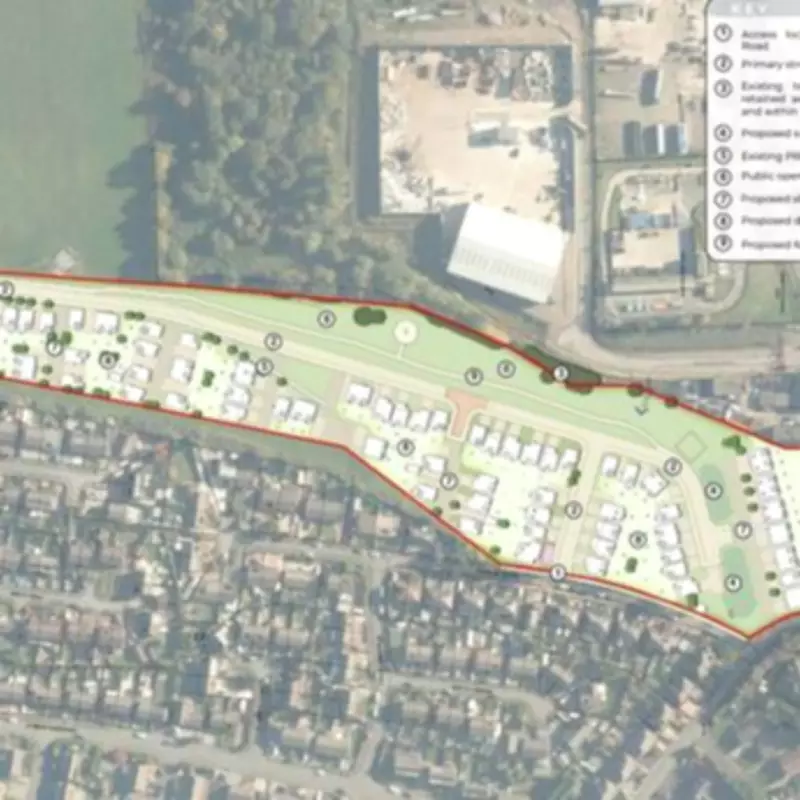
Plans to construct an 83-home residential estate on green land in Atherton have been decisively rejected by Wigan Council this week. The proposed development, submitted by Bellway Homes, aimed to transform a site adjacent to Tyldesley Old Road and Douglas Road, directly neighbouring the Chanters industrial estate.
Council Raises Concerns Over Residential Amenity
In a detailed planning report, council officers highlighted significant conflicts with local policies, stating the development could not be satisfactorily delivered. The primary concern centred on the site's immediate proximity to the Chanters employment park, with planners warning that future residents would likely be affected by industrial noise and the area's commercial character.
The report explicitly noted: "Officers have concluded that the proposed development conflicts with policies within the local plan in that it cannot be satisfactorily delivered. The applicant has failed to address these site constraints effectively through the provision of physical and green infrastructure needed."

Potential Impact on Business Operations
A particularly noteworthy objection raised by planners involved the potential for the housing development to create pressure restricting current and future business activities within the industrial estate. The council expressed concern that residential complaints about noise and operations could lead to limitations on commercial enterprises that currently operate without such constraints.
The planning document further explained: "Furthermore, officers have concluded that if the development was delivered it would lead to subsequent pressure to restrict the current and future activities of businesses within the industrial estate. The proposed development would not achieve an acceptable standard of residential amenity in relation to noise."
Developer's Vision Versus Local Reality
Bellway Homes had presented the 8.28-acre site as suitable for creating "a sustainable urban extension for the area by working with the sites own features and wider landscape character." In their design and access statement, the developer characterised the location as being within "a predominantly residential area" bounded by existing houses to the west, light industrial infrastructure to the east and south, and open land with woodland to the north.
Community Opposition and Ward Councillor Concerns
The council received 15 formal objections to the application, with residents raising multiple concerns about the proposal. Key objections included worries that future residents would be negatively impacted by their proximity to the industrial estate, concerns that Douglas Road lacked sufficient width for the proposed access arrangements, and apprehension about the development's closeness to electricity pylons and overhead lines.
Ward Councillor Debra Wailes added her voice to the opposition, emphasising that the site currently serves as a natural buffer between existing houses on Douglas Road and the Chanters industrial estate. She warned that the mature tree line supporting this buffer zone would be destroyed if the development proceeded.
Broader Implications for Planning Policy
This decision underscores the careful balancing act local authorities must perform when considering residential developments near established industrial areas. The rejection highlights how proximity to commercial operations can fundamentally undermine residential amenity standards, even when developers propose what they describe as sustainable extensions to existing communities.
The council's firm stance suggests a prioritisation of protecting both existing residential areas from inappropriate development and safeguarding the operational freedom of established businesses within industrial parks. This case may set a precedent for how similar proposals are evaluated in Wigan and potentially other local authorities facing comparable planning dilemmas.