The men of the 7th Cavalry who fell at the Battle of the Little Bighorn are often remembered as gallant soldiers who died with their boots on. But many of them also died wearing flat caps, hailing from Birmingham and the Black Country. This fact has been obscured by Hollywood's romanticized portrayals of the US Army's near annihilation by a powerful Native American force.
Black Country Voices at Little Bighorn
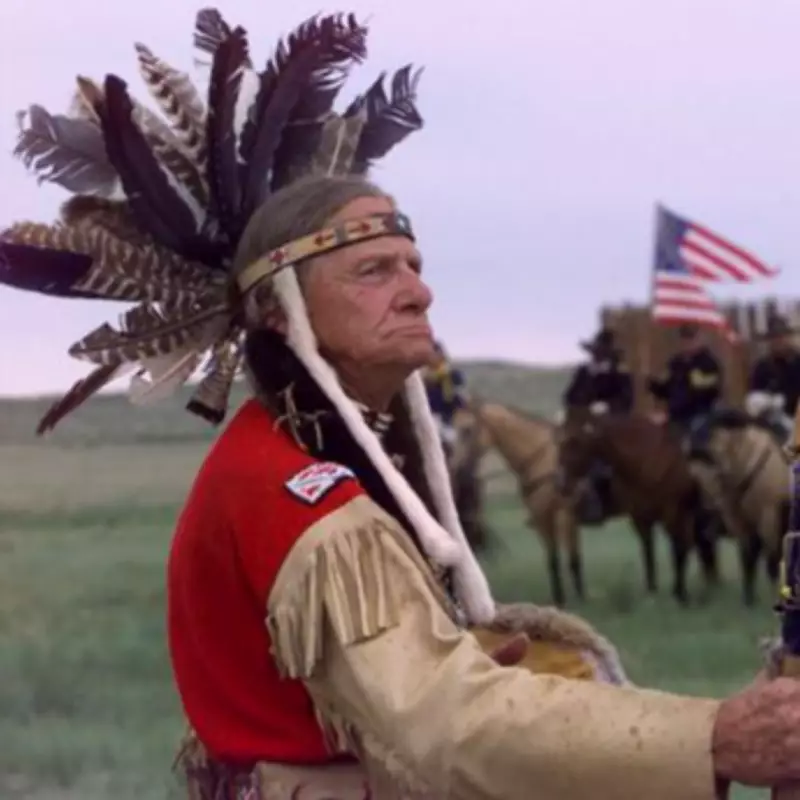
If the numerous film adaptations of the June 25, 1876, Montana massacre were accurate, Black Country accents would have been heard above the war cries. Soldiers might have muttered, "Sod this for a game of soldiers!" or "Don't talk to me about that piggin' General Custer." The real battle has been lost in misinformation, manipulated facts, and patriotic propaganda, with filmmakers rewriting history to satisfy audiences craving all-American heroism.
The Real 7th Cavalry
Contrary to depictions by John Wayne and Errol Flynn, the 7th Cavalry was not an elite, highly trained force. It was a rag-tag unit with a heavy immigrant influence. Irish, German, and English riders made up 40 percent of the cavalry, many lacking battle experience. Thirty percent of privates had served for a year or less. Driven by poverty, they signed up and often regretted it. Medical notes reveal rampant alcoholism and tooth decay among the ranks, with many soldiers malnourished.

Debunking the Myths
There was no gallant circle of "blue shirts" defiantly firing until ammunition ran out, as depicted in Errol Flynn's epic "They Died With Their Boots On." Instead, mass panic and chaos ensued, with many soldiers killed while fleeing. They were not felled by arrows alone; the Indian coalition carried Winchester, Henry, and Spencer rifles. Not every soldier died; only those in C, E, F, I, and L companies under Custer's command perished. In total, 274 soldiers were killed and 49 wounded.
British and Local Casualties
Among the fallen were Staffordshire's William Heath, 27; John Hiley from Rugby, 27; Gloucester's Edward Lloyd, 23; Birmingham gunsmith John Parker, 26; and Melton Mowbray watchmaker Fred Allen, 28. The website "Men With Custer" lists 61 British men who served with him, many succumbing to ill-health rather than combat. From the region, Shropshire's John Stanley died of spinal inflammation in 1879; Staffordshire's Michael Monaghan of blood poisoning in 1881; and Birmingham's John Robinson of a fractured skull in 1880.
The Truth About General Custer
General George Armstrong Custer was not a general at the time but a lieutenant colonel. His flowing locks had been cut short. Historians now dismiss the image of a valiant, honorable patriot, instead portraying him as a vain, self-publicizing dandy and womanizer. He ignored battle orders and warnings about the enemy's size, leading to disastrous blunders. Custer believed there were only 800 warriors, despite scouts reporting a much larger force. He divided his units, diluting their power, and pitted 700 men against a combined force of 1,100 to 2,500 warriors.
Custer's Death and Aftermath
Custer's death was horrific. He was among 40 survivors on Battle Ridge when shot in the head and chest. Some claim he committed suicide. His brothers Tom and Boston, nephew Henry Reed, and brother-in-law James Calhoun also died. Warriors mutilated the bodies, believing it would condemn their spirits. Standing Bear, a 17-year-old at the battle, later recalled the chaos and the overwhelming number of Native Americans. A film from a Birmingham and Black Country perspective might be titled "Yam Not Taking My Scalp, Kid!"