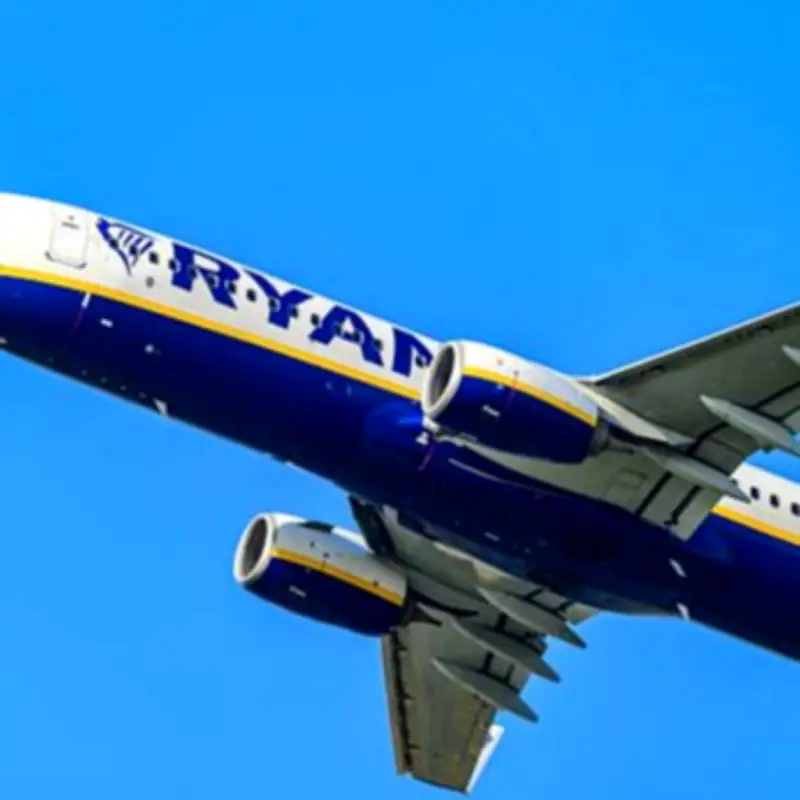
Ryanair has issued advice to passengers regarding the new Entry/Exit System (EES), warning that passport control 'may take longer' for some travelers after the major change was introduced earlier this year.
The European Union implemented the EES, an automated border control system, replacing the manual stamping of passports. It digitally records the entry and exit of non-EU nationals travelling to the Schengen Area.
The airline emailed customers to inform them this could lead to longer queues at airports. The email stated: 'From 10 April 2026, the EU's Entry/Exit System (EES) is in place at all Schengen Area external borders. As a result, passport control may take longer for some passengers.'

According to reports, the email indicated that passengers would be affected if they held a non-EU, non-EEA, or non-Swiss passport and were flying into or out of the Schengen Area. Commonly affected routes include flights between the Schengen Area and countries such as the UK, Ireland, Cyprus, Albania, Montenegro, Serbia, Türkiye, Egypt, Israel, and others.
Those using the EES may need to scan their passport, provide fingerprints, and have a facial image taken at passport control. As checks are more extensive, longer queues may form, particularly at busy airports.
Ryanair suggested that affected passengers arrive at the airport early to allow for queues. It also recommended that travelers have all documents ready and follow signs marked 'EES / Passport Control'.
EU, EEA, and Swiss passport holders were not affected, nor were those flying within the Schengen Area, for example from Spain to Italy or from Germany to France.
Ryanair added: 'If you are denied entry, this will be due to EU policy, not Ryanair's rules.' The airline has a section on its website dedicated to how EES may affect travel plans.