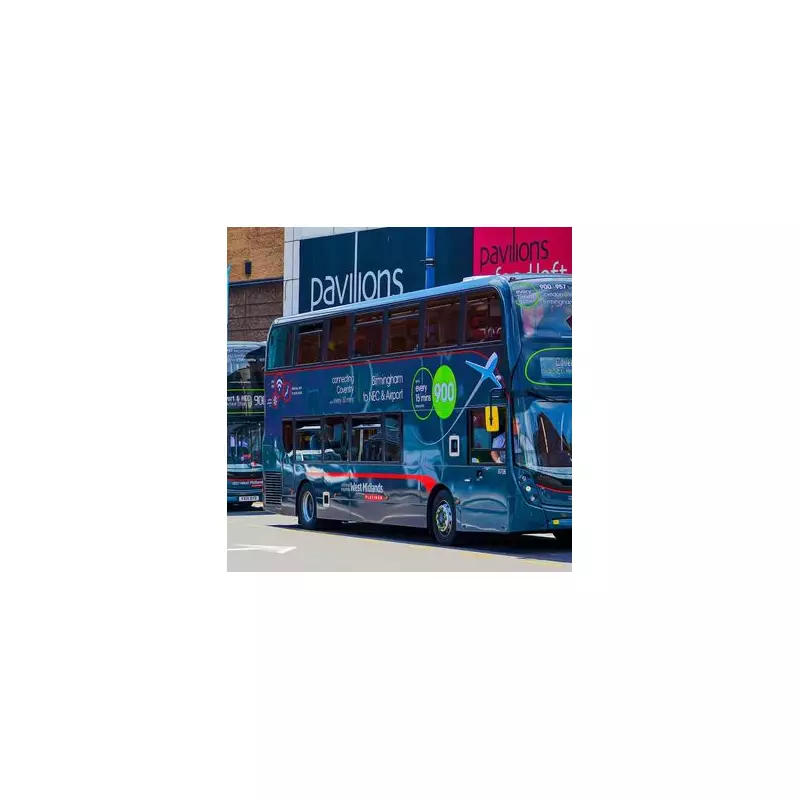
Calls are growing for a significant improvement in how bus services are marketed across the West Midlands, with the aim of persuading more residents to leave their cars at home and utilise public transport. The issue was highlighted during a recent West Midlands Combined Authority (WMCA) joint overview and scrutiny committee meeting, where the persistent preference for private vehicles over convenient bus routes came under scrutiny.
Subsidised Routes Ignored by Car Users
Solihull councillor Andrew Burrow expressed his frustration that many people continue to rely on their cars, even in areas where bus routes are subsidised and travel directly to key destinations. He pointed out a fundamental disconnect between the availability of these services and public uptake, suggesting that communication and customer understanding are severely lacking.
"We asked could you create a study to look at why daily users of cars in those areas where bus routes are subsidised don't use buses," Councillor Burrow stated. "This is despite the fact the buses go to where they want to get to."

Marketing Criticised as "Awful"
Drawing on his background in the private sector, Councillor Burrow did not mince words when assessing the current promotional efforts. "As an ex-private sector person, I cannot believe how awful the marketing is in my area," he remarked. He clarified that by marketing, he meant the operator's ability to comprehend what is required to attract passengers and to engage effectively with the community.
The councillor, who admitted he himself does not use the bus network, shared insights from his constituents. "If I talk to my residents about the customer service levels, it doesn't surprise me we haven't got people on buses in my area. I don't travel on them because I don't know how to. I speak to people around where I live, the southern part of Solihull, and that's common. You do it if you only have to."
Franchising Seen as Catalyst for Change
Councillor Burrow emphasised the broader benefits of increasing bus patronage, linking it directly to financial sustainability. "We've got to get those people onto the buses, including me, because that way it reduces the subsidy and we can run more services," he explained. He expressed hope that the transition to a franchised bus network would instigate the necessary transformation. "But it is going to require total change, when we go to franchising, in the way we do stuff. That's my great hope for franchising."
Studies Underway to Inform Future Strategy
WMCA bosses confirmed that investigations are currently in progress to analyse the barriers to bus usage. These studies are integral to the planned shift from the existing private operator-led model to a franchised system, where public authorities would have greater control over service provision.
Ed Cox, interim chief executive of the WMCA, noted: "As part of the work we are doing for franchising, there are a number of different studies going on that will inform the franchising process and this is one of them we are looking at."
Mayor Highlights Broader Transport Factors
West Midlands Mayor Richard Parker acknowledged the complex decision-making process behind transport choices. "The choices the residents make about whether they use a car, a bus, a train often depends on personal preferences but also reliability, affordability of public transport and the safety too," he said.
He also provided context on current usage, revealing that monitoring indicates buses remain the dominant form of public transport in the region. "The team have been looking at that. Monitoring is done on a regular basis around usage and across this region, the bus network is still the most popular mode of public transport. Around 80 per cent of transport users in the region use the bus network."
The ongoing discussions and research underscore a critical juncture for public transport in the West Midlands, as authorities seek to enhance appeal and efficiency ahead of structural changes to the bus network.