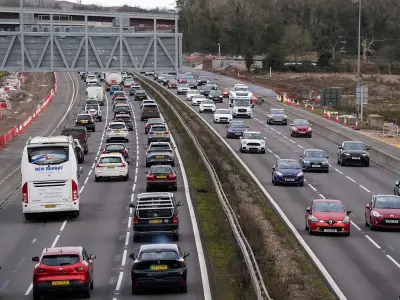
Two major automotive manufacturers are pushing back against Chancellor Rachel Reeves' newly announced pay-per-mile tax for electric and hybrid vehicles, launching a significant rebate scheme for affected drivers.
Budget Announcement Sparks Industry Response
During the Labour government's second Autumn Budget on Wednesday, November 26, Chancellor Rachel Reeves confirmed the introduction of a controversial new road charging scheme. The levy will see Electric Vehicle (EV) drivers charged 3p per mile, while hybrid vehicle owners will pay 1.5p per mile.
This move has prompted immediate action from Chinese car brands Omoda and Jaecoo, who have introduced an innovative EV tax rebate on their new Omoda E5 and Jaecoo E5 models. The scheme effectively covers the equivalent of 20,000 miles at the new three pence per mile rate.

Manufacturers Counter New Tax Burden
Gary Lan, CEO of Omoda and Jaecoo UK, stated: "Our EV Tax Rebate for the Omoda E5 and Jaecoo E5 effectively covers the first few years of this new tax, giving drivers the equivalent of thousands of miles of zero-cost motoring."
He emphasised the company's commitment to "making clean, efficient, and intelligent transportation more accessible to UK drivers from day one" through this initiative.
The new charges are scheduled to take effect from April 2028, meaning EV motorists will face additional costs on top of existing road fees. For long-distance journeys, this could mean substantial extra costs - potentially up to £12 for a trip between London and Edinburgh.
Implementation and Impact on Drivers
The government's change aims to offset lost revenue from fuel duty, which is currently paid by petrol and diesel car owners. According to a leaked Office for Budget Responsibility (OBR) report, "In 2028-29, the charge will equal £0.03 per mile for battery electric cars and £0.015 per mile for plug-in hybrid cars, with the rate per mile increasing annually with CPI."
By the time the new system launches, approximately six million people are forecast to be Electric Vehicle owners in the UK, all of whom will be affected by the changes.
The implementation will require drivers to undergo annual mileage checks at MOT centres to verify self-reported figures. The government consultation states that electric vehicle owners must "be responsible for providing an accurate mileage reading" and paying the new Electric Vehicle Excise Duty (eVED).
The documentation adds that motorists must take "reasonable steps to ensure that the odometer is functioning correctly" and address any issues with mileage recording. This new verification process could impact around 1.5 million drivers initially.