Budget Tax Proposals Threaten Electric Vehicle Accessibility for Lower-Income Households
New research has revealed that drivers from lower-income households could be effectively priced out of the electric vehicle market following proposed tax rule changes in the recent Labour Party Budget. The findings come as the government attempts to address reduced fuel duty income through new taxation measures.
Significant Wealth Divide in EV Consideration
According to AutoTrader's "No Driver Left Behind 2026 Report," households earning less than £40,000 remain significantly less likely to consider an electric vehicle compared to higher-income households. The data shows a stark contrast in attitudes, with only 48% of households earning under £40,000 considering an EV for their next car, compared to 84% among those earning above that threshold.
The research follows budget proposals that threaten to make electric vehicles more expensive from 2028, including new pay-per-mile road taxes that would add to running costs. These measures have already impacted consumer sentiment, with nearly half of drivers (47%) stating they were less likely to go electric following the budget announcement.

Industry Experts Warn of Two-Tier System
Ian Plummer from AutoTrader commented on the findings, stating: "We're at a pivotal moment for the UK's EV transition but there is still a lingering wealth divide. This new data also busts the myth that those who can charge at home will definitely switch – the driveway divide is no longer so clear cut."
Plummer warned of the consequences if the situation continues: "If lower income households can't access affordable vehicles, we risk creating a two-tier system where the benefits of cleaner, cheaper motoring accrue to those already better off."
Charging Infrastructure Concerns
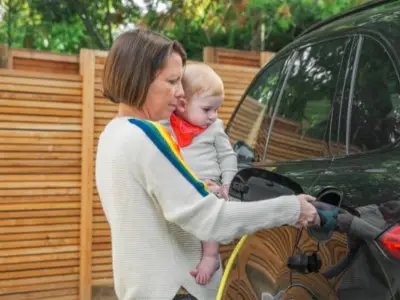
The research highlights ongoing concerns about charging accessibility, particularly for those without private driveways. Vicky Read, Chief Executive of ChargeUK, addressed these challenges: "For the majority of people, charging an EV is affordable. But we need to make sure that the cost of public charging is not a blocker for the millions who don't have the option to charge at home."
Read pointed to policy decisions affecting the industry: "The EV charging industry is committed to delivering affordable charging for all and constantly introducing new innovative ways to bring prices down, but the sector has been hit by a number of policy decisions that have sent costs soaring."
Path Forward for EV Accessibility
Industry leaders have outlined several key measures needed to ensure electric vehicles remain accessible to all income groups:
- Greater vehicle choice at lower price points
- Improved transparency on battery health metrics
- Practical charging solutions for those without driveways
- Equalisation of VAT between home and public charging
- Addressing surging charge point standing charges
- Inclusion of EVs in renewable fuel credit schemes
Plummer emphasised the importance of these measures: "The path forward is clear: more choice at lower price points, greater transparency on battery health metrics, and practical charging solutions for people without driveways. Do that, and we unlock EVs for everyone - not just the few."
The government now faces pressure to address these concerns in its forthcoming review into the costs of public charging, with industry leaders calling for policy adjustments to ensure electric vehicles remain a cost-effective option for drivers across all income brackets.