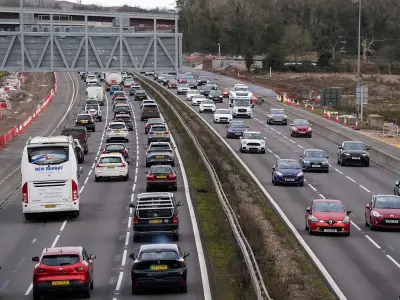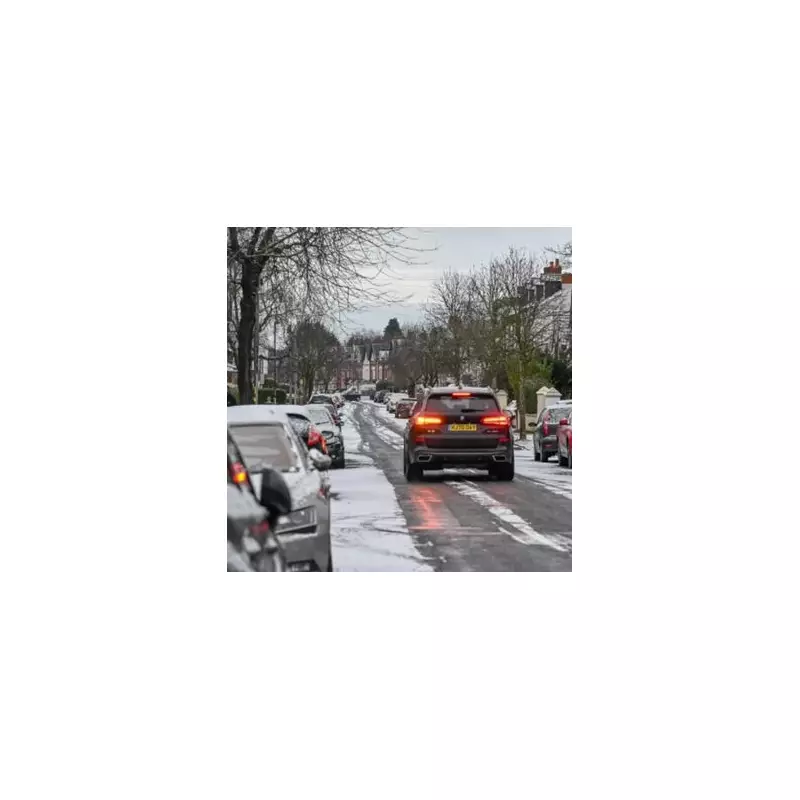
UK motorists are being issued a critical safety warning to avoid using a common feature found near the steering wheel as snow and ice grip the nation. The alert comes as Storm Goretti batters parts of the country, bringing powerful winds and a significant drop in temperatures.
Why Cruise Control Poses a Danger on Icy Roads
Driving instructors and insurance specialists are united in advising drivers to keep cruise control switched off during hazardous winter conditions. The feature, which allows a vehicle to maintain a set speed without driver input, is designed for convenience in normal circumstances.
However, on slippery surfaces, it can become a serious liability. Adams Driver Trainer has explicitly warned against its use, stating on its website: "While cruise control is convenient in normal conditions, it can be dangerous on icy roads. It reduces your ability to react quickly to changing road conditions."

The core of the danger lies in reaction time. By ceding direct control of the accelerator to the vehicle's computer, a driver cannot make immediate, subtle adjustments if the car begins to lose traction.
Expert Advice: The Risk of a "Surge" and Skidding
This concern is echoed internationally by experts like Ron Wilson of the Alberta Motor Association. He explains the specific mechanical risk: "You never want to use it on wet or icy roads. The car can actually surge forward and put the vehicle into a skid. So by the time you catch that, it could be too late."
This "surge" can occur if the driven wheels lose grip and spin. The cruise control system, detecting a drop in speed, will automatically apply more power to regain the set pace, which can exacerbate the loss of control and initiate a skid.
Wilson's general rule is clear: "Any time of the year, you should never use cruise control unless you can drive at a steady speed." This excludes not just icy roads, but also heavy traffic and winding routes.
How to React if Your Car Starts to Skid
With the heightened risk of skidding, knowing the correct response is vital. Specialists from Rooster Car Insurance have used social media to outline the crucial first steps if a vehicle begins to slide.
Their guidance is to "ease off the gas and do not brake hard." Slamming on the brakes can cause the wheels to lock up, stripping away any remaining steering control and effectively turning the car into an unpredictable sled.
The safest approach is to remain calm, steer gently in the direction you want the front of the car to go, and avoid any sudden inputs on the pedals.
Met Office Issues Snow Warnings Across Wales
These urgent driving cautions coincide with active weather warnings from the Met Office. The forecaster has issued yellow and amber alerts for snow across parts of Wales connected to Storm Goretti.
In their statement, they warned: "Rain, associated with Storm Goretti, will spread northeastwards across the warning area through Thursday afternoon and evening, transitioning to snow fairly widely overnight and into Friday."
They predict accumulations of 5-10 cm are likely quite widely, with the potential for 15-25 cm on some hills above 200 metres. This underscores the importance of adjusting driving behaviour for the conditions, starting with manually controlling your vehicle's speed and avoiding automated systems like cruise control.