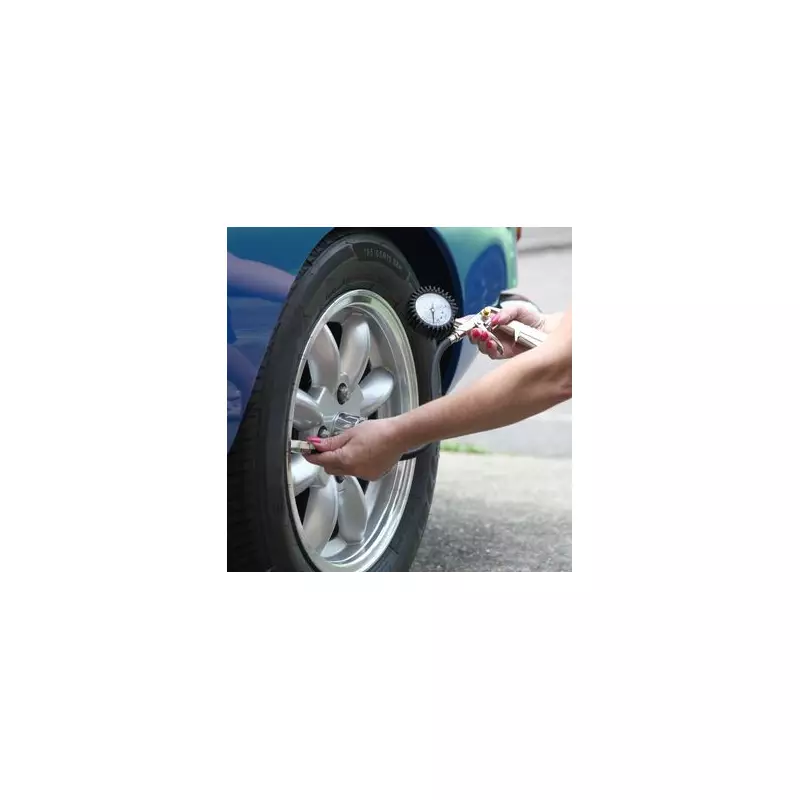
The RAC has issued a stark reminder to UK motorists about a simple yet critical monthly task that is often overlooked: checking tyre pressure. The automotive services company, headquartered in Walsall, states that many drivers only think about their tyres during their annual MOT, neglecting a routine that has major implications for both safety and wallet.
The Hidden Dangers of Ignoring Tyre Pressure
Failing to maintain correct tyre pressure can severely compromise your vehicle's handling and grip, leading to unpredictable performance on the road. The RAC emphasises that this isn't just about wear and tear; it can be a direct contributor to breakdowns or even serious accidents.
Beyond safety, there's a direct financial impact. Underinflated tyres are deformed, which increases rolling resistance. This means your engine has to work harder, burning more fuel to move the car. In essence, you are literally pouring money into wasted petrol or diesel.

Why Monthly Checks Are Non-Negotiable
The organisation explains that a vehicle's entire weight is supported by the air pressure in its tyres. Since tyres naturally lose a small amount of air every month, regular checks are essential to ensure they are not inadequately inflated.
Tyre pressure influences several key areas:
- Braking distance and efficiency
- Accuracy and stability when cornering
- Overall driving comfort and vehicle control
- Fuel consumption and running costs
A crucial tip from the RAC is to always check pressure when tyres are cold, ideally before driving that day or at least three to four hours after a journey. Warm tyres give a misleading reading, which could lead to incorrect inflation.
Your Step-by-Step Guide to Checking Tyre Pressure
To perform an accurate check, the RAC recommends following this process:
- Locate your vehicle's correct tyre pressure, found in the owner's manual or on a sticker inside the driver's door frame (measured in PSI or BAR).
- Use a reliable, high-quality tyre pressure gauge; digital versions are often preferred for their clarity.
- Remove the valve dust cap from the tyre valve and firmly press the gauge onto the valve stem.
- Note the reading to see if inflation or deflation is needed.
- To inflate, use a suitable pump, adding air in small bursts to avoid over-inflation.
- To deflate, gently press the metal pin inside the valve stem with a suitable tool (like a flat-head screwdriver tip) to release air.
- Re-check the pressure frequently during adjustment.
- Don't forget to check the pressure of your spare tyre, if your car has one.
By incorporating this quick monthly check into your routine, you not only enhance your safety and your vehicle's performance but also protect your finances from unnecessary fuel costs. It's a few minutes that could prevent a major incident and save you money at the pump.