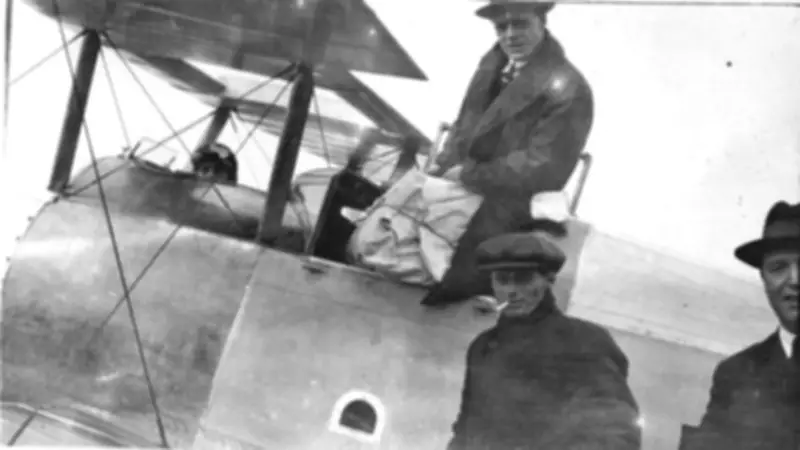
This month, John Simpson explores the first delivery of newspapers by air, exactly 107 years ago. Gabriel Evans, a First World War rigger who served at Lympne, left behind fascinating photograph albums. Among them is a series of images showing an aircraft delivering Evening News newspapers to an unknown location—now identified as Lympne Airfield. The event occurred on May 1, 1919, the very day civilian flying restrictions were lifted.
The Historic Flight
The pilot was accompanied by newspaper staff, who enjoyed 'beautifully upholstered' seats and spent the flight 'reading and smoking'. After landing at Lympne in 'record' time, the newspapers went on sale several hours earlier than usual. Although it is unlikely that Gabriel Evans had any direct connection to the event beyond possibly witnessing it, his photos provide a unique glimpse into this milestone.
Inauguration of Air Delivery Service
Three days later, the Evening News promoted the inauguration of a special newspaper delivery service using a Fairey seaplane from the Thames at Blackfriars to Westgate-on-Sea in Thanet. The article described the event in detail:

'Evening News' Delivered by Aircraft – For the first time, the Evening News was delivered by air to various locations on the Kent coast. The machine used was a Sopwith Gnu, a three-seater fitted with a luxurious limousine body. The special edition was delivered to Hounslow by car, arriving at 4.35 pm. By 4.40 pm, the aeroplane was loaded, and Captain AD Allen, the pilot, along with a representative of the Evening News as passenger, took off for Lympne.
Despite somewhat rough weather, visibility was good, enabling the trip to be completed in a remarkable 31 minutes—a record for a flight from Hounslow to Lympne. The machine was fitted with a 200-horsepower Bentley rotary engine and had been specially constructed for passenger work. The pilot sat in front, separate from the passengers, who sat side by side in the limousine. The seats were beautifully upholstered, and through glass panels, passengers could enjoy a wonderful view of the surrounding countryside.
Travel de Luxe
Special flying kit was unnecessary; the passenger wore an ordinary soft hat and waterproof, spending the time smoking and reading. The cabin featured excellent ventilation, electric lights, and telephones for constant communication with the pilot, who kept passengers informed of points of interest. The machine flew straight to the coast, passing over Richmond, Wimbledon, Croydon, across the Surrey hills to Ashford, and finally Lympne. It was the first civilian aeroplane to land at the south-east coast aerial custom house. On arrival, great interest was shown in the machine, and Captain Carlton, RAF, in charge of flying there, took all necessary particulars, including the landing fee. The papers were taken by special car to the surrounding district and were on sale nearly two hours earlier than usual.
John Simpson notes that the RAF rank of Captain did not exist in 1919 and was likely a throwback to the RFC. From April 1, 1918, the corresponding rank in the RAF was Flight Lieutenant.
Upcoming Events
Lympne Airfield History Society's next meeting is on Tuesday, May 5. Paul Ross, from the Silver City Association, will give a talk on the former car-carrying airline resident at Lympne from 1948 to 1954. On July 7, Dean Appleton will present on Winston Churchill at Lympne. Meetings take place in Lympne church, doors open at 6.30 pm, and entry is £3. For more information, call 07508 708725 or email johnsimpson43@btinternet.com.