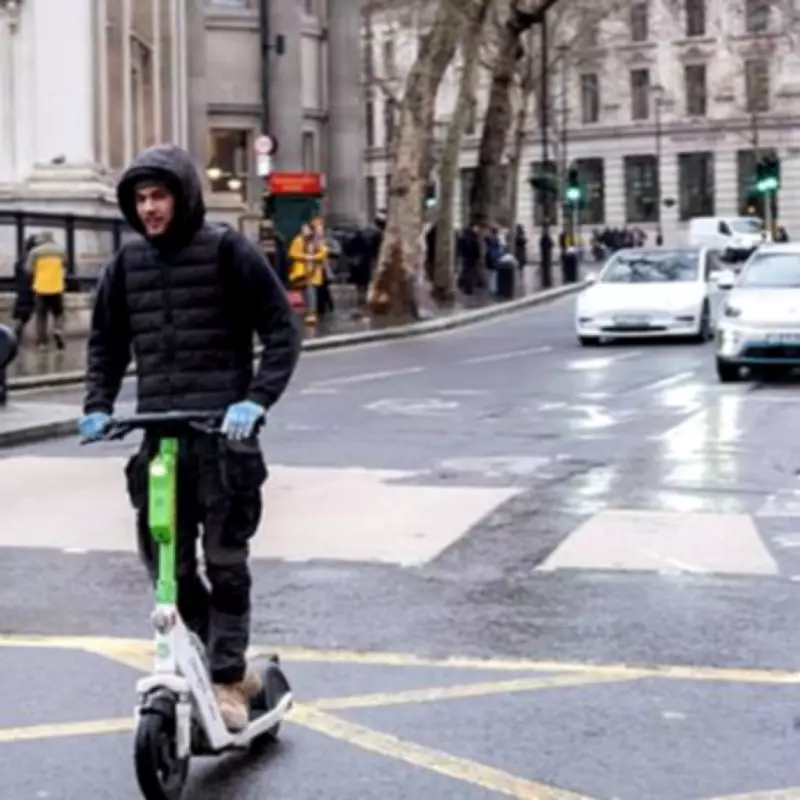
Labour Government to Introduce Comprehensive E-Scooter Regulations
Labour Party Transport Secretary Heidi Alexander has officially announced plans to reform e-scooter rules, with a public consultation on new regulations set to launch later this year. The move comes as the government acknowledges that the widespread use of these vehicles requires proper legal frameworks to ensure safety and order on public streets.
"Genie Is Out of the Bottle" on E-Scooter Usage
In a significant policy statement, Transport Secretary Heidi Alexander declared that "the genie is out of the bottle" regarding e-scooter adoption across the country. She emphasized that while e-scooters offer a convenient transportation alternative, current legal ambiguities have created problematic situations that demand immediate legislative attention.
A government source provided additional context to GB News, stating: "Successive Conservative Governments dragged their feet while a black market of e-scooters has been allowed to take over our streets. E-scooters can be a great way to get around, but they must be properly regulated, safe for pedestrians as well as riders, and we must ensure they cannot clutter up our streets."

Current Legal Loopholes and Proposed Solutions
Alexander highlighted the disconnect between existing laws and actual usage patterns, noting: "If you buy an e-scooter yourself in somewhere like Halfords... you can only use that scooter by law on private land. But we all know that isn't happening. We need to legislate so that we set some rules about where people can use them. I don't think, for example, they should ever be allowed to be used on pavements."
The Transport Secretary's comments underscore the government's intention to create clear boundaries for e-scooter operation, with pedestrian safety emerging as a primary concern in the proposed regulatory framework.
Extended Trials and Legislative Timeline
Transport Minister Simon Lightwood addressed the House of Commons regarding the government's approach, revealing: "We have extended e‑scooter trials until May 2028 to allow local authorities to test how the technology works. We have also committed to pursuing legislation, when parliamentary time allows, for the full regulation of micromobility, so they work for all people."
This extension provides additional time for data collection and assessment before implementing permanent regulations, reflecting a measured approach to policy development.
Road Safety Strategy and LZEV Framework
As part of the new Road Safety Strategy, the government has committed to pursuing legislative reform for electric vehicles "when parliamentary time allows." The strategy outlines how changes would establish a "proportionate and agile process" for regulating Low-speed Zero Emission Vehicles (LZEVs).
The official documentation states: "The LZEV Framework will enable safe, legal use of new technology and allow the police to tackle irresponsible and anti-social use. Further consultation and regulations will be developed once the LZEV Framework has been approved by Parliament, before any specific new vehicles are legalised and regulated."
The government's approach emphasizes evidence-based policymaking, with the strategy concluding: "By taking a proactive, evidence-led approach, Great Britain can harness the benefits of micromobility while minimising risks and ensuring equitable access to safe travel."
This comprehensive regulatory initiative represents a significant step toward integrating emerging transportation technologies into the national infrastructure while prioritizing public safety and orderly urban environments.