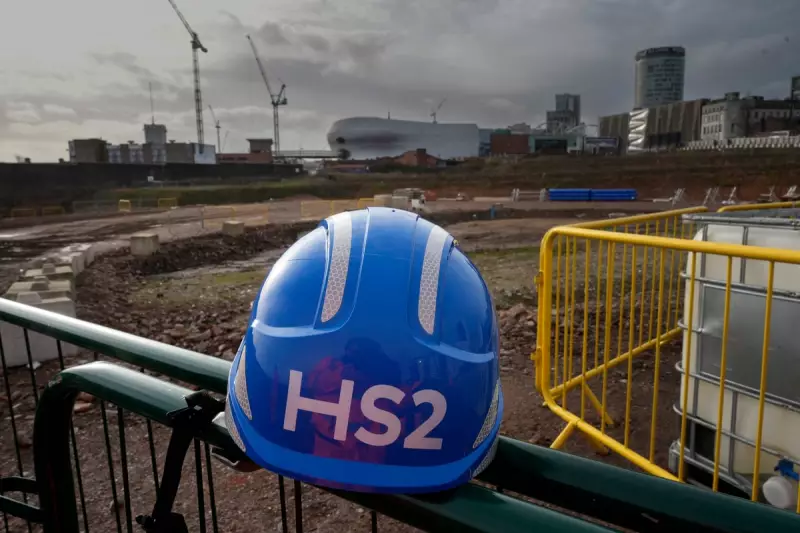
The ambitious HS2 high-speed rail project has reached a pivotal moment with the activation of the first tunnel boring machine destined to connect the line to central London. This significant development marks a major step forward in the infrastructure programme linking Birmingham and the capital.
Historic Launch of Tunnelling Operations
Named Madeleine in honour of Madeleine Nobbs, a former president of the Women’s Engineering Society, the colossal 1,624-tonne machine commenced its journey from Old Oak Common towards Euston station on Tuesday 27 January 2026. This engineering marvel will excavate a substantial 4.5-mile tunnel beneath west and central London, creating one of the twin passages required for HS2 services to reach their central London terminus.
Political and Industry Support
The ceremonial launch attracted prominent figures including Chief Secretary to the Treasury Darren Jones, Rail Minister Lord Hendy, HS2 Ltd chief executive Mark Wild, and Transport for London commissioner Andy Lord. Their presence underscored the project's national importance and cross-party support for transformative infrastructure development.

Lord Hendy emphasised that this tunnelling commencement brings HS2 "another step closer to reality," highlighting its essential role in delivering substantial economic benefits, employment opportunities, and housing development across the region.
Economic Transformation Potential
Connecting HS2 to Euston station is considered absolutely critical for unlocking the project's full economic potential. According to estimates from Camden Council, the comprehensive redevelopment surrounding Euston could contribute approximately £41 billion to the UK economy by 2053. This regeneration is projected to support around 34,000 jobs while delivering a balanced mix of new residential properties and commercial spaces.
Broader Project Progress
This tunnelling initiative represents just one component of the extensive progress already achieved along the London-Birmingham corridor. To date, construction teams have successfully completed 23 miles of tunnels, erected 19 bridges, and constructed two substantial viaducts, demonstrating steady advancement across multiple project fronts.
As Madeleine advances through London's subsurface, it will simultaneously excavate soil while installing concrete segments to form the permanent tunnel structure that will eventually carry high-speed trains. This sophisticated engineering process ensures both efficiency and structural integrity.
Confidence in Delivery
HS2 Ltd chief executive Mark Wild expressed strong confidence that the railway would indeed reach central London, citing the tunnelling commencement as tangible evidence following a comprehensive year-long programme reset focused on enhancing cost control and delivery mechanisms.
Employment and Regional Benefits
Currently, the HS2 project employs more than 33,000 people across various disciplines and locations. Economic forecasts suggest the initiative will contribute approximately £10 billion to the west London economy over the coming decade, supporting nearly 19,000 jobs and facilitating the development of around 22,000 new homes.
Upon completion, HS2 will revolutionise rail connectivity by providing significantly faster services between London, Birmingham, and destinations further north, fundamentally transforming travel patterns and regional economic integration across the United Kingdom.