Initial Report Points to Track Fracture in Fatal Spain Rail Disaster
Preliminary findings from the official investigation into the catastrophic rail collision in Spain have identified potential track fractures as the primary factor behind the devastating incident. The initial report, compiled by the Railway Accident Investigation Commission (CIAF), has revealed critical evidence gathered from the crash site near Cordoba, which resulted in a tragic loss of life and widespread injuries.
Evidence of Structural Failure at the Derailment Site
The commission's initial assessment notes the presence of significant "nicks" on the train wheels and observable "deformations" on the railway tracks. These physical markers are consistent with a scenario involving a broken rail, suggesting a critical structural failure occurred prior to the collision. Investigators are currently operating on the leading hypothesis that the track fracture happened moments before the first train passed over the compromised section, triggering the catastrophic derailment.
Details of the High-Speed Collision and Aftermath
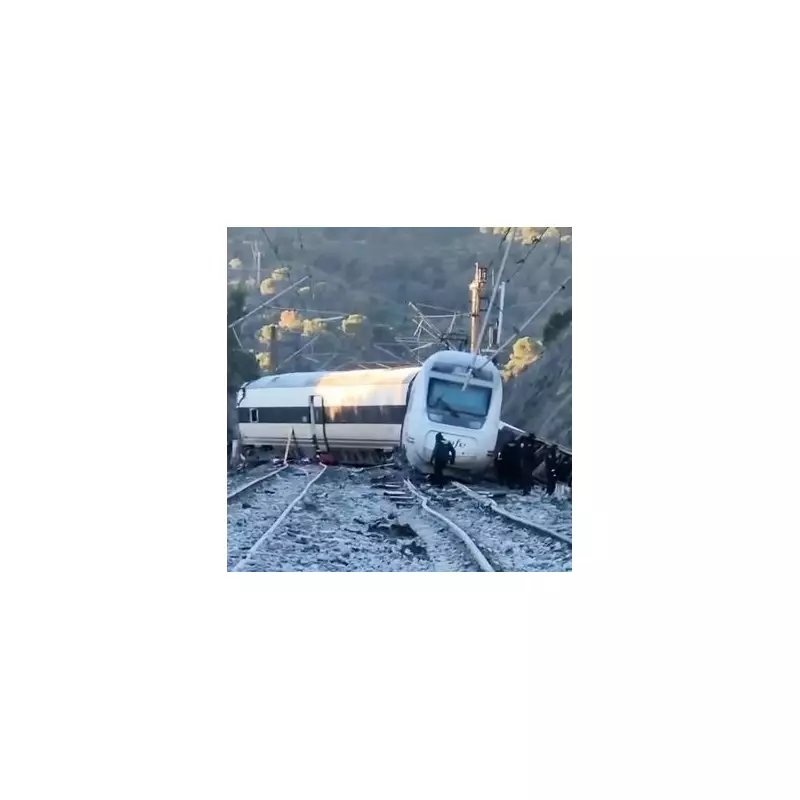
The horrific accident unfolded when the tail end of a train travelling from Malaga to Madrid derailed and collided with an oncoming train heading toward Huelva. Both services were operating at high speeds, estimated at approximately 130 miles per hour (209 kilometres per hour), at the moment of impact. The force of the collision was immense, causing the front of one train to bear the brunt of the crash and sending several carriages tumbling down a steep four-metre slope.

The human toll has been severe, with authorities confirming 45 fatalities and more than 150 individuals injured. The impact was so violent that some victims were found hundreds of metres from the main crash site. Distressing imagery from the scene depicted:
- Train seats violently ejected onto surrounding rocks.
- Carriages completely severed and lying on their sides.
- Widespread debris scattered across the area.
Ongoing Scientific Analysis and Community Impact
To determine the precise cause of the rail failure, samples from the track have been sent to a specialised laboratory for in-depth forensic analysis. This scientific testing aims to uncover whether the break resulted from:
- Long-term wear and material fatigue.
- Environmental factors or extreme weather conditions.
- Other underlying structural or manufacturing defects.
The commission has emphasised that while the track fracture theory is the leading line of inquiry, no other potential causes are being ruled out at this preliminary stage. A more comprehensive and detailed report is expected to follow, examining the crash in greater depth.
The disaster has profoundly affected local communities, particularly the province of Huelva, which was home to 27 of the 45 deceased victims. Juanma Moreno, the President of the Andalusia region, expressed "profound sorrow" and declared a period of official mourning, acknowledging the deep grief felt across the region.
Emergency Response and Recovery Efforts
In the wake of the tragedy, authorities have publicly commended the rapid response and exceptional bravery displayed by emergency services, volunteers, and blood donors. Rescue operations saw Civil Guard officers working alongside search dogs to meticulously comb through the wreckage, recovering personal belongings from the scattered debris as part of the ongoing recovery process.