20mph Zone Expansion Leads to Nearly One Million Drivers Receiving Penalty Points
The widespread implementation of 20mph speed limits across the United Kingdom has been directly linked to a significant surge in drivers accumulating penalty points on their licences. According to recently released official statistics, a staggering total of 939,519 motorists in England, Wales, and Scotland received an SP30 endorsement for exceeding speed limits during the previous year.
Substantial Increase in Speeding Offences
This figure represents a dramatic increase of approximately 32 percent compared to the 678,367 drivers who were penalised for speeding violations in 2022. The data clearly indicates that the proliferation of 20mph restricted areas has contributed substantially to this upward trend in traffic enforcement actions.
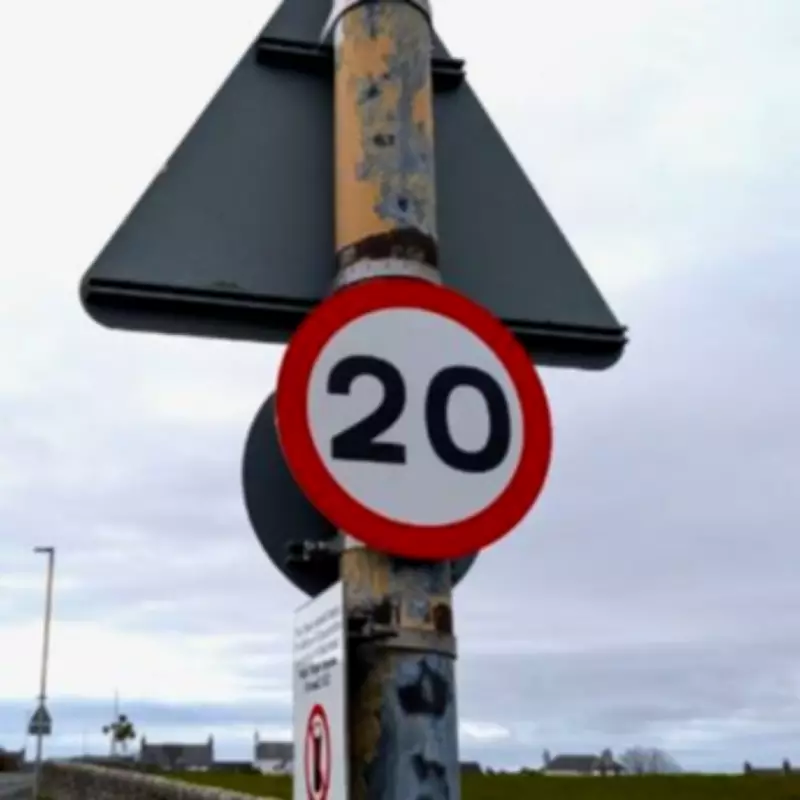
Currently, more than one-sixth of all roadways throughout Britain now operate under 20mph speed restrictions. This expansion has created numerous enforcement zones where drivers frequently exceed the posted limits, resulting in penalty point accumulations that can lead to licence suspensions and increased insurance premiums.

Contrasting Trends in Motorway Enforcement
Interestingly, while urban and residential area speeding violations have increased dramatically, motorway enforcement has shown a contrasting pattern. Only 216,141 drivers were caught exceeding speed limits on motorways in 2025, representing a six percent decrease from the previous year's figures.
Edmund King, the president of the Automobile Association, commented on this disparity, stating: "The increase in 20mph zones probably adds to those being caught on camera. As these zones expand across residential areas and town centres, more drivers are finding themselves facing penalties for what they may consider minor infractions."
Criticism of Current Enforcement Policies
Howard Cox, representing the FairFuelUK campaign organisation, offered a more critical perspective: "The war on UK motorists' wallets grows exponentially. Recent anti-speeding policies introduced behind alleged safety reasoning is just a dishonest mask to fleece more cash out of the world's highest-taxed drivers."
This sentiment has been echoed by numerous motorists who have expressed frustration with the current enforcement regime. One driver remarked: "It is almost impossible to go at 20mph and concentrate on the road and completely unnecessary. The new system isn't about road safety or pollution levels but merely to fill council coffers with yet more of our hard earned money."
High-Profile Cases and Driver Experiences
Even public figures have found themselves caught in the 20mph enforcement net. BBC presenter Evan Davis was recently penalised for speeding in a 20mph restricted area. Reflecting on his experience attending a speed-awareness course, Davis noted: "Most of us had been speeding at something like 26mph."
Another motorist offered practical advice for those facing penalties: "Just a part of the requirements of a 20mph zone - if you're caught, its worth looking at signage and the signs must conform to the Traffic Signs Regulations and General Directions. Always worth checking."
Road Safety Perspectives
Despite the controversy surrounding enforcement, road safety advocates maintain that speed reduction remains crucial for preventing serious accidents. Nicholas Lyes of IAM RoadSmart emphasised: "Speeding is one of the leading factors in the most serious collisions. We need a shift in mindset – speeding carries serious consequences, but the fact that it is so widespread indicates a cultural problem that needs addressing."
Many drivers continue to express frustration with the practical challenges of maintaining 20mph speeds. One commented: "It's very hard to drive at 20 MPH when the roads are clear and not busy or if you have some A hole pressurising you from behind. It's a total con to make money, nothing to do with safety, lunatics will drive recklessly regardless of speed limits, this ridiculous speed limit penalises law abiding drivers."

The ongoing debate surrounding 20mph zones and their enforcement continues to divide motorists, safety advocates, and policymakers as the data reveals the substantial impact these restrictions are having on driving records across the nation.