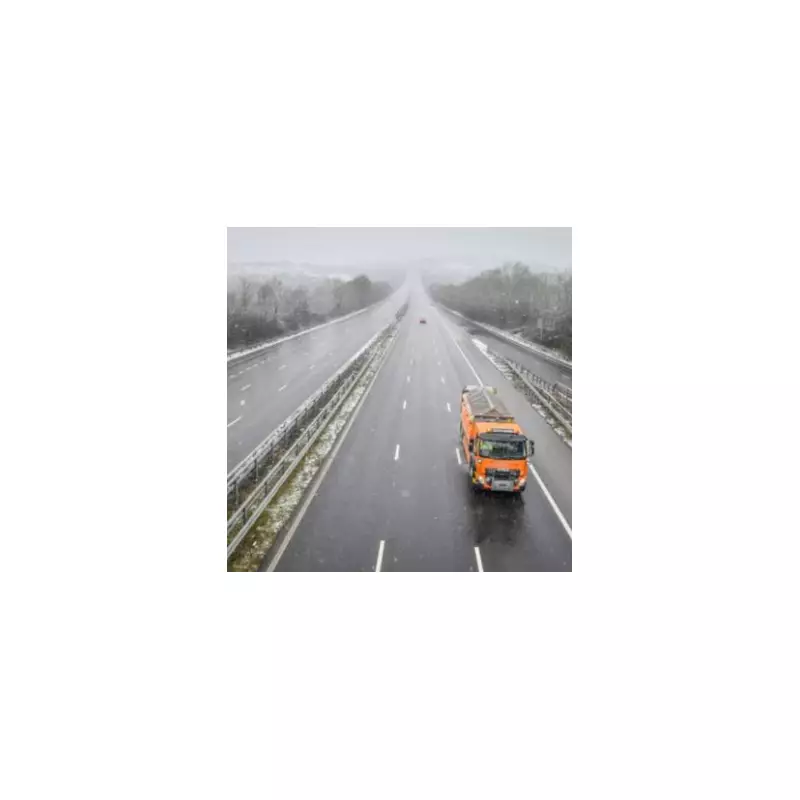
Motorists across the UK are being urgently advised that official Highway Code guidance on stopping distances falls dangerously short during winter weather, potentially increasing the risk of serious collisions.
Official Figures Based on 'Ideal Conditions'
Car insurance specialists at Quotezone.co.uk have issued a stark warning, revealing that the distance required to bring a vehicle to a halt on icy or snow-covered roads can be up to ten times longer than the distances published in the Highway Code. The code's benchmarks are calculated for optimal, dry conditions and become dangerously misleading when temperatures drop.
Greg Wilson, CEO and car insurance expert at Quotezone.co.uk, explained the discrepancy. "The Highway Code figures are based on ideal driving conditions," he said. "In winter, those distances simply don't reflect reality. When roads are icy or wet, drivers need far more time and space to react."

The Critical Gap Between Theory and Reality
The current Highway Code advises the following stopping distances for a car in good conditions on a dry road:
- 30mph: 23 metres (approx. 6 car lengths)
- 50mph: 53 metres (approx. 13 car lengths)
- 70mph: 96 metres (approx. 24 car lengths)
These distances combine 'thinking distance' – the time it takes to perceive a hazard and move your foot to the brake – and 'braking distance'. However, on ice, braking distance becomes exponentially greater, while thinking distance remains constant, creating a potentially lethal shortfall.
Insurance and Safety Implications
The warning carries significant weight for both safety and insurance claims. Wilson emphasised that failing to adapt could have serious financial consequences. "If a driver is involved in an accident during icy or snowy conditions and is found to be speeding or driving carelessly, insurers may challenge the claim," he stated. "Drivers are still expected to adapt their driving to the conditions."
The AA echoed the call for increased caution, reminding drivers that stopping distances are variable. "When driving, you should leave enough clear distance in front of you to be able to come to a stop," a spokesperson said. "The stopping distance will increase the faster you drive and the wetter the road is."
The fundamental advice for all motorists is unequivocal: in winter weather, dramatically increase your following distance and reduce your speed well below the posted limit. The legally enforceable speed limit is the maximum allowed in perfect conditions; it is not a target for icy roads. Proactive adaptation is the key to preventing accidents and ensuring safety for all road users during the challenging winter months.