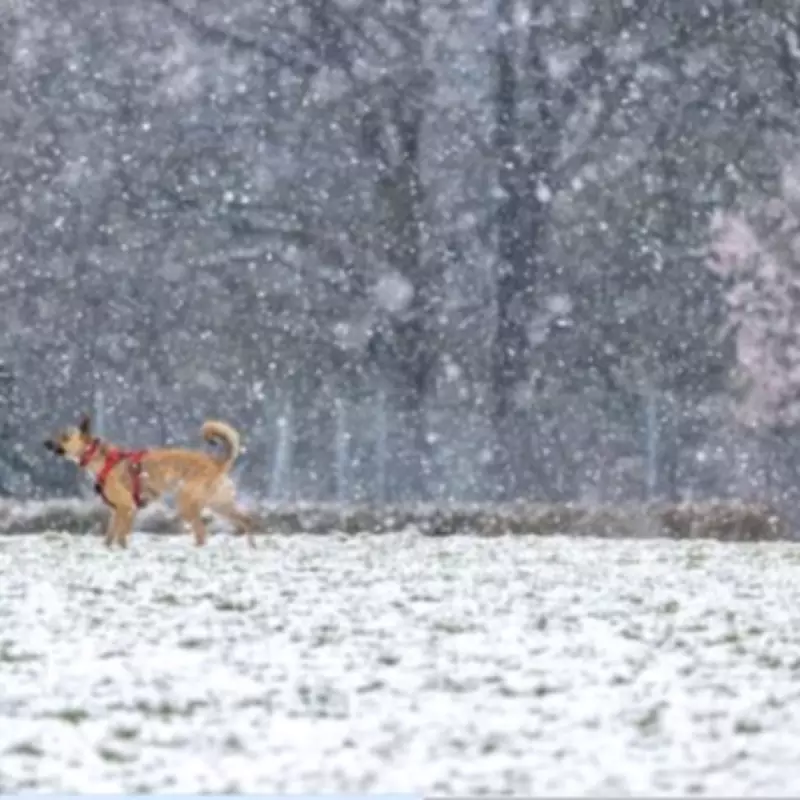
New weather mapping data has revealed that six specific counties in England are likely to escape the significant snowfall predicted to engulf the majority of the United Kingdom later this month. While forecasts indicate that around ninety percent of the country will face wintry conditions, a fortunate few regions appear set to avoid the worst of the impending cold snap.
Regions Spared from the Wintry Onslaught
According to the latest projections from WX Charts, which utilises data from Met Desk, the south-western part of England is expected to remain largely unaffected by the substantial snow showers forecast for February 23rd. The analysis shows that Cornwall, Devon, Dorset, Somerset, and Gloucestershire, along with the Isle of Wight, are the six counties that will likely experience minimal to no snowfall during this period.
Meteorological Context and Expert Analysis
Netweather TV's senior meteorologist, Ian Simpson, has provided insight into the broader weather patterns influencing these predictions. He noted that milder air is anticipated to push into north-eastern regions during the coming week, resulting in near-average or mild temperatures across most areas. While some northern and eastern parts may still see occasional snow, conditions are expected to be considerably less severe than the intense cold experienced over the past month.

Simpson elaborated in a detailed blog post, explaining how changing atmospheric conditions could contribute to a potential cold and wintry spell across Britain. "The reduced input of intense cold air masses into the North Atlantic Ocean may lead to a weakening of the jet stream," he wrote. "This development, combined with an ongoing sudden stratospheric warming event, increases the probability of cold and potentially snowy weather persisting through the latter half of February and into March."
Forecast Reliability and Regional Variations
The meteorologist emphasised that while there is strong evidence supporting these model outputs, certain regional variations remain. The forecasted setup for the next seven to ten days appears marginal for snowfall at lower altitudes, particularly in southern regions where temperatures may not drop sufficiently for widespread snow accumulation. This nuanced understanding helps explain why the six identified counties are projected to remain relatively clear while other areas face more significant winter weather impacts.
This regional disparity in weather patterns highlights the complex nature of British winter forecasting, where microclimates and geographical factors can create substantial variations in conditions across relatively short distances. Residents in the spared counties may experience a reprieve from the harshest winter elements, while the majority of the country prepares for potential disruption from the approaching snow systems.