The Transformative Impact of the South Wales Metro Rail Project
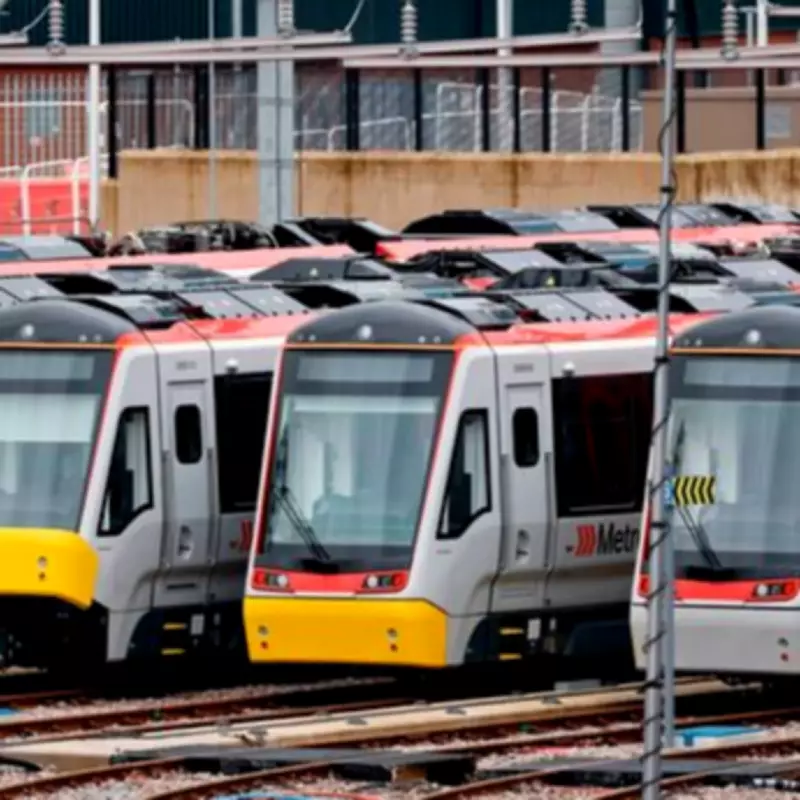
After 15 years and over £1bn of investment, the South Wales Metro is approaching its final stages of completion. What began as an ambitious vision is now transforming into a tangible reality across the Cardiff Capital Region. New trains are already operational, and by the end of 2027, residents will witness four electric tram-trains per hour directly linking Aberdare, Merthyr, and Treherbert with Cardiff.
This significant upgrade will dramatically cut journey times while simultaneously doubling capacity on the Core Valley Lines. For daily commuters, students, and all public transport users, these improvements represent practical, measurable benefits that enhance daily life.
Beyond Transportation: An Economic Catalyst
However, as the program nears completion, a more profound question emerges: how can the region fully maximize the Metro's broader impact? Backed by the Welsh Government and Cardiff Capital Region, the Metro is already enhancing reliability, increasing service frequency, and expanding access to opportunities.

Employers can now tap into a wider labor pool, while college and university courses become more accessible to workers and students thanks to cheaper, faster, and more predictable journeys. At a time when congestion and environmental pressures are intensifying, this shift toward high-quality public transport supports crucial efforts to reduce car dependency and lower harmful emissions.
Yet, the success of the Metro should not be judged solely by passenger numbers or reduced road traffic. Its true value lies in its potential to act as a catalyst for wider economic and social change. This includes accelerating much-needed regeneration projects, supporting better housing developments, attracting new investment, and connecting people of all ages and backgrounds to enhanced opportunities.
Revitalizing Town Centers and Housing
Consider the example of town centers. Many high streets have faced years of decline due to changing planning policies, emerging technologies, evolving retail habits, and broader economic pressures. The Metro offers a genuine chance to reverse this decline by bringing more people within easy reach of local centers.
However, improved access alone will not suffice. Without complementary investment in placemaking and business support, there is a risk that passengers will simply pass through without stopping to spend money locally.
Housing presents a similar challenge. Enhanced connectivity makes new locations viable for development, potentially easing pressure on high-demand areas. But this must be carefully managed. Building more homes is not, in itself, a solution unless they are the right homes in the right places, supported by appropriate infrastructure and services.
The Promise of Transit-Oriented Development
Aligning future transport and planning policy will be critical if the Metro is to facilitate sustainable development rather than piecemeal expansion. This is where more innovative approaches, such as transit-oriented development (TOD), deserve greater attention.
By concentrating mixed-use development around transport hubs, vibrant, walkable neighborhoods can be created, maximizing the value of public investment. While widely adopted in places like Denmark and the Netherlands, this approach remains relatively under-utilized in south Wales. Many believe it holds the secret to unlocking the full potential of the Metro network.
Boosting Social Mobility and Skills
The Metro's potential extends far beyond bricks and mortar. One of its most significant promises is its ability to improve social mobility by linking communities more effectively to centers of employment, education, and training.
As better connectivity improves access to colleges and training centers, it can attract new employers, help existing businesses tackle persistent skills shortages, and allow individuals to upskill and retrain in response to a changing economy. However, realizing this potential will not happen by accident.

Policy makers, planners, developers, employers, and education providers all need to engage actively in shaping how the system evolves. Important questions about leadership, accountability, and investment must be addressed. Who is responsible for ensuring the benefits of the Metro are fully realized? Where should future funding be directed? How can progress be shared across all communities rather than concentrated in a few locations?
A Forum for Future Planning
These critical questions will be explored at Metro & Us, a one-day conference and exhibition taking place at the Depot Cardiff on June 4th. The brainchild of Professor Mark Barry from Cardiff University, the event is supported by organizations including Arup, Cardiff and Vale College, Cardiff Capital Region, Capital Law, Mott MacDonald, Transport for Wales, and Freshwater.
The conference features sessions spanning transport, regeneration, housing, education, and investment, aiming to move the debate forward from infrastructure delivery to long-term impact. The South Wales Metro is, by any measure, a major achievement. The challenge now is to ensure that this transformation in transport provision becomes a transformation in prosperity, opportunity, and ambition that benefits individuals, businesses, and communities across the entire region.