New research from global property consultancy Knight Frank has revealed that a severe shortage of top-quality industrial space is hampering investment and suppressing market activity across Wales. The firm's latest figures show that overall take-up of large industrial units in 2025 fell significantly compared to the previous year, a trend directly attributed to the lack of available modern facilities.
Market Activity Dips Amid Supply Crisis
The data focuses on industrial units larger than 50,000 sq ft. The final quarter of 2025 saw 675,000 sq ft of space taken up, a notable increase of 250,000 sq ft from the third quarter. However, this remained considerably lower than the activity witnessed in the same period in 2024. This quarterly total was comprised of just two lettings and three sales, including major transactions at Queensway Meadows in Newport (165,000 sq ft) and Swansea Enterprise Park (200,000 sq ft).
The cumulative effect meant that total take-up for the entire year of 2025 reached just over 1.7 million sq ft. This represents a substantial decline from the 2.7 million sq ft recorded in 2024, highlighting a marked slowdown in the market for large-scale industrial space.

"No Available Grade A Space" in Key Region
Neil Francis, head of the Knight Frank Wales logistics and industrial team in Cardiff, pinpointed the core issue. He stated that the annual drop was "at least partly accounted for by there being no available grade A space in South Wales of this size throughout last year." While availability in South Wales stood at 3.7 million sq ft at the end of 2025, much of this stock is considered suboptimal.
Mr Francis elaborated, noting that much of the available space is "poor quality accommodation in secondary locations where redevelopment or higher value uses are not viable." This mismatch between what the market demands and what is available has led to a growing number of enquiries stalling. Consequently, discussions about pre-let agreements for yet-to-be-built space are becoming increasingly common.
Rental Growth and Development Confidence
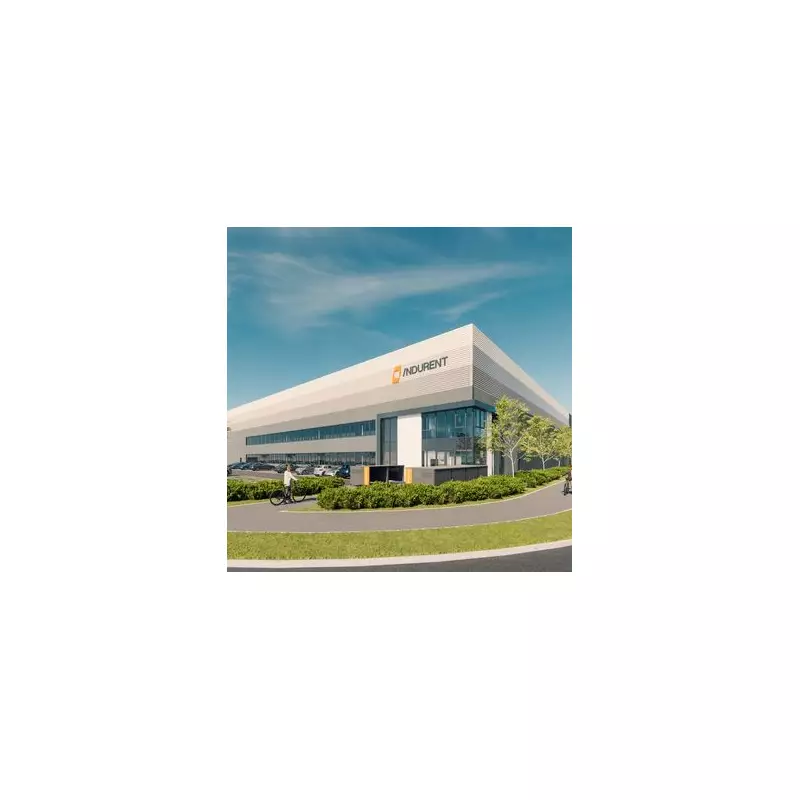
This supply-demand imbalance is, however, fuelling rental growth and providing confidence for new developments. Knight Frank reports that the shortage has encouraged developer Indurent to progress with a new phase five at Indurent Park in Newport, which will deliver 338,000 sq ft of modern industrial and logistics space. Double-digit rents are now being quoted and achieved in the market.
In a related segment, the mid-box market for slightly smaller units saw a record headline rent achieved in Wales. This was secured by London Metric Property Plc, which pre-let its newly developed 36,000 sq ft Axis 32 logistics warehouse at Junction 32 of the M4 in Cardiff to FPS Distribution on a 15-year lease.
Outdoor Storage and Smaller Units Show Strength
Further analysis by Knight Frank shows Wales leading the UK in rental growth for industrial Outdoor Storage sites. Associate Rhys Price revealed that Swansea, Newport, and Cardiff took the top three places nationally for annual rent increases in this category. Swansea led with 23% growth, followed by Newport at 20%, and Cardiff at 17%.
The market for smaller business units is also showing positive movement. Mr Price highlighted new developments such as the second phase at Pencoed by JG Francis, with further schemes planned for 2026 in Bridgend, Abercynon, and Nelson by developers including Dawan Developments and Cyncoed Properties.
A Strong Year for Agency Activity Despite Challenges
Despite the constrained market, Knight Frank's Cardiff-based industrial team reported another strong year in 2025. For the second consecutive year, the team transacted over one million sq ft of space, a feat Neil Francis described as "a testimony to the strength of the team and our position in the market." He emphasised that this performance was "even more striking given only one of these deals involved Grade A space."
Across the Welsh marketplace last year, Knight Frank's team handled more than £13 million in sales transactions and lettings worth over £2.75 million per annum, underscoring the continued underlying demand within the sector.