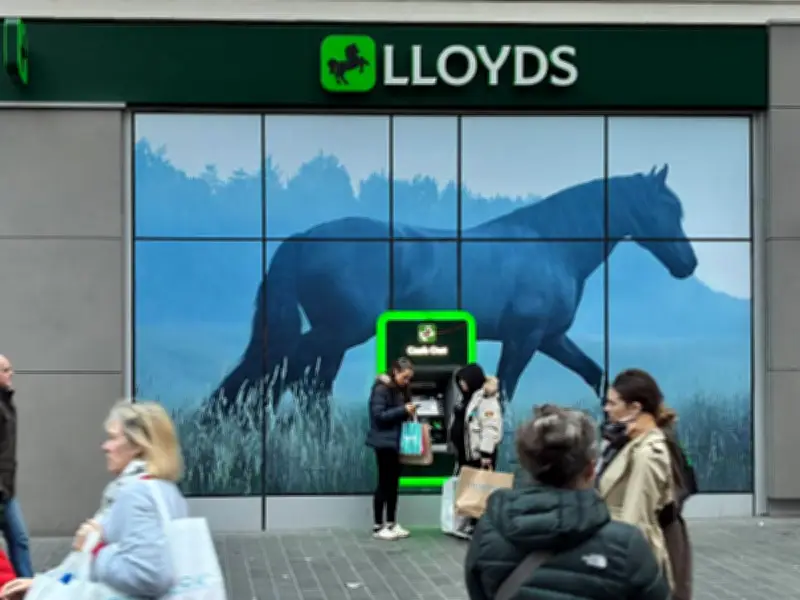
Lloyds Bank has confirmed a £518 boost for bank account customers and homeowners, as its latest house price index shows the average property price rose to £299,330 in July, up from £298,812 in June. The bank, which has branches in Birmingham, released the data on Tuesday morning, highlighting a 0.2% monthly increase and a 0.6% annual rise.
Market enters holding phase amid economic uncertainty
Emeritus Professor Joe Nellis, economic adviser at MHA, described the housing market as having entered a holding phase. He said: "The long-term trajectory of interest rates remains unclear, leading many potential buyers to hold off on purchasing until the economic outlook becomes clearer. Prices are yet to pick up at any great rate this year, with the Halifax House Price Index recording only a 0.6% year-on-year rise in June."
Nellis added: "A monthly rise of 0.2% reflects a market that is stable but lacking any real momentum. Affordability remains a significant constraint on the market. Although mortgage rates have eased slightly in recent months as lenders compete for business, they remain high enough to keep many potential buyers on the sidelines."

First-time buyers face deposit challenges
First-time buyers, in particular, continue to struggle to save for larger deposits. Nellis noted: "As a result, demand remains steady rather than strong, helping to keep house price growth modest. Although lenders have introduced more flexible affordability assessments and expanded the availability of higher loan-to-value mortgages, many prospective buyers are still forced to postpone home ownership. Given the economy's current lacklustre state, any improvement in affordability will be gradual rather than dramatic."
The average first-time buyer property now costs £240,433, according to Lloyds data, with annual price growth for this group increasing to 0.8% in June from 0.3% in May.
Lloyds head expects measured market pace
Amanda Bryden, Head of Mortgages at Lloyds, said: "House prices rose for the first time in four months during June, increasing by +0.2%, compared to May. The typical property now costs £299,330, while the annual rate of growth also edged higher to +0.6%."
Bryden continued: "Recent price trends continue to reflect wider economic uncertainty, including the impact of global events on inflation and interest rate expectations. While affordability remains stretched for many buyers, mortgage rates have eased from their recent highs, offering some encouragement to those considering a move."
She added: "While latest industry data shows the number of new mortgage approvals dropped in May, this wasn’t unexpected given the spike in rates seen earlier this year, and we’d expect to see activity recover assuming borrowing costs continue to fall."
Outlook depends on inflation and confidence
Looking ahead, Bryden said: "We expect the housing market to continue moving at a measured pace. Lower borrowing costs should provide some support for demand, though affordability constraints remain an important factor. The outlook for house prices will depend largely on inflation continuing to ease and household confidence gradually improving."
The £518 difference between July and June figures marks a modest boost for homeowners, but experts caution that significant price growth is unlikely in the near term.