Smiles, whispers, and a buried warning—what does the bin strike 'deal' really mean for Birmingham? A deal has been 'done' to end the bin strike. It should be a celebratory moment. But what is the deal and what does it mean for Brummies?
A Chamberlain-esque Moment
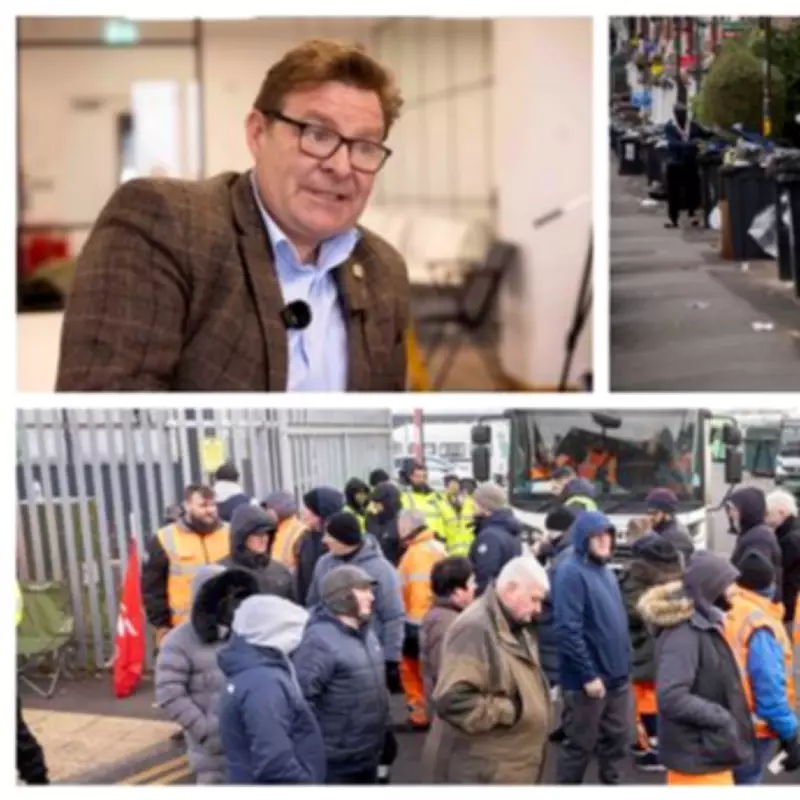
There was something Neville Chamberlain-esque about Birmingham City Council's Labour leader John Cotton as he crossed a sun-kissed Victoria Square to tell local media that 'peace' had been delivered in the long-running bin wars. With a broad smile, piece of paper in hand, he declared that an end to the bin strike was 'in sight'. An agreement had been reached between Labour and the bins union Unite that would finally unlock the impasse between the workers and the council, he told the assembled reporters. It was odd then that he hot-footed it straight back to the sanctuary of the Council House, refusing to take questions about this celebratory moment.
Was It a Stunt?
Was it because the deal might not stand up to scrutiny? Was it, as political rivals opined, a 'stunt' designed to prop up Labour amid grim polling for the party ahead of May 7's local authority elections? Was it the real deal and a genuine breakthrough—or a sham? And what does it all mean for Brummies, the innocents caught up in a powerplay between workers and bosses?

The announcement certainly had the desired short-term impact for Labour and Unite alike. National news sites and broadcasters picked up the local development gleefully. No more 'rats and bins' nasty headlines for Brum—now there was hope, and it was Labour that dunnit. It was presented as a double act, a deal with two partners—but make no mistake, this was Unite's day. 'Historic', said a smiling Unite national officer Onay Kasab. 'Vindication,' said the union's General Secretary Sharon Graham.
The Details of the Deal
Their members in Birmingham's waste service had been in dispute since January 2025 over the impact of a massive restructure of rubbish collections. Unite let slip some of the crucial details of the proposed agreement—a £16,000 'pay off' for affected bin truck drivers, a smaller compensation package for other downgraded staff, protection of pensions and a pledge to drop legal action against any individuals involved in disputes—including those accused of gross misconduct against colleagues. Amid the detail in the lengthy media statement from Unite was a critical sentence, easily overlooked: 'If it is reneged on in any way, then the union will escalate the dispute.'
Unite now expects the agreement to be pushed through, in full, whoever is in charge of the city council come May 7. Whatever the outcome of due diligence, consultation or legal input, or the views of 101 councillors, it's now deal done, as far as the union is concerned. It's a heck of a legacy to pass on to the next leaders of Birmingham City Council, and the residents they will be asked to represent.
What Is in the Deal
The deal is described by both Unite and Labour as being similar to a ballpark deal tentatively discussed by the council and Unite last summer. As strike watchers might recall, I revealed explosive WhatsApp messages between Unite leader Sharon Graham and council CEO Joanne Roney last summer which suggested that legal advisors and the commissioners pulled the plug on a deal both women wanted to deliver. The agreement set out this week is remarkably similar, though the sums involved have changed. Other than that, though, it is unclear what is different. Unite says what has changed is that the region's mayor Richard Parker and other industrial relations experts decided it was 'reasonable' and 'doable'.

- Workers will get a minimum of two years' cushion from the impact of the job evaluation process—the process that downgraded bin truck drivers from 'team leaders' part way through the strike and triggered an escalation. Bin workers affected had previously been offered six months of salary protection. In stark terms, affected staff will receive compensation for their 'lost salaries' for two years, so they will get up to £16,000 each, with drivers getting the most.
- Striking agency workers with at least 12 months employment on the contract would be offered a path to permanent employment.
- Disciplinary issues will be quashed and gross misconduct issues reviewed—this could mean workers accused of serious misbehaviour before and during the strike, including against colleagues who stayed at work, would face no penalties.
- For pension purposes, the dispute will be treated as 'authorised absence' so strikers won't lose out.
- Legal action on both sides will be ended. This does not include the ongoing injunction in place to stop bin workers and their supporters blocking trucks, which has recently been extended until 2028.
It's a deal that, according to Unite, has been under negotiation for 'several months' and has involved senior figures in the Labour Party including life peer Lord Brendan Barber, former general secretary of the Trades Union Congress and a former chair of arbitration service Acas. Both he and Mayor Parker were praised. Noticeably, scant credit was given to Birmingham Labour leader John Cotton by the union. A Unite member, he has been on the receiving end of an aggressive campaign that has personally targeted him on billboards, adverts and leaflets.
Lord Barber has described the deal as 'a fair and reasonable settlement that the workers have been battling for while at the same time protecting costs for the council.' Parker described it as a welcome move and said the agreement 'must be honoured in full, with a clear timetable and a formal resolution that gives confidence to workers and residents alike.'
The talks are said to have involved legal advisors from Labour and Unite with a remit to ensure the deal would not lead to a fresh wave of equal pay claims. Both sides claim their agreement 'avoids structural equal pay issues'. But, according to one insider, it's accepted it will likely involve significant payouts under sex discrimination rules to other staff. These will be 'much less' than original estimates suggested, they claimed. 'The idea that an agreement could be reached that was completely cost free and with no mitigation payments is not realistic. This deal is financially palatable,' they told us. They wouldn't be drawn on how many millions was likely involved in the calculations.
What Happens Next?
Immediately after the Labour/Unite breakthrough was announced on Monday, a hasty meeting was convened by city council officers with political leaders from the other groups on the council where it was made clear the deal presented had not emanated from the council itself and was no more than a Labour proposal at this stage. Political rivals issued scathing statements condemning the announcement as an 'election stunt' and a transparent bid to staunch the flow of votes away from Labour in Birmingham.
In truth, the agreement is predicated on Labour being in power or having significant sway inside the city council after May 7. Despite what Unite says, only Labour politicians can be held to it given it's not been seen by or agreed to by anyone else. It will be up to the biggest party or coalition to agree the terms of any deal next month. A detailed offer will have to be drawn up and presented to Unite by council officers. Commissioners will have their say, under the instruction of the Government. External auditors will also have a say. All members of the council will eventually have a vote.
It's a process that could take days, weeks or even months. In the meantime, Unite have not committed to halt the strike. The warm words of consensus between affiliated political allies are welcomed but, for now, the misery for Brummies goes on.