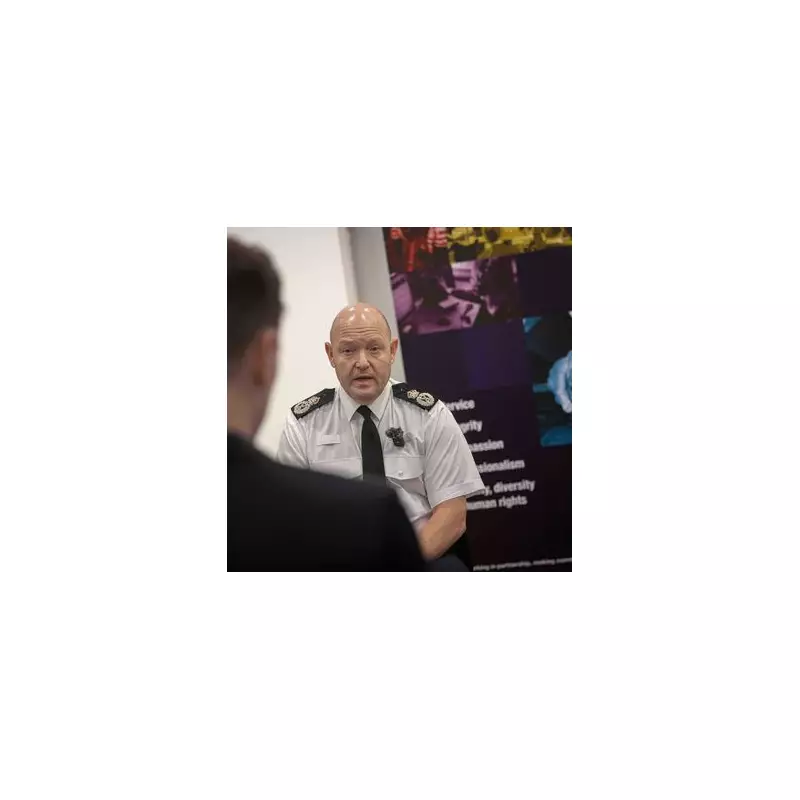
The Chief Constable of West Midlands Police has faced severe criticism from MPs over a controversial dossier used to justify banning Israeli football fans from a match in Birmingham. The report included details of a 'fictitious' football match and relied heavily on an unrecorded conversation with foreign police.
MPs Demand Answers in Home Affairs Committee Grilling
Chief Constable Craig Guildford and Assistant Chief Constable Mike O'Hara were questioned by the influential cross-party Home Affairs Committee on Monday, December 1st. The session, chaired by Staffordshire Moorlands MP Dame Karen Bradley, sought to unravel the decision-making behind the ban on Maccabi Tel Aviv supporters attending the Europa League match against Aston Villa in November.
The committee aimed to resolve conflicting accounts about why the force recommended the ban and to examine the roles of the Birmingham City Council-led Safety Advisory Group, the Home Office, and politicians. The original decision provoked a fierce backlash, culminating in Prime Minister Keir Starmer expressing his 'anger' and concerns the move could be seen as antisemitic.

'Fictitious Match' and Unverified Claims
Under intense questioning, Mr Guildford admitted that a key police report recommending the ban referenced a non-existent game between Maccabi Tel Aviv and West Ham United. He stated the reference 'came off social media', despite the two clubs never having played each other.
Liberal Democrat MP Paul Kohler criticised the force for citing a 'fictitious match off the internet' without attempting to verify the information with UK clubs or police forces that had recently policed Maccabi games.
More critically, Guildford revealed the bulk of the report was based on an unrecorded conversation on October 1st between a West Midlands chief inspector and three Dutch police counterparts. This conversation, concerning a Maccabi match in Amsterdam a year earlier, was later summarised in an email and became a pivotal factor in the ban decision.
The Dutch officers' second-hand descriptions, as relayed by the West Midlands officer, included alleged attacks on taxi drivers, racist chants, and running street battles requiring thousands of officers. Guildford told MPs these claims convinced him to reconsider safety but admitted no further checks were made to verify the alarming accounts.
Confidence 'For Now' and Political Fallout
West Midlands Police and Crime Commissioner Simon Foster, responsible for holding the chief constable to account, was also questioned. When asked if he retained 'total faith' in Craig Guildford, Mr Foster said he did – 'at least for now'.
Mr Foster confirmed he is continuing to scrutinise the decision-making process and has called a special meeting in the new year to examine his force's handling of the affair. He is also liaising with politicians, including Shadow Home Secretary Chris Philp, who alleged in Parliament that the force had 'exaggerated' violence to justify the ban.
The government's antisemitism advisor, Lord Mann, told the committee the intelligence in the West Midlands report was 'wildly different' from official findings and his own report, which concluded the Amsterdam match was well-policed. He argued the Villa game should have proceeded with both sets of fans, using established policing methods like escorted coaches.
Home Office minister Sarah Jones revealed the ban announcement triggered 'a weekend of activity' across government. She stated the Prime Minister intervened because the decision sent an unacceptable message that Jewish people were not welcome in a British city, amid a context of rising antisemitism.
The match ultimately went ahead on November 6th with an empty away end. Some 700 police officers were deployed outside Villa Park, resulting in 11 arrests but no reported injuries.