West Midlands Police has strongly defended its controversial decision to prevent Maccabi Tel Aviv supporters from attending a Europa League match against Aston Villa, following claims that the ban was based on inaccurate intelligence from Dutch authorities.
The Controversial Ban and Political Fallout
Birmingham's Safety Advisory Group took the unprecedented step in October to bar away fans from the November 6 clash at Villa Park, citing significant public safety concerns. The decision sparked immediate controversy, drawing criticism from the highest levels of government.
Prime Minister Sir Keir Starmer expressed anger about the ruling, while Downing Street pledged to intervene and attempt to overturn the ban. Ultimately, the Israeli club made the decision to decline any ticket allocation offered to their supporters.

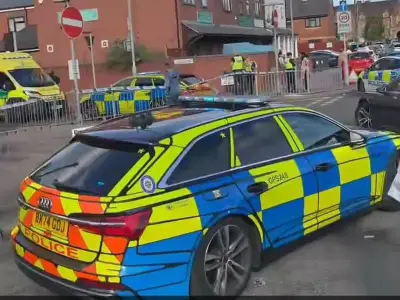
The match itself, which saw more than 700 police officers deployed around the stadium, passed without major incidents, though ten arrests were made in the vicinity of Villa Park.
Disputed Intelligence Claims
West Midlands Police had classified the fixture as high-risk based on what they described as 'current intelligence and previous incidents', specifically pointing to violent clashes during a 2024 Europa League match between Ajax and Maccabi Tel Aviv in Amsterdam.
However, according to a Sunday Times investigation, Dutch police authorities have now disputed several key claims in the West Midlands Police report that formed the basis of the ban justification.
The controversial report alleged that Maccabi Tel Aviv fans in Amsterdam had thrown members of the public into the river, that 500 to 600 supporters deliberately targeted Muslim communities, and that 200 fans were linked to the Israeli Defence Forces. The document also described the supporters as 'highly organised, skilled fighters' and claimed Dutch police deployed 5,000 officers in response.
Dutch Police Challenge the Narrative
Sebastiaan Meijer, spokesman for the Amsterdam division of the national force, systematically challenged these claims. He stated that the only known case of someone being thrown into water involved what appeared to be a Maccabi Tel Aviv fan who was filmed being told he could leave the river if he said "Free Palestine".
Mr Meijer clarified that there was no evidence supporting the claim that up to 600 people 'deliberately' targeted Muslim communities, adding that his force didn't have precise numbers for how many people participated in the disorder.
Regarding the assertion about 200 fans having IDF links, Mr Meijer explained that Dutch police do not investigate military backgrounds of football supporters. He also rejected the characterisation of Israeli fans as organised, skilled fighters, describing how much of the violence stemmed from 'small incidents'.
Perhaps most significantly, the Dutch police spokesman revealed that only 1,200 officers were deployed across different shifts, directly contradicting the 5,000 figure cited in the West Midlands Police report.
Police Stand By Their Decision
Despite these challenges to their intelligence sources, West Midlands Police maintained that their evaluation was correct and their approach proportionate.
A force spokesperson stated: "West Midlands Police's evaluation was based primarily on information and intelligence and had public safety at its heart. We assessed the fixture between Ajax and Maccabi Tel Aviv in Amsterdam as having involved significant public disorder."
The police emphasised that they met with Dutch authorities on October 1, where information about the 2024 fixture was shared. They concluded that Maccabi Tel Aviv supporters, specifically the subgroup known as the Maccabi Fanatics, posed a credible threat to public safety.
The force also highlighted that an independent peer review conducted by the UK Football Policing Unit, the National Police Chiefs' Council and subject matter experts on October 20 had fully endorsed their approach and decision-making.
West Midlands Police stated they remain satisfied that their policing strategy and operational plan was effective, proportionate, and maintained Birmingham's reputation as a safe and welcoming city for everyone.