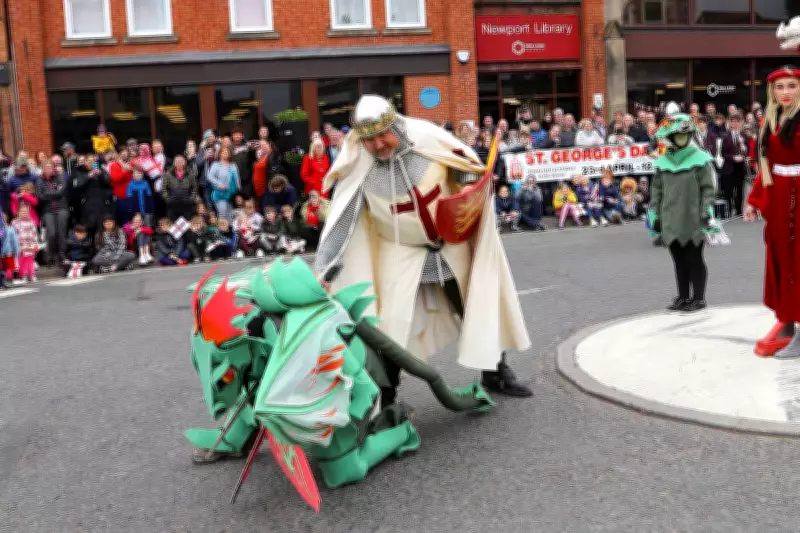
St George's Day: Reclaiming Celebration Over Conflict
St George's Day should be a time for embracing the positives of English culture, from Cornish pasties to Shakespeare, rather than descending into arguments over flags. This is the heartfelt plea from a new campaign aimed at marking England's national day and reclaiming the St George's flag as a symbol of unity and pride. The initiative seeks to shift focus from divisive debates to shared values and identity, encouraging a collective celebration of what makes England great.
Campaign for Unity Gains Momentum
Singer and activist Billy Bragg is among the prominent voices calling for people to make St George's Day a day of celebration and to "resist hateful division." He is supporting a campaign that promotes unity on the patron saint's day, alongside former Conservative MP Sir Sajid Javid. The campaign has launched a "virtual pocket museum" featuring 50 beloved and notable objects, people, or events symbolising Englishness, selected from 3,000 public submissions. These include items like the Magna Carta and Marmite, presented in formats such as decks of cards, wall posters, tea towels, and T-shirts.
Community Tensions and Flag Disputes
Recent events have highlighted community anxieties surrounding the flying of St George's and Union flags. Last summer, an online campaign called Operation Raise The Colours became contentious, leading several local authorities to remove flags from public infrastructure. Currently, tensions are rising in Shropshire, where the council's intention to remove flags has been met with more flags being erected. In Walsall, the council plans to replace flags at Brownhills 'Jigger Island' with a managed display that includes national flags alongside the Black Country flag.

Political and Public Perspectives
While some politicians have criticised the removal of flags, others have attributed the increased number of flags being flown to xenophobia or racism. Bragg, who recently participated in a demonstration against the far right in London, emphasised that St George's Day should focus on positive commonalities and community identity. Sir Sajid Javid added that celebrating shared values, such as local bobbies and war memorials, can foster understanding and unity.
Research on Flag Perceptions
Separate research by the British Future think tank reveals that four in 10 people in England avoid displaying the English flag due to fears of being associated with the far right. The survey, conducted by Focaldata in February 2026 with a nationally representative sample of 2,426 adults, found that 81% dislike when the flag is linked to racism or used to intimidate minorities. Sunder Katwala, director of British Future, noted that flag displays can polarise opinions, but most agree on celebrating England's heritage without prejudice.
Historical Facts About St George
To enrich the celebration, here are key facts about St George:
- St George wasn't English: He was likely a Greek-speaker from the Roman Near East who died as a martyr around AD 303.
- He wasn't a knight: Although often depicted as a chivalric knight, he was probably an officer in the Roman army.
- St George was a martyr: He died for his Christian faith during Emperor Diocletian's persecution.
- He never visited England: Despite this, he has been celebrated in England since the early 8th century, with his cross becoming the national flag in the 16th century.
- England isn't alone: St George is also celebrated in places like Venice, Genoa, Portugal, Ethiopia, and Catalonia.
This campaign underscores the importance of focusing on shared heritage and values, inviting everyone who calls England home to feel part of St George's Day celebrations, free from divisive politics.