Secret 1920s Love Letters Reveal Forbidden Romance at Witley Court
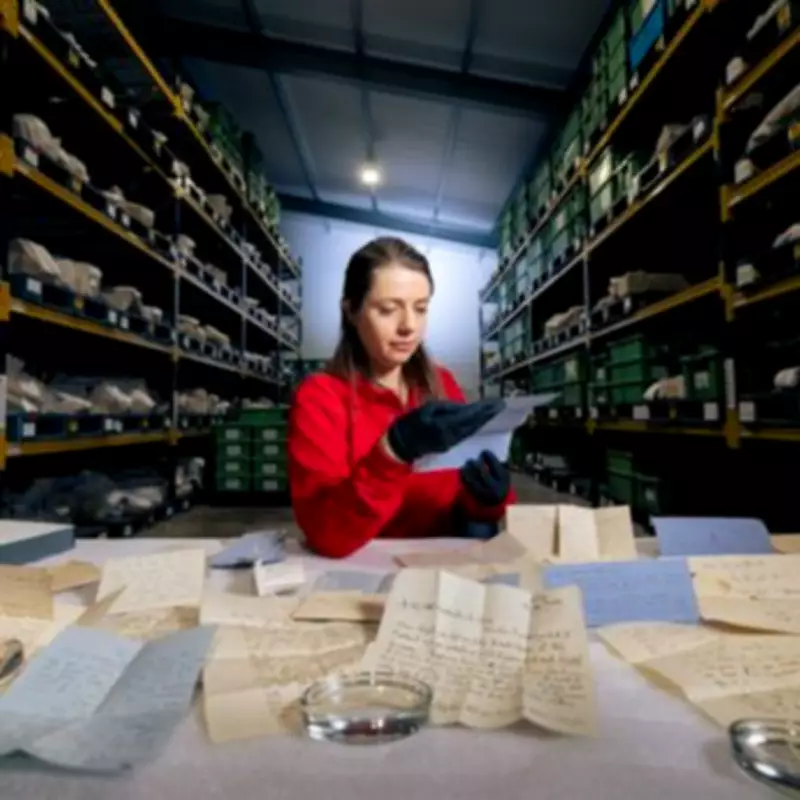
A remarkable collection of 108 love letters from the 1920s has been uncovered, shedding light on a clandestine and passionate affair between a married society heiress and an affluent RAF officer. The letters, which were found tucked away in a shoebox, offer an intimate glimpse into a forbidden romance that ultimately led to marriage.
The Illicit Liaison of Dora Smith and Noel Pearson
The correspondence details the relationship between Dora Smith, the daughter of Sir Herbert Smith, the last private owner of Witley Court in Worcestershire, and Noel Murray "Fred" Pearson, a wealthy RAF officer. During the time these letters were exchanged, Dora was still married to her first husband, making their romance a secret and socially taboo affair.
The letters span several years, including a period when Dora resided at the grand stately home of Witley Court, now in ruins. They are filled with tender and playful pet names, such as "Snuffy Scruffy" and "Little Baby Gazelle," revealing the deep emotional bond that developed between the couple.

Discovery and Preservation of the Letters
The letters were initially discovered in the 1960s in a shoebox kept by a local accountancy practice. They were safeguarded by staff member Elizabeth Jones, who recognized their historical and sentimental value. Now, this extraordinary collection has been revealed by English Heritage just in time for Valentine's Day, offering a poignant reminder of love's enduring power.
Matty Cambridge, assistant curator at English Heritage, expressed delight at the find, stating, "Coming across these letters has been such a joy. They're so warm and funny, but what is really touching is the timespan of these letters. They run over a number of years, and it's evident how much they genuinely care for each other. It's not just soppy; they are concerned about each other's well-being."
Content of the Passionate Correspondence
In one heartfelt letter, Noel writes to Dora, "My wonderful little baby gazelle, baby darling, if only I could have my precious little baby sweetheart nestled up in the car with me, I'd want to drive right away from all your worries and find you a little nest where troubles didn't exist and everything was one long wonderful dream."
Dora's response captures the depth of her feelings, declaring, "Dear my love, never did I think that you would be the very cornerstone of my life and all that I hold precious to my heart. Indeed, I did not believe that anyone, man or woman, could claim such wholehearted affection."
English Heritage has described the extensive correspondence as revealing a "warm, playful, and intimate portrait" of a young couple, while also chronicling the challenges of their forbidden romance. The organization's curatorial specialists are currently examining the material to assess its historical significance and conservation needs.
Outcome and Historical Context
The illicit romance ultimately brought Dora and Noel together, with the pair marrying in 1929 following Dora's stormy divorce. However, little else is known about their life after marriage, and English Heritage is appealing to the public for any additional information about their story.
Witley Court, once among England's most magnificent stately homes, has a rich history dating back to the early 1600s. It underwent numerous renovations under the Foley and Ward families, who amassed wealth from the West Midlands' iron and coal industries. During Victorian times, the property was renowned for its opulence and extravagant social events. Sadly, it fell into dereliction after a devastating fire in 1937.
This discovery not only highlights a personal love story but also connects it to the broader historical narrative of Witley Court, offering a unique window into the social and emotional lives of its former residents.