Historians are embarking on a fascinating quest to uncover the hidden Jewish history of Llandudno, appealing for public memories of the thriving businesses that made the North Wales town a flourishing centre of Jewish life in the early twentieth century.
The Royal Connection: Wartski's Legacy
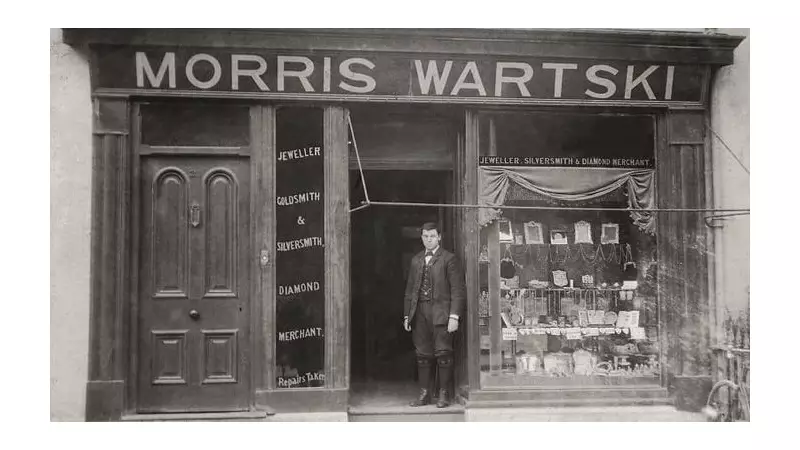
The remarkable story begins with Morris Wartski, a Polish immigrant who established his first jewellery premises at 21 High Street in Bangor before moving to Llandudno in 1907. His company would eventually achieve royal status, creating wedding rings for King Charles III and Queen Camilla.
Wartski's journey to royal favour began with patronage from King Edward VII and other aristocratic clients, along with celebrities like Hollywood star Bing Crosby. His success as a trailblazer attracted other Jewish businesses to the seaside resort, helping to build the town's Jewish community.

The family's legacy continued when Morris's son, Isadore Wartski, became Llandudno's first Jewish mayor in 1939. Though the company now operates from London's St James with royal warrants from both the King and Queen, it has dropped the 'of Llandudno' from its shop front.
Thriving Business Community
Llandudno's commercial landscape was enriched by several prominent Jewish businesses during its heyday. Lazar's department store on Madoc Street stood as a landmark establishment, while the family also operated an exclusive private hotel.
The Oriental Stores on Mostyn Street was run by Iraqi-born Joseph Gubay, whose grandson would later establish the Kwiksave discount supermarket chain. Another success story was Blairman fine art and antiques, which began in Llandudno and now operates as a world-leading auctioneer in Mayfair.
According to Laura Henley Harrison of the Jewish History Association of Wales (JHAW), 'The commercial life of Llandudno had a massive boost from the influx of Jewish families starting in Victorian times. Due to the popularity of Llandudno as a holiday destination for people from large cities, the town became a starting point for high-end businesses that are still thriving today.'
Preserving Community Heritage
The Jewish community established deep roots in Llandudno, with a synagogue opening in Upper Mostyn Street in 1909. Now historians are determined to preserve this rich heritage through planned exhibitions and talks with Llandudno Museum and Conwy Archives for Summer 2026 and 2027.
Though substantial documentation exists, curators acknowledge they lack the first-person memories that would truly bring the story of the town's Jewish community to life. The appeal extends beyond business memories to include anyone connected to the Jewish community in Llandudno or Colwyn Bay, including families who holidayed in the area.
Laura Henley-Harrison emphasises the broad scope of their search: 'We are looking for anybody who was a member of the Jewish community in Llandudno or Colwyn Bay, also Jewish families who took their holidays in the area. We would be excited to hear of any memories that you have or have been passed down by your families, and of course any artefacts you have in the attic would be real treasure to us.'
The project reflects the expanded mission of the recently renamed Jewish History Association of Wales, which dropped 'South' from its title to extend its work across the principality. Professor Nathan Abrams of Bangor University notes: 'As we've expanded our operations, we have realised just how far Jewish life in Wales reached. There is a wealth of history here to be discovered.'
Anyone with memories, photographs or artefacts relating to Llandudno's Jewish history is encouraged to contact Project Manager Laura Henley Harrison at laura.henley.harrison@jhawales.org.uk.