Birmingham Man Clinically Dead for Over Four Minutes After Marathon Run
A Midland father was pronounced dead for more than four minutes after completing the New York Marathon, and he vividly recalls hearing paramedics break the devastating news to his wife. Richard Green, 62, a former driving instructor now living in Solihull, collapsed in New York City following an unintentional overdose of painkillers he had taken for a training injury.
A Life-Altering Experience During a Charity Run
Richard Green had been training for the marathon to raise funds for a breast cancer charity, in dedication to his sister. He sustained a heel injury during his preparations and took painkillers to manage the discomfort. However, an accidental overdose caused him to collapse just outside a paramedics' tent shortly after finishing the race on November 1, 2009.
"The two paramedics were leaning over me when I heard one say: 'He has no pulse; he's not breathing. I think he's gone'," Richard recounted to BirminghamLive. "I was trying to speak, blink, twitch, anything to let them know I was still there. Then I heard my wife Debbie's voice say: 'What's happening?'"

The words that followed would haunt him forever: "I'm sorry, Ma'am, but he's gone." His wife Debbie passed out upon hearing this and was stretchered away. Medical professionals confirmed there was no heartbeat, no pulse, no breathing—Richard was clinically dead.
The Science and Sensation of Near-Death
When someone dies, hearing can continue to function for approximately four minutes. Richard experienced this firsthand. "I then heard something that sounded like a siren and a faint voice calling my name," he described. He found himself in the back of an ambulance en route to St. Luke's Hospital in New York, aware of electronic device blips and bleeps, followed by the flatline tone.
Richard was resuscitated three times that day. Remarkably, he spent only one night in the hospital and was discharged the following day. "But, in a way, dying was the best thing to happen to me, because it was like a rebirth," he reflected. "Everything was brighter, sounds were clearer, colours were now rich, and I felt I finally knew what life was about."
A Profound Shift in Perspective
The experience led to what Richard calls "a total shift in how he saw life and what truly matters." He realized he had been chasing the wrong things. "It had nothing to do with the size of the car on the drive or the bank balance; it was about friendship and giving," he explained. "Even if it was just a smile or a 'how are you? Are you okay?'"
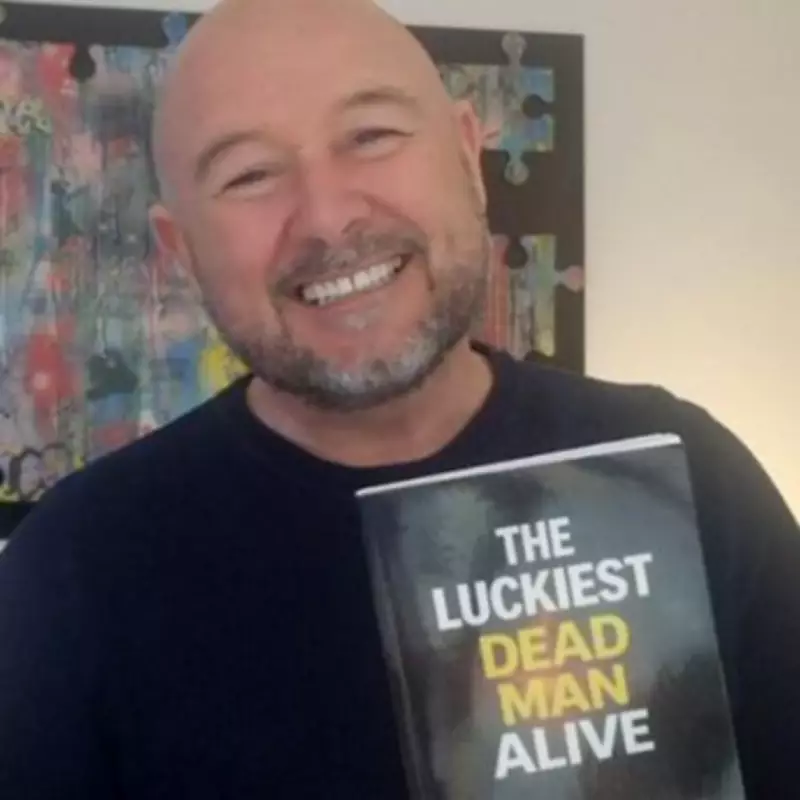
Richard, who grew up in Bordesley Green and was part of the Birmingham band Streetcar Dezire in the 1980s, has channeled his journey into a memoir titled The Luckiest Dead Man Alive: A Near-Death Experience Memoir That Will Change How You See Life. The book has become an Amazon number one bestseller and number two best-selling memoir.
"The final irony is I was the kid sent to the back of the class to copy lines because my spelling was terrible and my grammar even worse, but somehow I wrote an Amazon number one bestseller," he noted with humor.
Grounding the Story in Real Life
Unlike many near-death accounts, Richard's story is not framed through a spiritual or clinical lens. Instead, it is rooted in his working-class upbringing in Birmingham, his lifelong passion for music inspired by David Bowie, and a narrative filled with humor, chaos, and unexpected turns.
Richard, who taught young people with autism, ADHD, and anxiety how to drive, shared a profound insight: "What if the day you die is the day that life actually begins? That is true for me. We've got to make the most of what we've got while we've got it. You've got to keep the faith, keep going and enjoy the journey."
He emphasized that he did not return with all the answers, but with a clear understanding: "I came back knowing that most of the things we worry about don’t really matter. It changes how you live – completely."

Connecting with Readers
Since its release, the book has garnered widespread positive feedback, particularly from readers who admit they had not picked up a book in decades. "One of the best things I’ve heard is people telling me, 'I’ve never read a book since school, but I can’t put this down.' That means more than anything," Richard said.
He concluded, "This isn’t a story about dying. It’s about waking up and learning how to live properly." The book is currently available on Amazon in both paperback and Kindle formats.