Mistakes, Conflict and Controversy: Questioning the Polarising Boss of Birmingham Pride
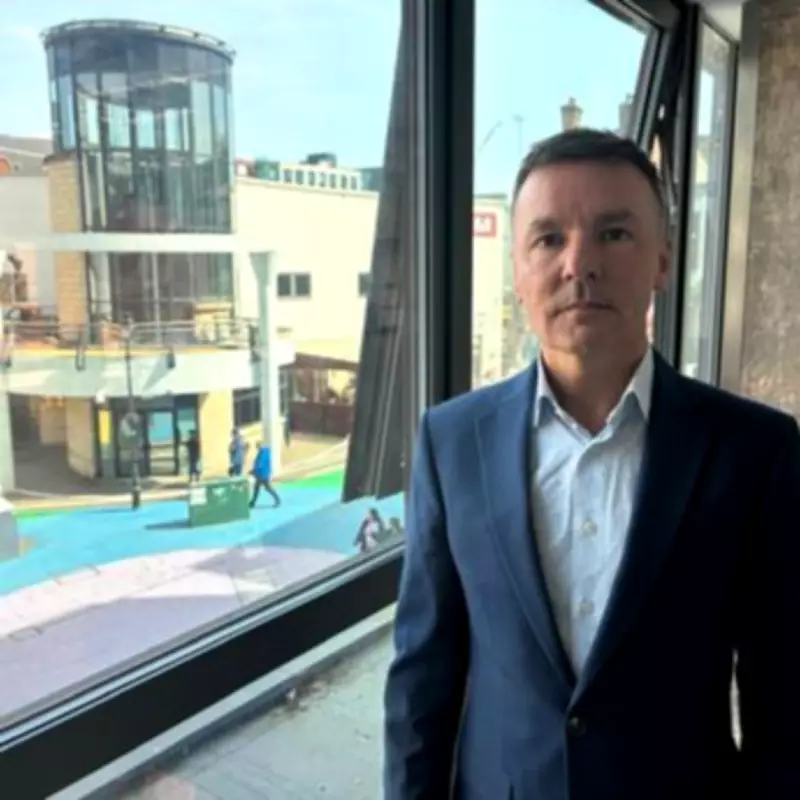
Pride director Lawrence Barton has been steering the ship since 2009, but things look very different here in 2026. When a colleague questioned how someone could "own" Pride, it highlighted a central tension surrounding one of the country's biggest LGBTQ+ gatherings.
Lawrence Barton doesn't own Pride, but he has served as festival director since 2009 in a voluntary role at the not-for-profit organization. Over the years, many have hoped he would resign from this position.
A Man of Many Hats
Lawrence, 52, wears numerous hats beyond his Pride responsibilities. He's a board member at the Southside Business Improvement District, director of a family-owned business portfolio, and owner of several prominent Birmingham bars. In 2020, he was appointed by Queen Elizabeth II's lord lieutenant John Crabtree OBE to be a deputy lord lieutenant of the West Midlands.

However, not all his ventures have glittered. In 2025, his apprentice training business, GB Training Ltd, collapsed into liquidation amid a probe showing claims for £8.4 million owed to organizations including the publicly-funded West Midlands Combined Authority.
Liquidators reported that Lawrence had made payments of £331,300 to 'connected companies', including nightclub The Nightingale, days before going bust. No wrongdoing was found, and a settlement was reached, with Lawrence stating it "in no way represents an acceptance of any culpability or guilt in this matter."
At the time, community members called for Lawrence to resign from Birmingham Pride permanently. He didn't.
Managing Expectations and Accessibility
Our conversation begins with business matters. Lawrence explains how Pride ticket prices are lower this year, with weekend tickets costing £46.87 instead of £73.70 in 2025. The purpose, he says, is to make Pride more accessible.
"Pride has to pay costs," Lawrence states. "Even if it was a free event, someone has to find money for road closures, parking suspensions, security, and toilets. It's possible for it to be free, but there's a challenge with managing expectations."
He acknowledges the diverse perspectives within the community: "Everybody has their own idea of what Pride is. For some, it's an ideology; for others, a massive celebration. For some, it's about safe spaces and visibility; for others, a political statement. No one view is the oracle on what Pride is."
Internal Community Conflicts
Lawrence delves deeper into conflicts within the LGBTQ+ community that he believes are causing harm. "Pride is a protest as well as a celebration," he says, "and the trans family in particular are going through a really torrid time."
"Over the last three to five years, our internal community has felt fractured," he adds. "We aren't as united as we could or should be." Lawrence notes that anti-trans voices seem louder in 2026 than when he came out in 1991.
"I had trans friends then and didn't even give it a thought that we weren't all just one family," he recalls. "Now the T in LGBT is considered by some to be problematic. But their pathway can be likened to that of gay people."
He emphasizes the need for unity: "Ours is a whole community, and Pride is strength. With this internal division, we harm ourselves. That's my concern."
Owning Business Failures
Addressing his business controversies, Lawrence states firmly: "Look, I own my failures. And in business, I've had tremendous successes too. I know what being rigorously investigated feels like."
"When you're in the public eye with a profile, you can be scrutinized," he acknowledges. "People can form their own opinions, but I own my failures. I stand up."
Lawrence explains he doesn't draw a salary from Pride, working in a voluntary capacity with no management charge. "I was scrutinized rigorously, and I didn't do anything wrong," he maintains. "Sometimes things do go wrong when you're in businesses that are interconnected."
The liquidation caused personal hurt: "I lived and breathed GB Training from age 24. My mom sold her house to set up that company. We transformed thousands of people's lives through training. For the end of it, the bad bits, to be what was highlighted, was heartbreaking. But we move on."

Commitment to Pride and Community
When asked why he didn't resign from Pride amid criticism, Lawrence responds: "I've got a deep, deep-rooted social conscience, and I love the work that I do at Pride. I put my heart and soul into my work."
He reflects on his personal journey: "I didn't feel proud as a gay child growing up. I was bullied terribly. When I came out to my mom, she said 'oh god, son, I'm scared about the life you're going to have.' I was told I'd have to work 50 times harder to get my head above."
"I've worked really hard in my life," he continues, "and I couldn't turn away from Pride and my body of work. I heard the noise, the pressure, but I couldn't walk away from my team. We're a family."
Looking Toward 2027
Lawrence has an end date in mind for his Birmingham Pride leadership, potentially coinciding with the festival's 30th anniversary in 2027.
"In my own mind, I'd love for it to be a free festival," he shares. "I'd love to make that happen. I feel like once that's done, I think it'll be my time to then say we brought it full circle, and I will need to pass the baton on."
"Everybody in our community needs to see themselves and have their voice heard," he adds. "They need to mould things in their own way and have an influence. I've tried to hold it together—it's been a pleasure and an honour—but I'm looking forward to 2027 as that full circle moment."
Birmingham Pride takes place on Saturday, May 23 and Sunday, May 24, with tickets now on sale.